
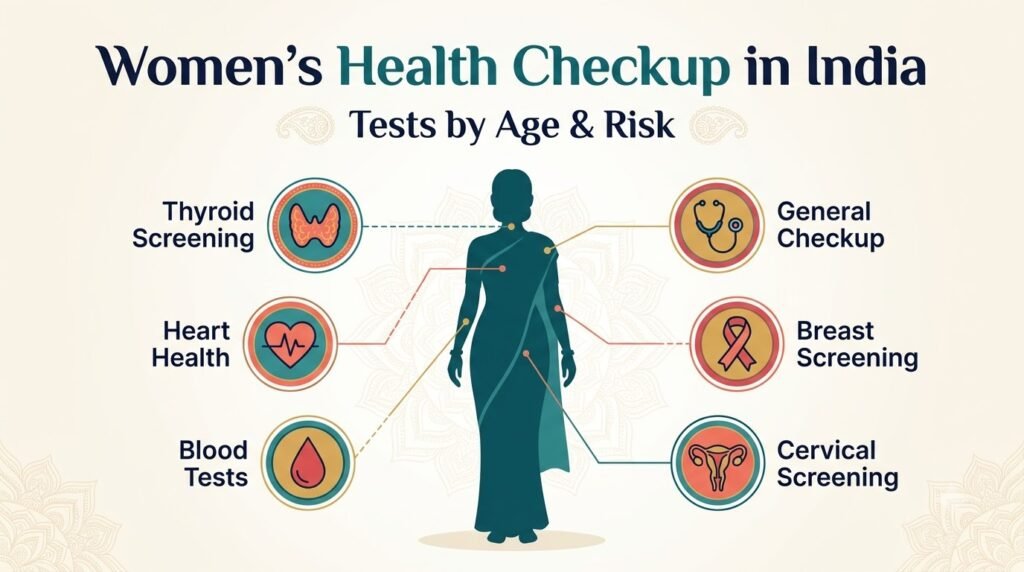
If you are planning a womens health checkup in India, it helps to know that the right tests depend on age, symptoms and risk factors. Women’s health needs can change with age, pregnancy history, menstrual health, family history, lifestyle and existing medical conditions. A health checkup is not one fixed package for everyone. The right tests depend on symptoms, age, risk factors and a clinician’s advice.
This guide explains common women’s health checkups in India, including routine blood tests, diabetes and cholesterol screening, thyroid evaluation, cervical cancer screening, breast health assessment and preventive care. It is written for education and should not replace an individual consultation with a qualified doctor.
📌 Quick Summary
| Health area | Common evaluation | Important note |
|---|---|---|
| General health | Blood pressure, weight, BMI, medical history | Usually reviewed at routine visits |
| Blood tests | CBC, blood glucose or HbA1c, lipid profile | Testing frequency depends on risk |
| Thyroid | TSH, with T4 or other tests when indicated | Especially relevant with symptoms, pregnancy or fertility concerns |
| Cervical health | Pap test, HPV testing or other locally available screening | Follow age- and risk-appropriate guidance |
| Breast health | Clinical evaluation, mammography or ultrasound when advised | Screening differs from evaluation of a lump or symptom |
What Is a Women’s Health Checkup?
A womens health checkup is a preventive assessment designed around a woman’s age, health history and current concerns. It may include a physical examination, discussion of menstrual or reproductive health, mental wellbeing, lifestyle factors, vaccinations and selected laboratory or imaging tests.
Some tests are recommended for many adults, while others are needed only when there are symptoms or specific risk factors. A package labelled “full body” or “women’s wellness” may include useful tests, but a larger package is not automatically better. Unnecessary testing can create anxiety, false-positive results and avoidable costs.
Which Basic Tests Are Commonly Considered?
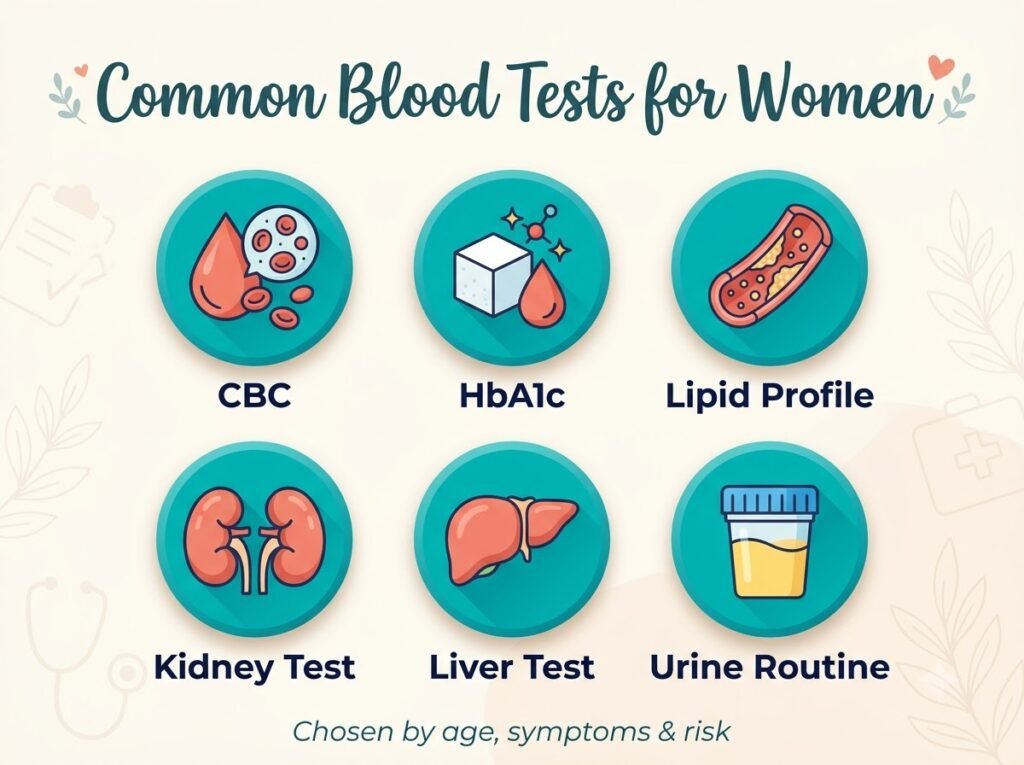
The following tests may be considered as part of routine preventive care, depending on age and medical history:
- Blood pressure: High blood pressure can remain unnoticed for years. Readings should be interpreted using proper technique and, when needed, repeated measurements.
- Complete blood count: A CBC may help assess haemoglobin and other blood cells, particularly when fatigue, heavy menstrual bleeding or suspected anaemia is present.
- Blood glucose or HbA1c: These tests assess blood sugar and may be especially relevant with overweight, family history of diabetes, previous gestational diabetes or symptoms.
- Lipid profile: Cholesterol assessment helps review cardiovascular risk along with blood pressure, smoking, diabetes and family history.
- Kidney and liver tests: These are not required at the same interval for every person, but may be suggested when there are symptoms, medical conditions or long-term medicines.
- Urine routine examination: This may be considered when urinary symptoms, pregnancy, diabetes or kidney concerns are present.
You can read more about related investigations in HealthPartner’s guides on the CBC test, HbA1c test, lipid profile, kidney function test and urine routine test.
Women’s Health Checkup in the 20s
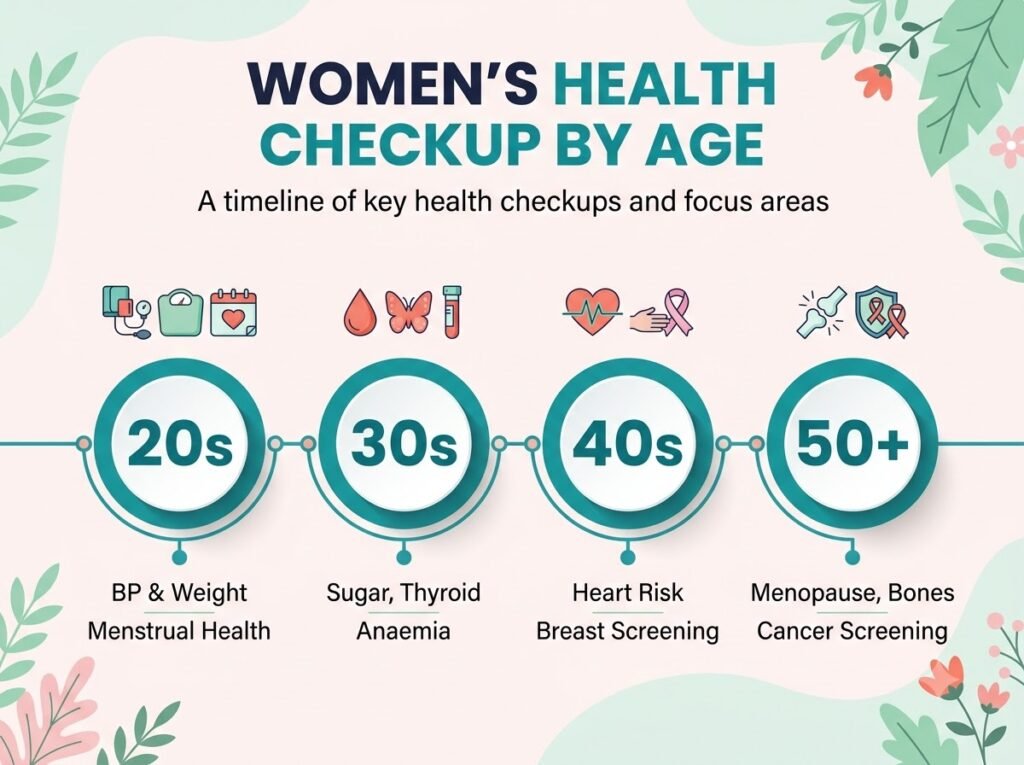
In the 20s, preventive care often focuses on establishing healthy habits and identifying concerns early. A routine visit may include blood pressure, weight, lifestyle review, vaccination status and discussion of menstrual, sexual or reproductive health.
Additional tests may be appropriate when there are symptoms such as persistent fatigue, very heavy or irregular periods, pelvic pain, unusual vaginal bleeding, abnormal discharge, breast changes or concerns about fertility. Depending on the situation, a doctor may request a CBC, pregnancy test, thyroid testing, iron studies, ultrasound or other focused evaluation.
Cervical screening recommendations vary by country and programme. Women should follow the screening guidance used by their doctor or local health service rather than self-ordering repeated tests.
Women’s Health Checkup in the 30s
During the 30s, diabetes, cholesterol, thyroid problems, anaemia and reproductive health concerns may become more relevant for some women. Screening should be individualised rather than based only on age.
Women who are planning pregnancy may need preconception counselling. This can include review of medicines, vaccinations, nutrition, previous pregnancy history and conditions such as diabetes or thyroid disease. A doctor may recommend selected blood tests based on personal risk rather than ordering every available test.
Women with a history of gestational diabetes, high blood pressure during pregnancy, polycystic ovary syndrome, premature menopause or a strong family history of heart disease may need a more personalised follow-up plan.
Women’s Health Checkup in the 40s
In the 40s, cardiovascular risk assessment becomes increasingly important. Blood pressure, blood sugar, cholesterol, weight, physical activity, sleep, tobacco exposure and family history should be reviewed together.
Breast cancer screening decisions should consider age, personal history and risk level. For women at average risk, many guidelines discuss starting mammography around age 40 to 50, with the interval decided through shared discussion. Women with a strong family history or known genetic risk may need an earlier or different plan.
A new breast lump, nipple discharge, skin change, persistent focal pain or a change that does not settle should be evaluated promptly. Screening tests are not substitutes for assessment of a symptom.
Women’s Health Checkup After 50
After 50, continued assessment of blood pressure, diabetes, cholesterol, kidney health, bone health and cancer screening may be relevant. Menopause-related symptoms such as hot flashes, sleep disturbance, vaginal dryness, mood changes and urinary symptoms can also be discussed.
Bone health assessment may be considered when there are risk factors such as low body weight, previous fracture, long-term steroid use, early menopause or other medical conditions. A bone density scan is not automatically necessary for every woman at the same age, so the decision should be based on clinical risk.
Women should continue age-appropriate breast and cervical screening according to local guidance. Screening intervals may change after previous abnormal results, surgery, immune problems or other high-risk conditions.
Cervical Cancer Screening: Pap Test and HPV Testing
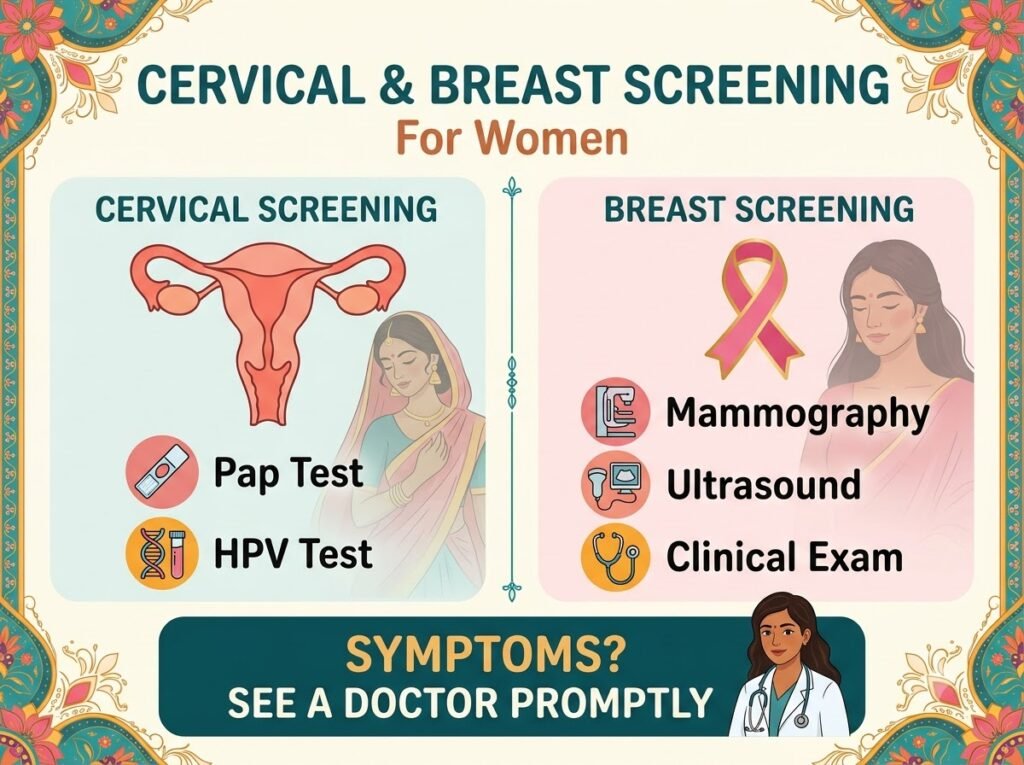
Cervical screening looks for high-risk HPV infection or cell changes that could become cancerous. It is different from a test ordered because of symptoms such as bleeding after sex, bleeding between periods or unusual discharge.
The World Health Organization states that adult women should undergo periodic cervical cancer screening and that screening should be linked to appropriate follow-up and treatment when abnormalities are found. Screening methods and intervals vary by programme, age and risk. Ask a gynaecologist or local screening service which method is appropriate for you.
A previous normal result does not mean that future screening can be ignored. At the same time, screening more frequently than recommended is not necessarily beneficial and may increase unnecessary follow-up procedures.
Breast Health: Screening Versus Symptom Evaluation
Mammography, ultrasound and clinical examination may be used in different situations. The best test depends on age, breast density, symptoms and risk level.
- Screening: Testing in people without symptoms to detect disease early.
- Diagnostic evaluation: Tests performed because a lump, discharge, skin change or other concern is present.
Do not wait for a routine screening appointment if you notice a new or persistent breast change. A clinician may recommend examination followed by ultrasound, mammography or another test.
Thyroid, Iron and Vitamin Tests: When Are They Useful?
Thyroid, iron and vitamin tests are often included in women’s health packages, but they should be connected to a clinical question. TSH testing may be useful with symptoms such as unexplained weight change, palpitations, constipation, heat or cold intolerance, menstrual changes, infertility concerns or pregnancy-related monitoring.
Iron studies may be relevant with heavy periods, fatigue, hair loss, anaemia or a low haemoglobin level. Vitamin B12 or vitamin D testing may be considered when symptoms, diet, malabsorption, medicines or other risk factors make deficiency more likely. Results should be interpreted with the medical history rather than treated in isolation.
HealthPartner also provides educational guides on the thyroid function test, iron deficiency, vitamin B12 deficiency and vitamin D deficiency.
How to Prepare for a Women’s Health Checkup
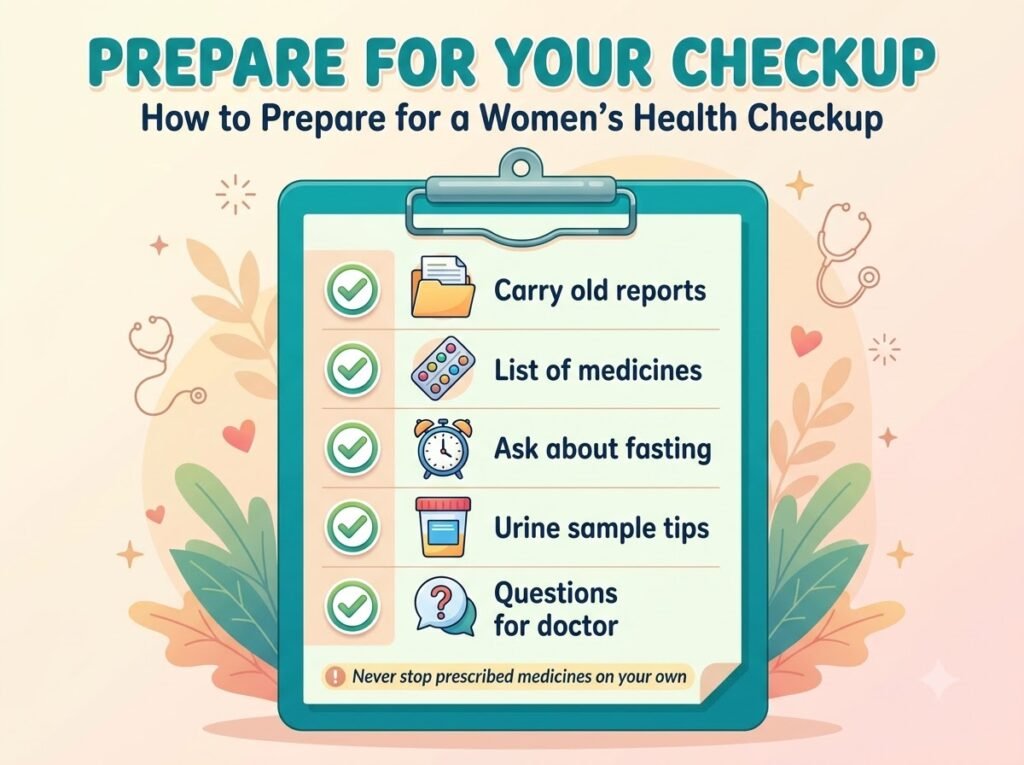
Preparation depends on the tests ordered. Some blood tests may not require fasting, while others may be performed after a defined fasting period. Confirm the instructions with the laboratory before the appointment.
- Carry previous reports and a list of medicines or supplements.
- Tell the doctor if you are pregnant, trying to conceive or breastfeeding.
- Ask whether any medicine should be taken as usual on the day of testing.
- For urine tests, follow the collection instructions carefully.
- Do not stop prescribed medicines or take high-dose supplements only to change a test result unless your clinician advises it.
When Should You Speak With a Doctor Promptly?
Arrange medical evaluation for a new breast lump, abnormal vaginal bleeding, severe pelvic pain, fainting, chest pain, breathlessness, sudden weakness, very heavy bleeding, persistent fever, unexplained weight loss or symptoms that are worsening.
Emergency symptoms should be assessed through local emergency services rather than waiting for a routine health package or home collection appointment.
Frequently Asked Questions
Is a women’s health package necessary every year?
Not necessarily. Some people benefit from regular preventive reviews, while others need targeted tests based on age, symptoms and risk factors. A clinician can help decide which tests are appropriate.
Which blood tests are commonly included?
Common options include CBC, blood glucose or HbA1c, lipid profile and selected kidney, liver or thyroid tests. The exact list should match the person’s health needs.
Can a health package detect all diseases?
No. A package is not a complete guarantee of health. Some conditions require a clinical examination, imaging, specialist assessment or repeated testing.
Should women test thyroid hormones without symptoms?
Thyroid testing may be useful in selected situations, including pregnancy, fertility concerns, relevant symptoms or certain risk factors. Routine testing should follow a clinician’s advice.
Is a Pap test the same as a general pelvic examination?
No. A Pap test is a cervical screening test. A pelvic examination and symptom evaluation may involve additional assessment.
Can tests be done during menstruation?
It depends on the test. Some blood tests can be done during a period, but certain urine or cervical samples may need specific timing. Ask the laboratory or clinician.
What if one test result is abnormal?
An abnormal result does not always confirm a disease. It may require repeat testing, additional tests or clinical review.
Final Takeaway
A womens health checkup should be personalised rather than based on the biggest available package. Regular review of blood pressure, blood sugar, cholesterol and symptoms can support prevention, while cervical and breast screening should follow age- and risk-appropriate guidance. Discuss symptoms, pregnancy plans, family history and previous reports with a qualified healthcare professional before deciding which tests you need.
🔗 Related Reading
- Health Checkup After 30: Which Tests Should You Consider?
- Full Body Health Checkup: What’s Included, Who Needs It & Cost
- PCOS Tests: Blood Tests, Ultrasound, AMH & How Diagnosis Works
- Blood Pressure Range: Normal, High & Low BP Levels
📚 External References
- World Health Organization: Screening for cervical cancer
- World Health Organization: Cervical Cancer Elimination Initiative
- Women’s Preventive Services Guidelines
- CDC: Women’s Health
Medical References
Screening recommendations depend on age, symptoms, pregnancy status, family history and individual risk. A clinician can help decide which tests are appropriate; a broad check-up panel is not necessary for everyone.
- WHO — Cervical Cancer
- NHS — Breast Cancer Screening
- NHS — Contraception and Reproductive Health Information
⚕️ Medical Disclaimer
This article is for general education only and does not provide a diagnosis, treatment plan or personal medical advice. Test requirements and screening intervals may vary by age, symptoms, pregnancy status, family history and local clinical guidance. Please consult a qualified doctor for individual advice.
Need Help With Health Tests?
HealthPartner India can help you understand available online healthcare options through Tata 1mg where offered. Medicine-order and lab-test services depend on location, availability and the provider’s current terms. Contact us on WhatsApp to ask about the next steps.
Send your prescription or test requirement on WhatsApp: +91 93479 68950
Follow HealthPartner India: