
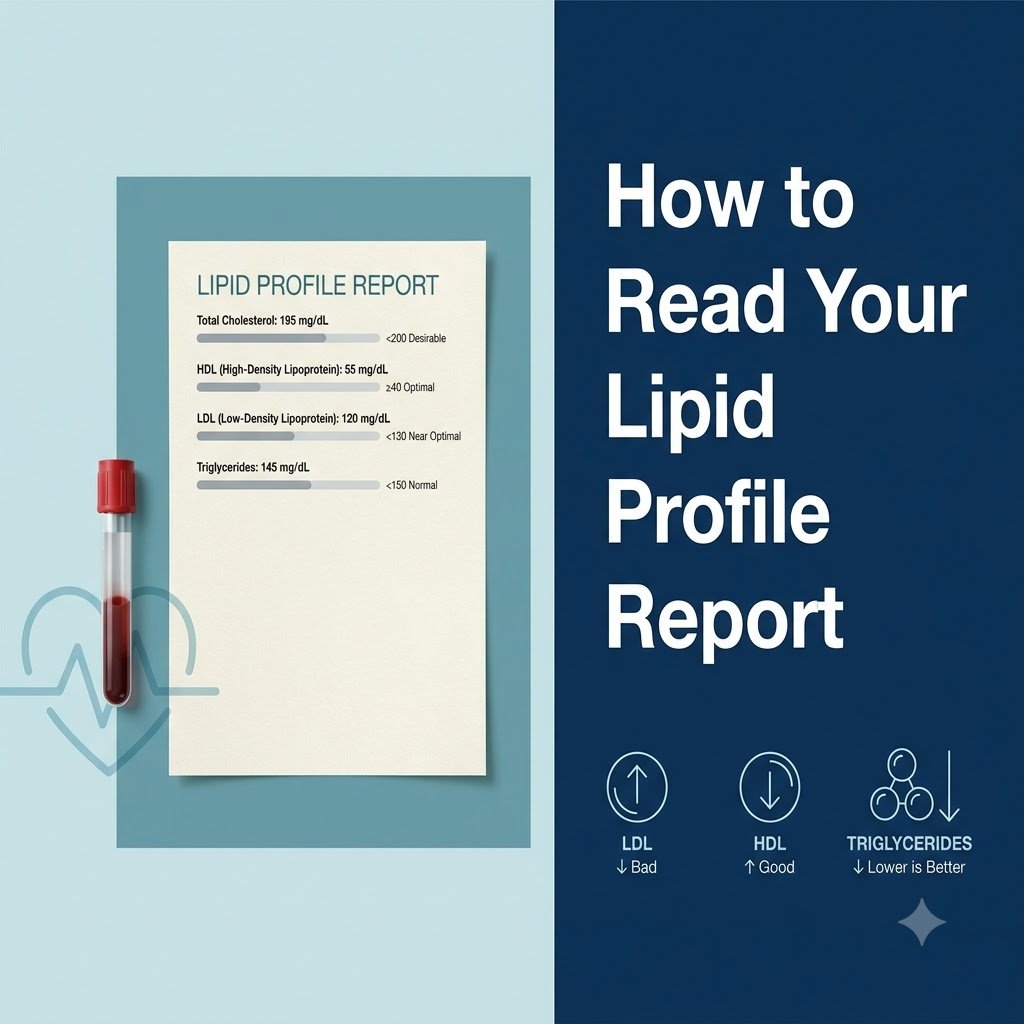
Got a lipid profile report with numbers such as LDL, HDL, triglycerides and total cholesterol and are unsure what they mean? You are not alone. A lipid profile is a common blood test used to assess cholesterol and other blood fats, but the report can be difficult to understand without context.
Knowing how to read lipid profile report values correctly makes the numbers far less intimidating. This guide walks through the main values in a lipid profile report, commonly used reference ranges, fasting considerations and what you should do when a result is outside the laboratory range. If your report shows elevated LDL or total cholesterol, our companion guide on high cholesterol symptoms, causes and treatment explains what those numbers mean in more depth.
Important: Reference ranges can vary by laboratory and personal treatment targets can be different from population reference ranges. Use your own lab report and your doctor’s advice when interpreting results.
Lipid Profile Quick Summary
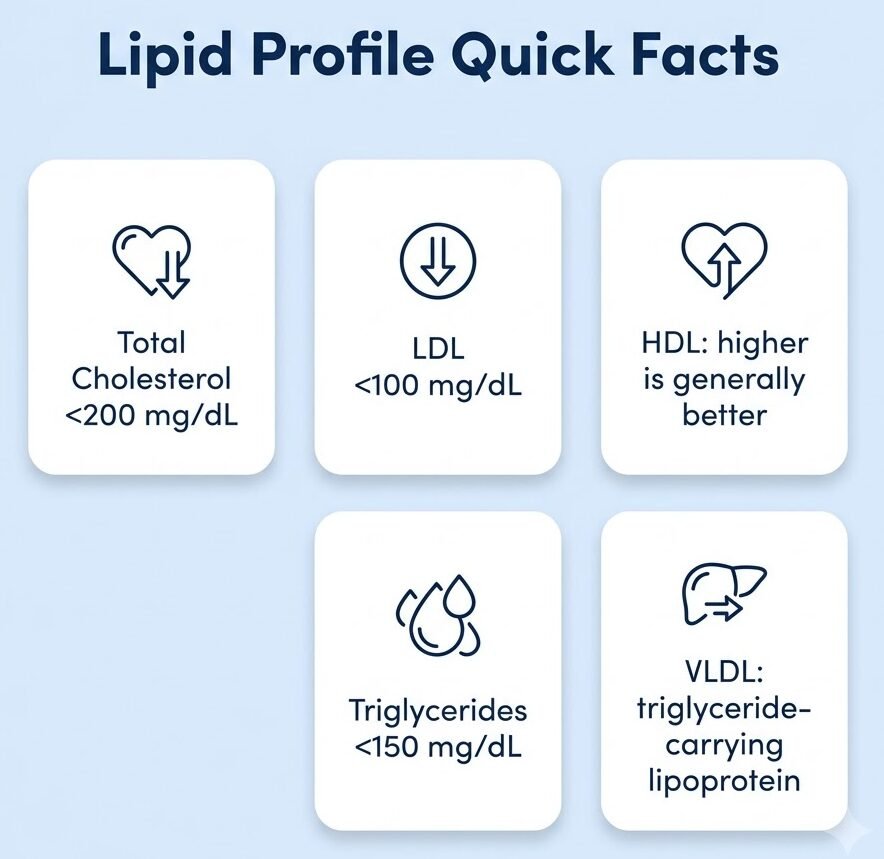
| Parameter | What it measures | Commonly used reference point |
|---|---|---|
| Total cholesterol | Overall amount of cholesterol in blood | Below 200 mg/dL is generally desirable |
| LDL cholesterol | Low-density lipoprotein cholesterol | Below 100 mg/dL is generally optimal |
| HDL cholesterol | High-density lipoprotein cholesterol | Higher levels are generally better; low HDL can be a risk factor |
| Triglycerides | Main form of fat stored in the body | Below 150 mg/dL is generally desirable |
| VLDL | Lipoproteins that carry triglycerides | Often reported as an estimated value |
What Is a Lipid Profile Test?
A lipid profile, also called a lipid panel or cholesterol test, measures several fats and cholesterol-related markers in the blood. It commonly includes total cholesterol, LDL cholesterol, HDL cholesterol and triglycerides; some reports also include VLDL, non-HDL cholesterol or cholesterol ratios.
Lipid testing is used to help assess cardiovascular risk and to monitor people who already have abnormal cholesterol or are receiving cholesterol-lowering treatment. High cholesterol usually does not cause noticeable symptoms, which is why blood testing is important. Many full-body checkup packages combine a lipid profile with a kidney function test and a liver function test to give a broader picture of overall health.
How to Read Lipid Profile Report Values
1. Total Cholesterol
Total cholesterol gives an overall measure of cholesterol in the blood. A commonly used classification is:
| Category | Total cholesterol |
|---|---|
| Desirable | Below 200 mg/dL |
| Borderline high | 200–239 mg/dL |
| High | 240 mg/dL or above |
Total cholesterol should not be interpreted alone. LDL, HDL, triglycerides and your overall cardiovascular risk are also important.
2. LDL Cholesterol
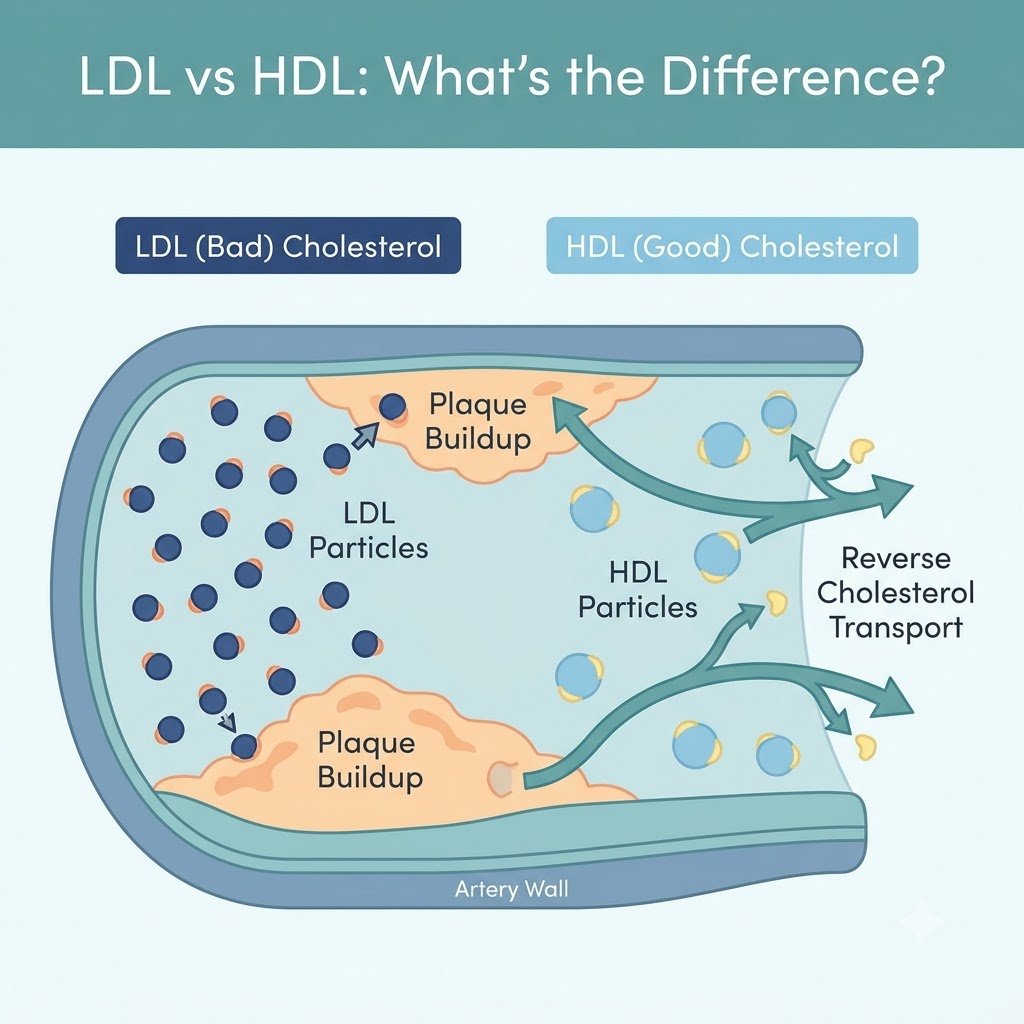
LDL stands for low-density lipoprotein. It is often called “bad cholesterol” because higher LDL levels are associated with cholesterol buildup in artery walls.
| Category | LDL cholesterol |
|---|---|
| Optimal | Below 100 mg/dL |
| Near optimal | 100–129 mg/dL |
| Borderline high | 130–159 mg/dL |
| High | 160–189 mg/dL |
| Very high | 190 mg/dL or above |
Your personal LDL goal can be substantially lower if you have established cardiovascular disease or other high-risk conditions. Do not choose a treatment target from a generic table alone.
3. HDL Cholesterol
HDL stands for high-density lipoprotein. It helps transport cholesterol back toward the liver for processing.
In general, low HDL is associated with higher cardiovascular risk. Common reference points are below 40 mg/dL in men and below 50 mg/dL in women as low levels, while 60 mg/dL or above is often considered favourable.
4. Triglycerides
Triglycerides are a type of fat in the blood. Elevated levels can occur with excess calorie intake, obesity, diabetes or insulin resistance, alcohol use and other conditions.
| Category | Triglycerides |
|---|---|
| Normal | Below 150 mg/dL |
| Borderline high | 150–199 mg/dL |
| High | 200–499 mg/dL |
| Very high | 500 mg/dL or above |
Very high triglycerides need prompt medical attention because they can be associated with pancreatitis risk.
5. VLDL Cholesterol
VLDL means very-low-density lipoprotein. It is involved in transporting triglycerides through the bloodstream. Some laboratories calculate rather than directly measure VLDL, so the value and reference interval should be interpreted according to the report.
6. Non-HDL Cholesterol and Ratios
Some lipid reports include non-HDL cholesterol or a total-cholesterol-to-HDL ratio. These can provide additional information, but treatment decisions should be based on the complete clinical picture rather than one ratio.
Do You Need to Fast Before a Lipid Profile?
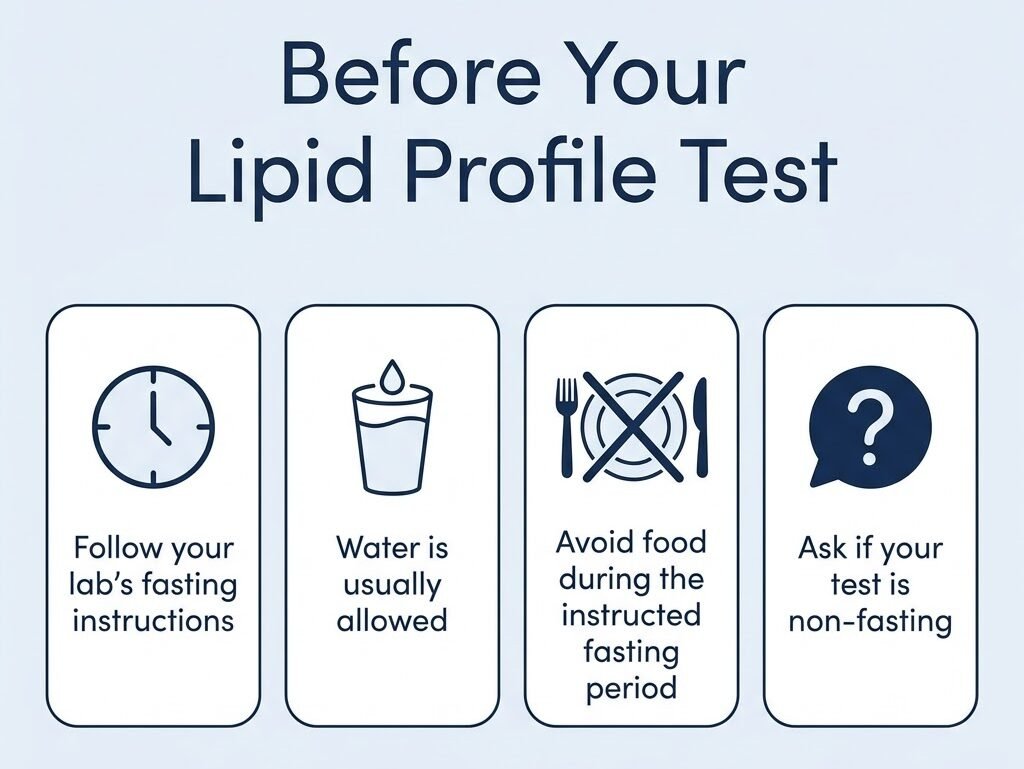
Fasting is not required for every lipid test. Many laboratories and clinicians still request fasting when triglycerides need a clearer assessment or when the test is bundled with other fasting investigations.
If your lab or doctor has specifically instructed you to fast, follow those instructions. Water is usually permitted, but follow the preparation instructions given by the testing laboratory.
What If Your Lipid Profile Is Abnormal?
An abnormal value does not automatically mean that you have heart disease. Your result may need to be repeated or interpreted alongside blood pressure, diabetes status, smoking history, family history, medications and other cardiovascular risk factors.
Common next steps may include:
- reviewing diet and physical activity;
- checking blood glucose or an HbA1c test when appropriate;
- reviewing thyroid or other medical conditions that can affect lipids;
- repeating the lipid profile when advised;
- discussing medication when cholesterol levels or overall cardiovascular risk are high.
Do not start, stop or change cholesterol medication based only on an online article.
Lifestyle Habits That Can Help
Depending on your medical situation, helpful habits can include:
- reducing trans fats and limiting excess saturated fat;
- eating more fibre-rich foods such as oats, beans, lentils, vegetables and fruit;
- maintaining a healthy weight;
- exercising regularly;
- avoiding tobacco;
- limiting alcohol;
- managing diabetes and blood pressure.
Who May Need a Lipid Profile?
Testing may be considered as part of routine cardiovascular risk assessment and is especially important for people with diabetes, high blood pressure, obesity, a strong family history of premature cardiovascular disease or known cholesterol abnormalities.
Lipid Profile Test Cost in India
Lipid profile prices vary by city, laboratory, and the number of parameters included (some panels add non-HDL cholesterol or ratios). Because prices and home-collection availability change frequently, it’s best to confirm the current price and included parameters before booking rather than relying on a number you saw online.
HealthPartner India works with trusted diagnostic partners — including Tata 1mg, PharmEasy, Netmeds and Torus Health — so you don’t have to compare prices and availability yourself. Message us on WhatsApp with your city and the test you need, and we’ll check the current options with our partners and help you book, including home sample collection where available.
WhatsApp: +91 93479 68950
We are proud to partner with Tata 1mg, PharmEasy, Netmeds and Torus Health to help our customers access diagnostic testing.
Medical Disclaimer
This article is for general educational and informational purposes only and does not constitute medical advice, diagnosis or treatment. The reference ranges mentioned are indicative and can vary by laboratory, testing method, age, sex and individual health status — always rely on the range printed on your own report. This content should not be used to self-diagnose or to start, stop or change any treatment, and it is not a substitute for consultation with a qualified physician or laboratory specialist. If you are experiencing a medical emergency, call your local emergency number or go to the nearest hospital immediately. HealthPartner India is a healthcare assistance service; we help customers access and book diagnostic tests through our partner network but do not provide medical diagnosis or treatment.
FAQ
What is a lipid profile test?
A lipid profile is a blood test that measures cholesterol and other blood fats, commonly including total cholesterol, LDL, HDL and triglycerides.
What is the normal range for a lipid profile?
Common reference points include total cholesterol below 200 mg/dL, LDL below 100 mg/dL and triglycerides below 150 mg/dL. Your laboratory range and personal treatment targets may differ.
Do I need to fast before a lipid profile?
Not always. Follow the preparation instructions from your doctor or laboratory, especially if fasting has been requested.
What does high LDL mean?
Higher LDL is associated with cholesterol buildup in artery walls and increased cardiovascular risk. The significance depends on the person’s overall risk.
Can cholesterol improve with lifestyle changes?
Lifestyle changes can improve cholesterol and triglycerides for many people, although some people also need medication.
HealthPartner CTA
Want help booking a lipid profile test? Message HealthPartner India on WhatsApp with your city and preferred date, and we’ll check availability and pricing with our diagnostic partners and place the booking on your behalf.
HealthPartner India books your test through our partner network — including Tata 1mg, PharmEasy, Netmeds and Torus Health — on your behalf; test availability, pricing, sample collection and fulfilment depend on the selected partner.