
Blood pressure is one of the simplest health measurements, but a reading such as 120/80, 130/80, 140/90 or 90/60 can be confusing.
So, what is the normal blood pressure range?
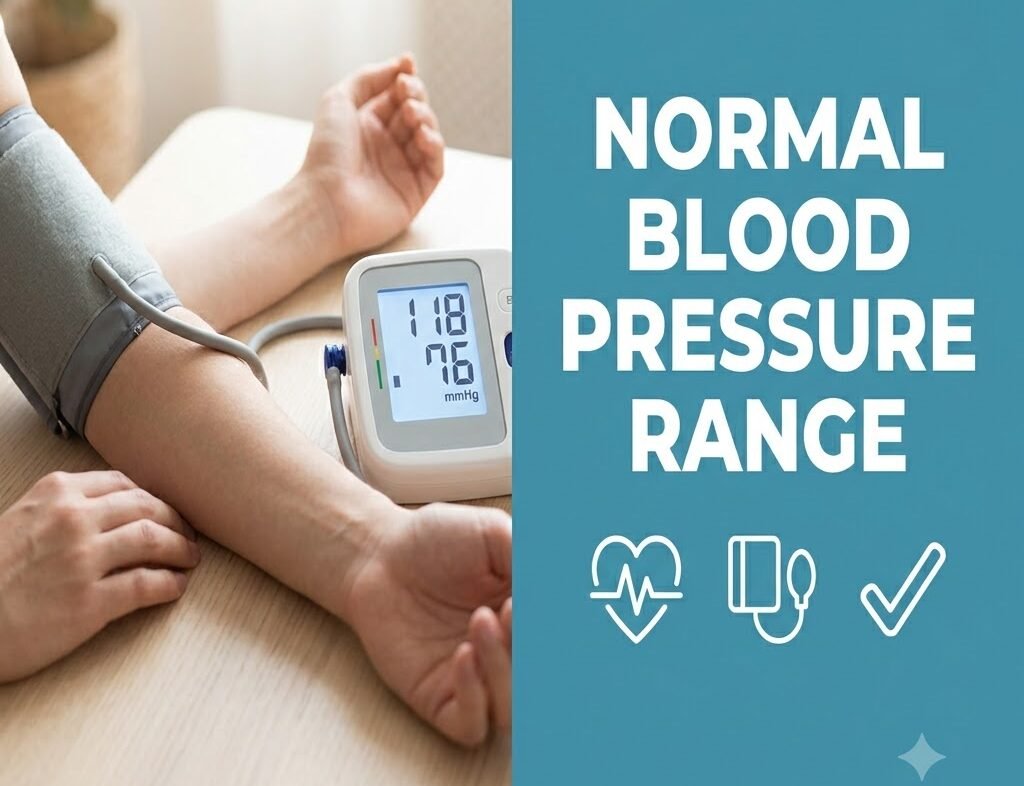
For adults, a blood pressure below 120/80 mmHg is classified as normal under the American Heart Association’s current categories. A persistent reading of 140/90 mmHg or higher meets the World Health Organization’s definition of hypertension when confirmed on different days. A reading around 90/60 mmHg or lower may be considered low blood pressure, especially when it causes symptoms.
But one blood pressure reading does not always tell the whole story. This guide explains blood pressure ranges, systolic and diastolic numbers, high and low BP, 120/80 and 140/90 readings, symptoms, causes, and how to measure blood pressure correctly at home.
Quick Answer: What Is a Normal Blood Pressure Range?
| Blood Pressure Reading | General Category | What It Means |
|---|---|---|
| Below 120/80 mmHg | Normal | Generally considered a healthy range |
| 120–129 and below 80 | Elevated | Higher than ideal but not hypertension |
| 130–139 or 80–89 | Stage 1 hypertension* | Above the normal range under AHA categories |
| 140 or higher, or 90 or higher | Stage 2 hypertension* | High blood pressure |
| Above 180 and/or above 120 | Severe hypertension | Requires prompt attention |
| 90/60 or lower | Low BP / hypotension | May be normal for some people but can be concerning if symptoms occur |
*Blood pressure classification systems differ. The WHO defines hypertension in adults as 140/90 mmHg or higher when confirmed on two different days, while the AHA categories classify 130–139 systolic or 80–89 diastolic as Stage 1 hypertension, and 140/90 or higher as Stage 2 hypertension.
One reading alone is never enough to diagnose anything — high, low or normal readings should be confirmed with repeat measurements before drawing conclusions.
What Is Blood Pressure?
Blood pressure is the force of blood pushing against the walls of your arteries as the heart pumps blood around the body. A blood pressure reading has two numbers:
1. Systolic blood pressure — the top number. It measures the pressure in your arteries when your heart contracts and pumps blood. In 120/80 mmHg, 120 is the systolic pressure.
2. Diastolic blood pressure — the bottom number. It measures the pressure in your arteries when your heart relaxes between beats. In 120/80, the 80 is the diastolic pressure.
Blood pressure is measured in millimetres of mercury (mmHg).
Blood Pressure Range Chart for Adults
| Category | Systolic | Diastolic |
|---|---|---|
| Normal | Less than 120 | Less than 80 |
| Elevated | 120–129 | Less than 80 |
| Stage 1 hypertension | 130–139 | 80–89 |
| Stage 2 hypertension | 140 or higher | 90 or higher |
| Severe hypertension | Higher than 180 | And/or higher than 120 |
The AHA uses these categories for adults. Diagnosis should not be made from a single home reading alone. For a closer look at how your BP target may shift with age, see our blood pressure by age guide below.
Is 120/80 Blood Pressure Normal?
Yes. A reading of 120/80 mmHg is commonly described as a normal or healthy reference reading. However, under the AHA’s current categories, normal is technically below 120 systolic and below 80 diastolic.
So:
- 119/79 → normal
- 120/80 → commonly considered a healthy reference reading, but technically at the threshold for elevated depending on which number is used
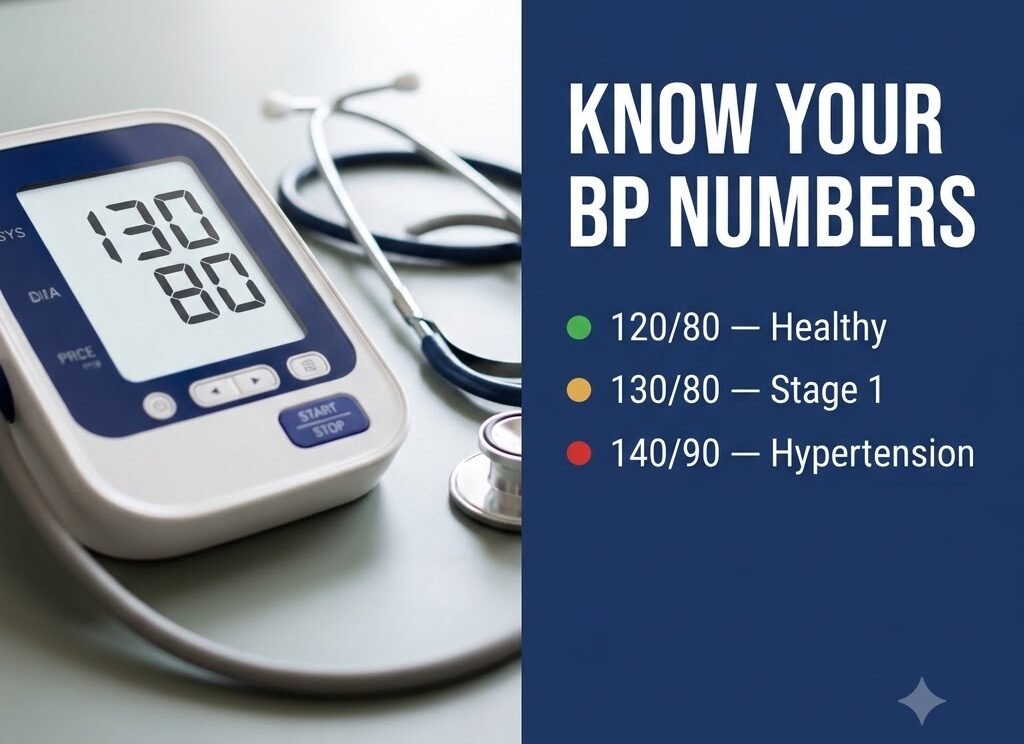
- 130/80 → Stage 1 hypertension under AHA categories
- 140/90 → hypertension under WHO criteria when persistent and confirmed on different days
This is why it is important not to judge your health based on one number alone.
What Does 130/80 Blood Pressure Mean?
A blood pressure reading of 130/80 mmHg is an important borderline reading. Under the AHA classification, 130–139 systolic OR 80–89 diastolic = Stage 1 hypertension. However, the WHO defines clinical hypertension in adults at 140/90 mmHg or higher, confirmed on two different days.
Therefore, a single 130/80 reading does not automatically mean you have hypertension. Your doctor may consider repeated readings, your overall cardiovascular risk, diabetes, kidney disease, previous cardiovascular disease and other factors when deciding what your target should be.
What Does 140/90 Blood Pressure Mean?
The WHO defines hypertension in adults as 140/90 mmHg or higher when confirmed on two different days. If you repeatedly get readings around 140/90 or higher, speak with a healthcare professional.
What Does 90/60 Blood Pressure Mean?
A reading of 90/60 mmHg or lower is generally considered low blood pressure, also called hypotension. However, low blood pressure is not automatically dangerous — some people naturally have lower readings and feel completely well.
It becomes more concerning when low BP causes symptoms such as:
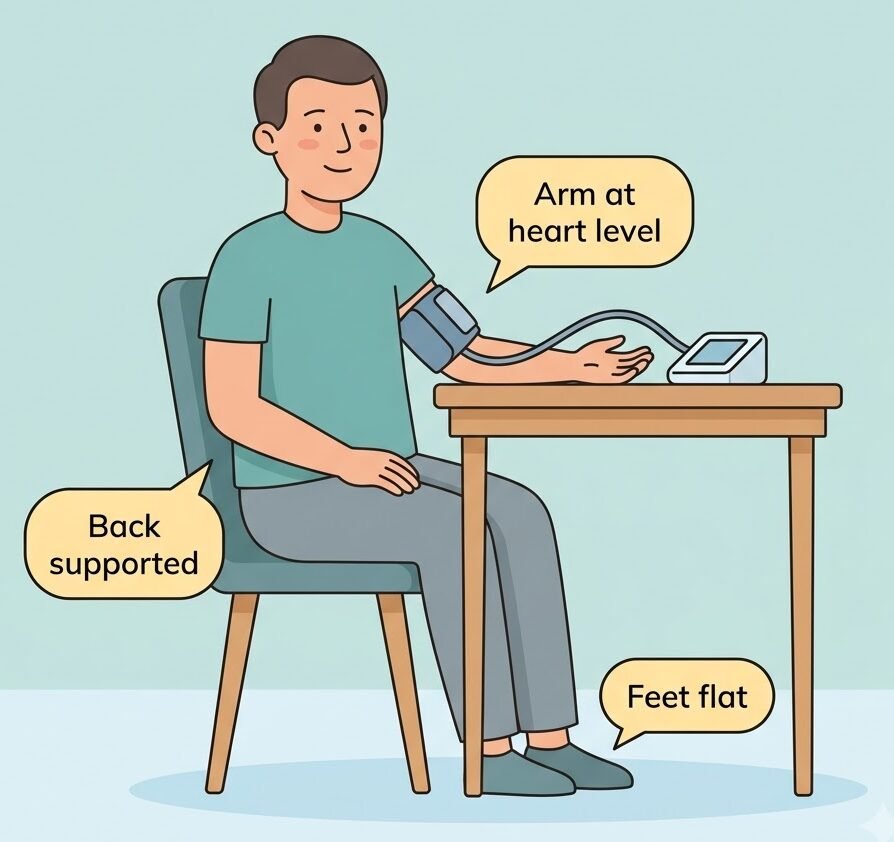
- Dizziness
- Light-headedness
- Fainting
- Weakness (this can overlap with iron deficiency symptoms — worth ruling out if fatigue and weakness are frequent)
- Blurred vision
- Confusion
- Nausea
MedlinePlus notes that low blood pressure can be normal for some people, while symptoms may indicate a problem requiring evaluation.
Blood Pressure in India: Why It Matters
Hypertension is a growing concern in India, driven largely by well-established modifiable risk factors: high-sodium diets, physical inactivity, rising rates of overweight and obesity, tobacco and alcohol use, and stress. It’s often called a “silent” risk because most people with high blood pressure feel no different — the only way to know your numbers is to measure them regularly rather than assume you’re fine.
Managing these everyday risk factors — reducing salt, staying active, maintaining a healthy weight, and getting BP checked periodically rather than only when unwell — remains the most effective way to catch problems early, in line with WHO’s global guidance on hypertension prevention.
Blood Pressure by Age: Is There One Normal Range? {#blood-pressure-by-age}
A common search is “blood pressure by age.” But there isn’t one simple table saying that every person of a particular age must have a specific blood pressure. For adults, commonly used blood pressure categories are based on the actual systolic and diastolic readings rather than assigning a completely different “normal” range to every age group.
Blood pressure can also be affected by age, family history, weight, physical activity, diet, stress, smoking, alcohol, medicines, kidney health, heart health, and other medical conditions.
Children and teenagers have different blood-pressure assessment methods, so adult ranges should not automatically be applied to children.
What Is High Blood Pressure?
High blood pressure is also called hypertension. It occurs when blood pressure remains higher than recommended over time. According to WHO, hypertension in adults is defined as 140/90 mmHg or higher, confirmed by measurements taken on two different days.
High blood pressure is sometimes called a “silent” condition because many people have no noticeable symptoms. The only reliable way to know your blood pressure is to measure it.
High Blood Pressure Symptoms
Many people with high blood pressure do not have symptoms at all — this is one of the most common misconceptions about hypertension, and one reason regular blood pressure checks matter more than waiting to “feel” unwell.
Very high blood pressure can sometimes be associated with symptoms such as:
- Severe headache
- Chest pain
- Shortness of breath
- Vision changes
- Weakness or numbness
- Difficulty speaking
These symptoms should not be ignored, especially when blood pressure is extremely high.
What Causes High Blood Pressure?
Several factors can increase the risk of high blood pressure:
- Unhealthy diet — a diet high in sodium and low in fruits and vegetables can increase risk.
- Physical inactivity — regular physical activity can help maintain healthier blood pressure.
- Excess weight — being overweight or having obesity can increase the risk.
- Family history — high blood pressure can run in families.
- Smoking and tobacco — tobacco use can damage blood vessels and increase cardiovascular risk.
- Alcohol — excessive alcohol consumption can contribute to high blood pressure.
- Age — the risk of hypertension generally increases with age.
- Kidney and other health conditions — certain kidney, hormonal and cardiovascular conditions can contribute to hypertension.
WHO lists factors including older age, genetics, overweight/obesity, physical inactivity, high-salt diets and alcohol use among important risk factors.
What Is Low Blood Pressure?
Low blood pressure is called hypotension. A reading around 90/60 mmHg or lower may be considered low, but the number alone isn’t enough to determine whether it is a medical problem. For some people, lower blood pressure is normal; for others, a sudden drop can cause symptoms or indicate an underlying problem.
Low Blood Pressure Symptoms
Possible symptoms include dizziness, light-headedness, fainting, blurred vision, weakness, confusion, nausea, and feeling unusually tired. If you repeatedly experience these symptoms — especially fainting or severe weakness — seek medical evaluation.
How to Measure Blood Pressure at Home
To get a more accurate reading:
Step 1: Rest first — Sit quietly for at least 5 minutes before taking the measurement.
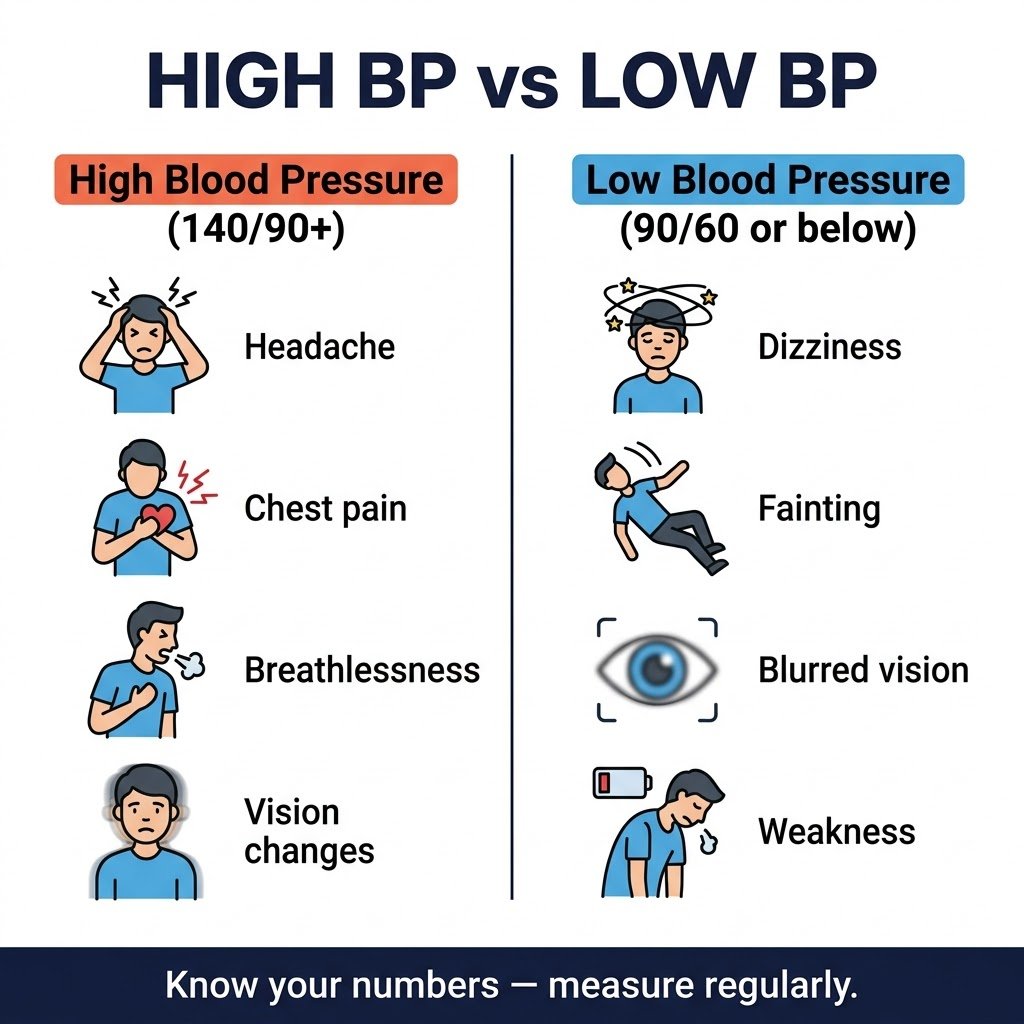
Step 2: Sit correctly — Keep your back supported, both feet flat on the floor, legs uncrossed.
Step 3: Position your arm — Rest the arm with the cuff on a table so it is approximately at chest/heart level.
Step 4: Use the cuff correctly — Place the cuff directly on your bare skin rather than over clothing. The cuff should fit correctly.
Step 5: Don’t talk — Remain quiet and still while the machine is measuring.
Step 6: Take multiple readings — The CDC recommends taking at least two readings, 1–2 minutes apart, and recording them.
Avoid caffeine, smoking and exercise for about 30 minutes before measurement, as these can affect the reading. For a step-by-step walkthrough with photos, Tata 1mg’s home BP guide is a useful companion reference.
Which arm should you use? The first few times you measure, check both arms about two minutes apart. If one arm consistently reads higher, use that arm for future readings — there’s no general rule that the left arm is more accurate; either arm is fine as long as you’re consistent.
Best time to check: Measuring once in the morning (before medicines, food or exercise) and once in the evening gives a more reliable picture than a single reading, especially in the first week of monitoring.
Which Blood Pressure Machine Is Best?
If you monitor your blood pressure at home, accuracy matters. A validated upper-arm blood pressure monitor (also called a BP machine, BP instrument or BP apparatus) is generally preferred for home monitoring over wrist devices. Do not choose a device simply because it is cheap or has many features — look for one that has been independently validated for clinical accuracy and use the correct cuff size. You can also discuss your home monitor with your healthcare professional and compare its readings with measurements taken in a clinical setting.
What Is Ambulatory Blood Pressure Monitoring?
Ambulatory blood pressure monitoring (ABPM) involves wearing a blood pressure device that automatically measures your blood pressure at different times over an extended period, usually during normal daily activities and sleep. It can provide a more complete picture than a single measurement in a clinic, and may help healthcare professionals understand differences between blood pressure readings taken at home and those taken in a medical setting.
How to Lower Blood Pressure
If your blood pressure is consistently high, lifestyle changes can help. Depending on your individual health, your doctor may recommend:
- Reducing excess salt intake
- Eating more vegetables and fruits
- Maintaining a healthy weight
- Regular physical activity
- Avoiding tobacco
- Limiting alcohol
- Managing stress
- Taking prescribed medicines correctly
- Monitoring blood pressure regularly
WHO recommends healthy diet, reduced salt intake, physical activity, weight management and avoiding tobacco as important lifestyle measures. Do not stop or change prescribed blood pressure medicines without speaking with your doctor.
What Should You Do If Your Blood Pressure Is High?
One high reading does not necessarily mean you have hypertension. If your reading is unexpectedly high:
- Sit quietly.
- Check that the cuff is positioned correctly.
- Repeat the measurement after a few minutes.
- Record both readings.
- Continue monitoring as advised by your healthcare professional.
- Discuss repeated high readings with a doctor.
If your blood pressure is above 180/120 mmHg, repeat the measurement and seek prompt medical guidance. If it is above this level and you have symptoms such as chest pain, shortness of breath, weakness/numbness, vision changes or difficulty speaking, seek emergency medical care immediately.
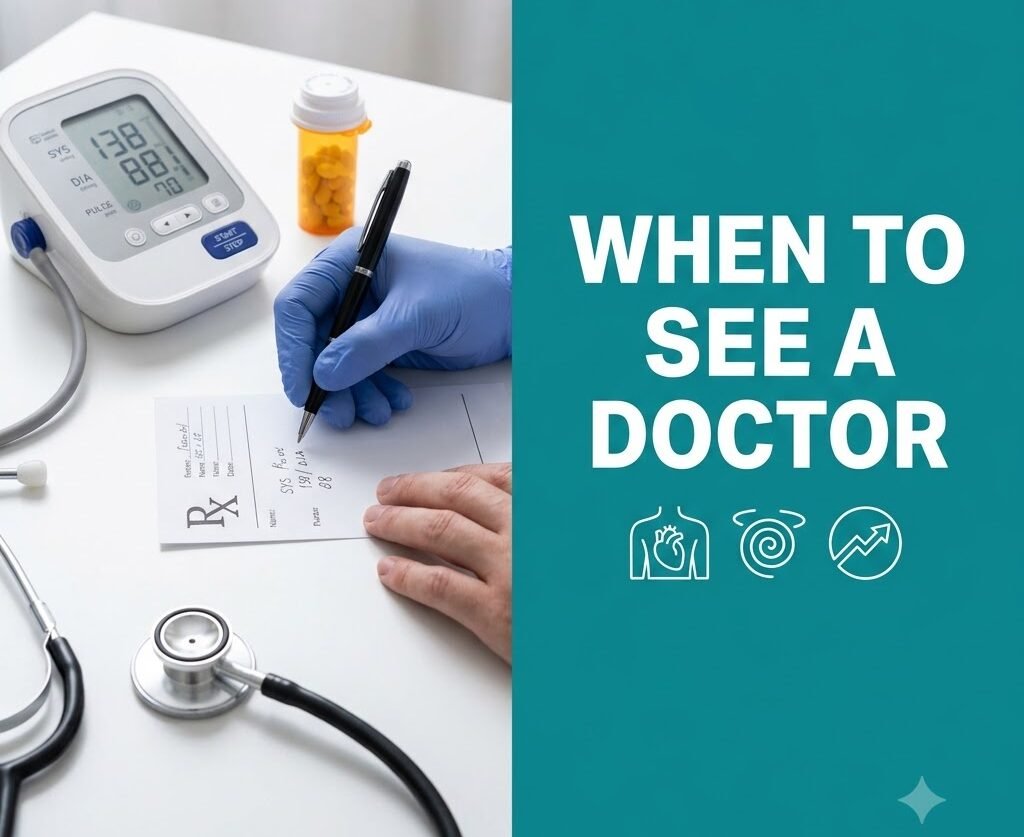
When Should You See a Doctor?
Talk to a healthcare professional if:
- Your BP is repeatedly 140/90 mmHg or higher
- Your readings are consistently above your recommended target
- Your BP is repeatedly around 90/60 or lower and you have symptoms
- You frequently feel dizzy or faint
- You experience chest pain or shortness of breath
- You are unsure how to measure your BP correctly
- You are taking BP medicines and your readings remain high or unusually low
Blood Pressure Numbers You Should Know
| Reading | What It Generally Means |
|---|---|
| 120/80 | A commonly recognized healthy reference reading, although current AHA classification technically defines normal as below 120/80 |
| 130/80 | Stage 1 hypertension under AHA categories, although WHO’s clinical hypertension threshold is 140/90 when confirmed on different days |
| 140/90 | Meets the WHO threshold for hypertension when confirmed on two different days |
| 150/100 | Clearly above the usual hypertension threshold and should be discussed with a healthcare professional if repeated |
| 160/90 | Significantly elevated and requires medical assessment if persistent |
| 170/100 | Very high and should not be ignored |
| 180/120+ | A potentially dangerous level — seek emergency medical care immediately if accompanied by concerning symptoms |
| 90/60 | May indicate low blood pressure, particularly if accompanied by dizziness, fainting or weakness |
Frequently Asked Questions
What is the normal blood pressure range? For adults, the AHA classifies normal blood pressure as less than 120/80 mmHg. WHO defines hypertension at 140/90 mmHg or higher when confirmed on different days.
Is 120/80 blood pressure normal? 120/80 is commonly considered a healthy reference reading. However, the AHA’s current categories define normal as below 120/80, so the exact classification depends on the guideline being used.
Is 130/80 blood pressure high? Under AHA categories, 130/80 falls into Stage 1 hypertension. However, one reading does not establish a diagnosis, and WHO uses 140/90 as its adult hypertension threshold when confirmed on different days.
Is 140/90 blood pressure dangerous? Repeated readings of 140/90 or higher should be medically evaluated because this meets the WHO definition of hypertension when confirmed on different days.
Is 150/100 blood pressure dangerous? A reading of 150/100 mmHg is clearly above the WHO and AHA hypertension thresholds. If it’s repeated on another occasion, it should be discussed with a healthcare professional rather than monitored alone.
Is 90/60 a low blood pressure? Yes. A reading of around 90/60 mmHg or lower is generally considered low blood pressure. It may be normal for some people but is more concerning when symptoms occur.
What are the symptoms of high blood pressure? High blood pressure often has no symptoms. Very high BP may be associated with symptoms such as chest pain, shortness of breath, weakness, vision changes or difficulty speaking.
Can blood pressure be high without any symptoms? Yes — this is common and is one reason hypertension is often called a “silent” condition. Regular measurement, not how you feel, is the reliable way to know your blood pressure.
How can I measure blood pressure at home? Sit quietly for at least five minutes, keep your back supported and feet flat, support your arm at heart level, use a properly fitted cuff, remain quiet during measurement and take at least two readings 1–2 minutes apart.
Which arm should I use to check blood pressure? Check both arms the first few times. If one arm consistently reads higher, use that arm going forward. There’s no general rule favoring the left arm — either arm is fine as long as you measure consistently.
What is the best time to check blood pressure? Checking once in the morning before medicines or food, and once in the evening, gives a more complete picture than a single reading — particularly useful in the first week of home monitoring.
How often should I check my blood pressure? If your readings are consistently normal, periodic checks (for example, weekly) are usually enough. If you have elevated or high readings, or are on BP medicines, your doctor may recommend daily monitoring — follow their specific guidance rather than a fixed rule.
How can I lower blood pressure naturally? Healthy eating, reducing excess sodium, regular physical activity, maintaining a healthy weight, avoiding tobacco, limiting alcohol and managing stress can help. People with hypertension may also need prescribed medicines.
Does blood pressure increase with age? Blood pressure patterns can change with age, but there is not one simple “normal BP by age” table that applies to every adult. Other health factors and repeated measurements are important.
What is systolic and diastolic blood pressure? Systolic pressure is the top number and represents pressure when the heart contracts. Diastolic pressure is the bottom number and represents pressure when the heart relaxes between beats.
Key Takeaways
- Blood pressure has two numbers: systolic and diastolic.
- Below 120/80 mmHg is classified as normal by the AHA.
- 130/80 falls into Stage 1 hypertension under AHA categories.
- 140/90 or higher, when confirmed on different days, meets WHO’s adult hypertension definition.
- 90/60 or lower may indicate low blood pressure, particularly when symptoms occur.
- High blood pressure often has no symptoms.
- Correct measurement technique — including checking both arms initially and testing at consistent times — is essential.
- Repeated abnormal readings should be discussed with a healthcare professional.
- A reading above 180/120 mmHg with concerning symptoms is an emergency.
Need to get your blood pressure checked or want help booking a home lab test? Chat with HealthPartner India on WhatsApp for test bookings and medicine ordering support. You can also explore our Services / How It Works page to see what home testing includes, or head back to our homepage for more health guides.