
📌 Quick Summary
| Aspect | Key Point |
|---|---|
| Main issue | Abnormal levels of cholesterol or other blood lipids |
| Symptoms | Usually no noticeable symptoms |
| Main test | Lipid profile blood test |
| Total cholesterol | 240 mg/dL or above is commonly classified as high |
| LDL | Lower is generally better, but individual targets depend on risk |
| Major concern | Long-term cardiovascular disease risk |
High cholesterol is one of those health problems that can exist without making you feel unwell.
You may have no headache, no tiredness and no obvious warning sign — yet a routine blood test may show that your LDL or total cholesterol is higher than recommended.
This is why cholesterol testing matters.
In this guide, we’ll explain high cholesterol symptoms, causes, cholesterol ranges, treatment options, lifestyle changes and the latest 2026 approach to LDL targets.
Important: Cholesterol treatment should be based on your overall cardiovascular risk and medical history, not on a single number from an online chart.
What Is High Cholesterol?
Cholesterol is a waxy substance that your body needs.
It plays an important role in:
- Cell membranes
- Hormone production
- Other normal body functions
The problem occurs when cholesterol and other blood lipids are present at unhealthy levels.
One of the most important markers is LDL cholesterol.
Higher LDL levels are associated with cholesterol buildup in artery walls, which can contribute to cardiovascular disease over time.
The broader term dyslipidemia is used when one or more blood lipid levels are abnormal, including LDL, triglycerides, HDL or other atherogenic lipoproteins.
Does High Cholesterol Have Symptoms?
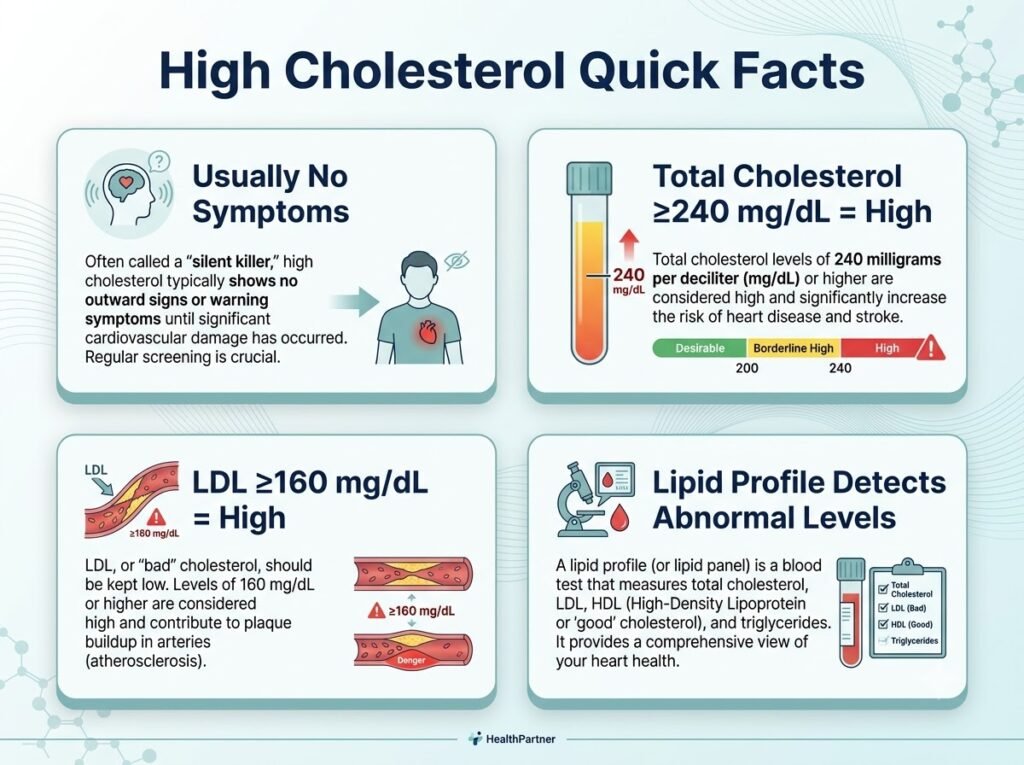
Usually, no.
High cholesterol itself generally does not cause everyday symptoms such as:
- Headache
- Tiredness
- Dizziness
- Weakness
A person can have high LDL cholesterol and feel completely normal.
This is why cholesterol is often discovered through a lipid profile blood test rather than through symptoms.
In some people with inherited conditions causing extremely high cholesterol, visible cholesterol deposits may develop around the eyes or in tendons.
These findings should be assessed by a healthcare professional rather than self-diagnosed.
What Causes High Cholesterol?
Several factors can contribute to unhealthy cholesterol levels.
Common contributors include:
- Diet high in saturated fats
- Trans fats
- Excess refined carbohydrates
- Physical inactivity
- Excess body weight
- Smoking
- Diabetes
- Hypothyroidism
- Kidney disease
- Age-related changes
- Family history
- Inherited conditions such as familial hypercholesterolemia
Some medicines and medical conditions can also affect cholesterol levels.
This means that high cholesterol is not always simply the result of eating one particular food.
Cholesterol Normal Range: What Counts as High?
Total Cholesterol
| Category | Total Cholesterol |
|---|---|
| Desirable | Below 200 mg/dL |
| Borderline high | 200–239 mg/dL |
| High | 240 mg/dL or above |
LDL Cholesterol
| Category | LDL |
|---|---|
| Optimal | Below 100 mg/dL |
| Near optimal | 100–129 mg/dL |
| Borderline high | 130–159 mg/dL |
| High | 160–189 mg/dL |
| Very high | 190 mg/dL or above |
These categories are useful for understanding a laboratory report.
However, they should not be treated as personal treatment targets.
For a complete explanation of LDL, HDL, triglycerides and VLDL, see our guide on How to Read a Lipid Profile Report.
2026 Cholesterol Guidance: Why Your LDL Target May Be Different
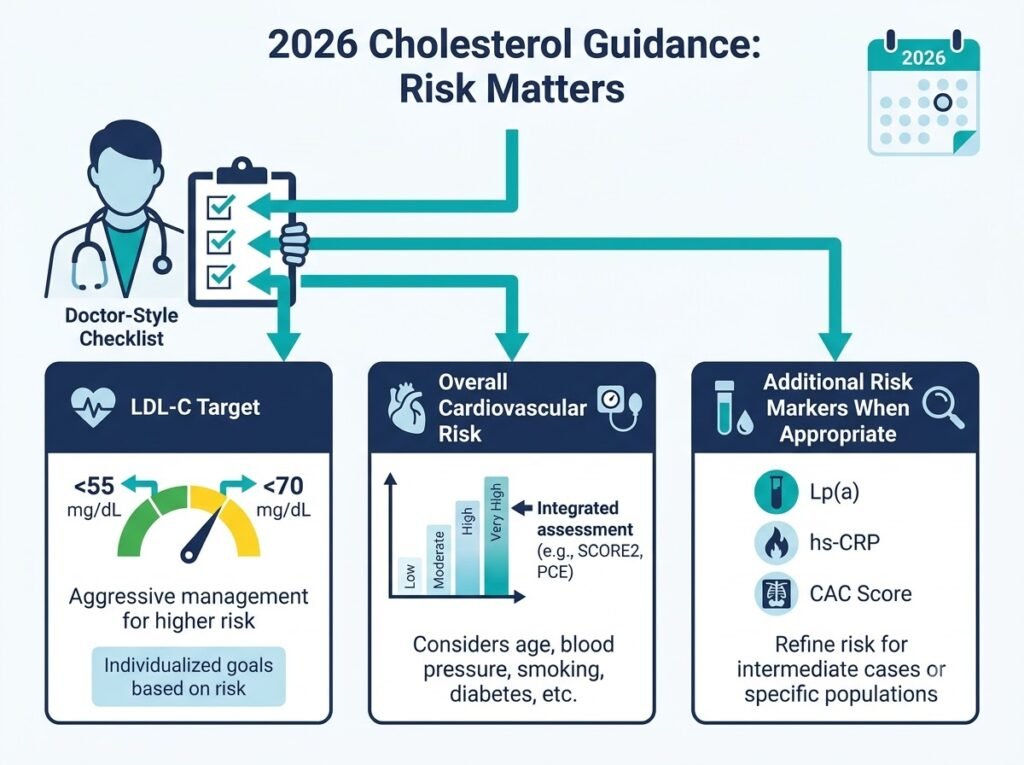
The 2026 AHA/ACC dyslipidemia guideline places greater emphasis on assessing a person’s overall cardiovascular risk rather than treating LDL as an isolated number.
The guideline brings LDL-C and non-HDL-C treatment goals back into clinical decision-making and emphasizes percentage LDL reduction as well. It also incorporates newer approaches to cardiovascular risk assessment, including the PREVENT-ASCVD equations, and gives greater attention to markers such as lipoprotein(a) and ApoB.
In simple terms:
There is no single LDL number that is right for everyone.
Your doctor may consider:
- Previous heart attack
- Previous stroke
- Diabetes
- Kidney disease
- Blood pressure
- Smoking
- Family history of premature heart disease
- Age
- Other cardiovascular risk factors
- Additional markers such as lipoprotein(a) when appropriate
People with established cardiovascular disease may have substantially lower LDL targets than people at lower risk.
This is why you should not decide on treatment based only on a generic cholesterol chart.
How Is High Cholesterol Treated?
Treatment depends on your cholesterol levels and overall cardiovascular risk.
1. Lifestyle Changes
Lifestyle changes are an important part of cholesterol management.
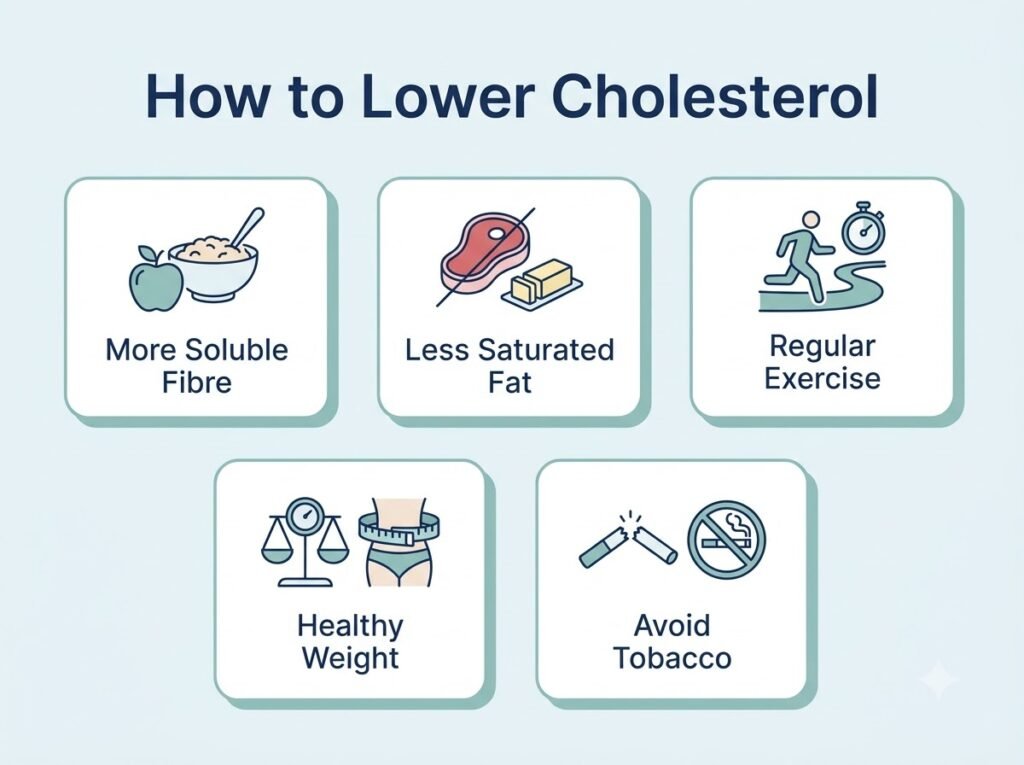
Helpful habits can include:
- Eating more soluble fibre from foods such as oats, beans and lentils
- Increasing vegetables and fruit
- Replacing saturated fats with healthier unsaturated fats
- Avoiding trans fats
- Exercising regularly
- Maintaining a healthy weight
- Avoiding tobacco
- Limiting alcohol
- Managing diabetes
- Managing blood pressure
2. Medicines
Some people need cholesterol-lowering medication in addition to lifestyle changes.
Statins remain an important first-line treatment for many people who need medication.
Other medicines may be considered when:
- LDL remains above the recommended goal
- Cardiovascular risk is high
- A person cannot tolerate a statin
- Additional LDL lowering is required
Your doctor will decide which treatment is appropriate for you.
Never start, stop or change a cholesterol medicine without medical advice.
Can You Lower Cholesterol Naturally?
Yes, lifestyle changes can improve cholesterol levels for many people.
Useful measures include:
- Eating more fibre-rich foods
- Reducing saturated fat
- Avoiding trans fats
- Exercising regularly
- Losing excess weight when appropriate
- Avoiding tobacco
- Limiting alcohol
However, “natural” does not automatically mean “enough.”
People with very high LDL levels, inherited cholesterol disorders or high cardiovascular risk may still require medication.
How Often Should Cholesterol Be Tested?
There is no single testing schedule that applies to everyone.
Your doctor may consider:
- Age
- Previous cholesterol results
- Diabetes
- Blood pressure
- Obesity
- Family history
- Previous cardiovascular disease
- Current cholesterol treatment
If you are already taking cholesterol medication, your doctor may recommend repeat testing to assess your response.
When Should You Speak to a Doctor?
Arrange medical review if:
- Your LDL is markedly elevated
- Your total cholesterol remains high
- Your triglycerides are very high
- You have diabetes
- You have high blood pressure
- You have kidney disease
- You have a strong family history of premature heart disease
- Your cholesterol remains high despite lifestyle changes
If you have symptoms suggestive of a heart attack or stroke, do not wait for a cholesterol test. Seek emergency medical care.
🧪 Need a Cholesterol Test?
HealthPartner India can help you check current cholesterol/lipid-profile test availability and pricing through our diagnostic partner network.
WhatsApp: +91 9347968950
Send your city and test requirement, and we’ll check the current options for you.
Where Can You Book a Cholesterol Test in India?
The price of a lipid profile can vary depending on:
- City
- Laboratory
- Number of parameters
- Home sample collection
- Current offers
Instead of relying on an old price listed online, confirm the current cost before booking.
HealthPartner India works with diagnostic partners including Tata 1mg, PharmEasy, Netmeds and Torus Health.
Send your requirement to us on WhatsApp and we can check current pricing and availability through our partner network.
WhatsApp: +91 9347968950
Frequently Asked Questions
What are the symptoms of high cholesterol?
Most people have no noticeable symptoms. High cholesterol is usually detected through a blood test.
What is considered high cholesterol?
Total cholesterol of 240 mg/dL or above is commonly classified as high. LDL of 160–189 mg/dL is commonly classified as high, while LDL of 190 mg/dL or above is very high.
Can high cholesterol be lowered naturally?
Lifestyle changes can improve cholesterol for many people. However, people with very high LDL or high cardiovascular risk may also need medication.
What is a good LDL level?
There is no single LDL target for everyone. Your goal depends on your overall cardiovascular risk and medical history.
Does high cholesterol cause headaches or fatigue?
High cholesterol itself usually does not cause headaches or fatigue. These symptoms can have many other causes.
Final Takeaway
High cholesterol can be difficult to detect because it often causes no symptoms.
The most important step is knowing your numbers through appropriate blood testing and understanding them in the context of your overall health.
Remember:
- High cholesterol may have no symptoms
- LDL is an important cardiovascular risk marker
- Lifestyle changes can help
- Some people need medication
- Your personal LDL goal depends on your risk
- One blood-test result should not be interpreted in isolation
Want help checking your cholesterol?
Send HealthPartner India your city and test requirement on WhatsApp.
We’ll check current availability and pricing with our diagnostic partners and help arrange the booking.
WhatsApp: +91 9347968950
Medical Disclaimer
This article is for general educational and informational purposes only and does not constitute medical advice, diagnosis or treatment. Cholesterol classifications and LDL treatment targets are general reference information and may not apply equally to every person. Your healthcare professional should interpret your results based on your cardiovascular risk, medical history and other relevant factors. Do not start, stop or change medication based on this article. Seek emergency medical care for symptoms suggestive of a heart attack or stroke.
HealthPartner India is a healthcare assistance service that helps customers access and book diagnostic tests through its partner network. We do not provide medical diagnosis or treatment.