
Kidney stones are hard deposits that can form inside the kidneys when certain minerals and salts in the urine become concentrated and crystallize. They may cause severe pain, blood in the urine, nausea, vomiting, burning during urination, or difficulty passing urine.
Doctors use a combination of urine tests, blood tests, and imaging tests to find out whether a kidney stone is present, where it is located, how large it is, and whether it is causing blockage or other complications.
This guide explains the commonly used kidney stone tests, including urine tests, ultrasound, X-ray, CT scan, blood tests, and stone analysis.
📌 Quick Summary
| Kidney Stone Test | What It Helps Detect |
|---|---|
| Urine Routine Test | Blood, crystals, pH and signs of infection |
| Urine Culture | Bacteria when a urinary infection is suspected |
| 24-Hour Urine Test | Factors that may increase the risk of repeated stones |
| Blood Tests | Kidney function, calcium, uric acid and signs of infection |
| Ultrasound (USG KUB) | Many kidney stones and swelling/blockage without radiation |
| X-ray KUB | Some types of kidney stones |
| Non-Contrast CT KUB | Size, number, location and possible blockage of stones |
| Stone Analysis | Helps identify what the stone is made of |
What Are Kidney Stones?
Kidney stones are solid deposits that develop when substances present in urine form crystals and gradually become larger.
Some stones remain inside the kidney without causing symptoms. Others can move into the ureter, the tube that carries urine from the kidney to the bladder.
When a stone blocks urine flow or moves through the urinary tract, it may cause sudden and severe pain.
The type, size and location of the stone can influence which tests are required and what treatment may be considered.
Symptoms That May Suggest a Kidney Stone
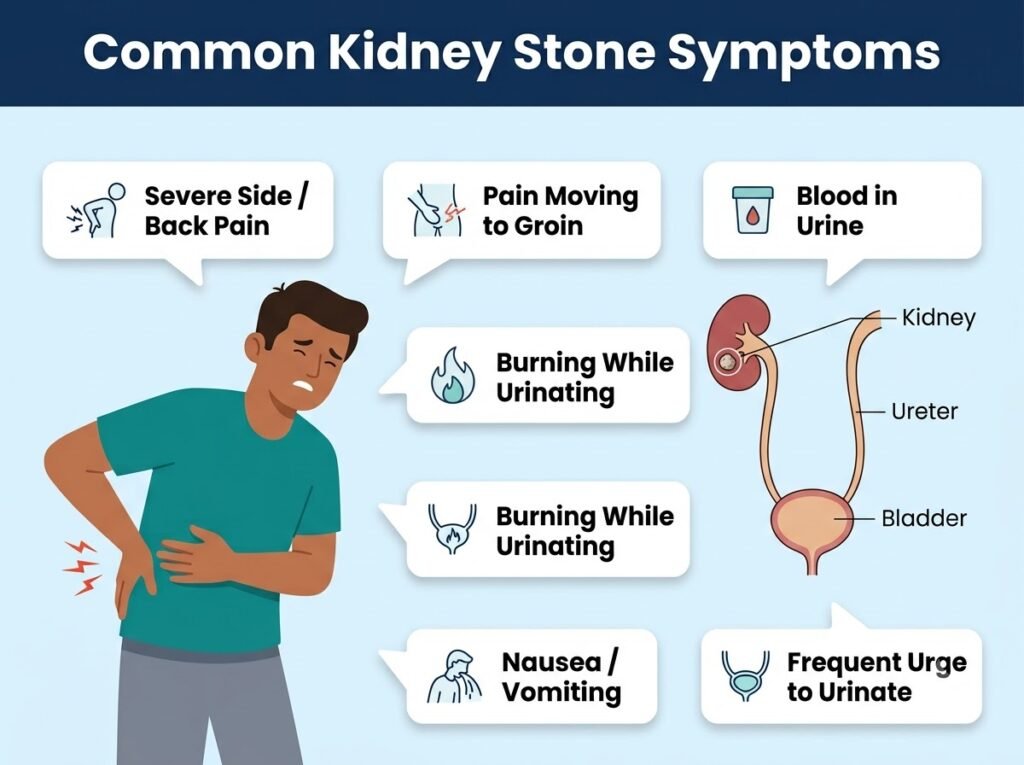
Kidney stones can cause different symptoms depending on their size and location.
Common symptoms may include:
- Severe pain in the side or back
- Pain that may move toward the lower abdomen or groin
- Blood in the urine
- Burning or pain while urinating
- Frequent or urgent urination
- Nausea or vomiting
- Difficulty passing urine
- Urine that appears cloudy or unusual
Some kidney stones may not cause noticeable symptoms and may be discovered during imaging performed for another reason.
How Do Doctors Diagnose Kidney Stones?
There is no single test that is suitable for every person.
Doctors may use a combination of:
- Urine tests
- Blood tests
- Ultrasound
- X-ray
- CT scan
- Stone analysis
- 24-hour urine testing in people with recurrent or high-risk stones
The choice depends on symptoms, age, pregnancy status, medical history, suspected complications and whether the person has had kidney stones before.
Urine Tests for Kidney Stones
Urine testing can provide important information when a kidney stone is suspected.
1. Urine Routine Test
A urine routine test can look for:
- Blood in the urine
- Crystals
- Urine pH
- Signs of infection
- Other abnormalities
Blood in the urine can occur with kidney stones, although it can also have other causes.
Crystals may provide clues about the substances that are forming in the urine.
A urine routine test can support the diagnosis, but it usually cannot determine the exact size or location of a kidney stone.
You can learn more about this test in our detailed guide:
Urine Routine Test: Normal Range, Pus Cells, Blood & Report
2. Urine Culture
A urine culture may be recommended when a urinary tract infection is suspected.
This test looks for bacteria in the urine and can help doctors determine whether an infection is present.
This can be particularly important when a person has symptoms such as fever, chills or painful urination along with suspected kidney stones.
A stone that blocks urine flow together with an infection can require urgent medical assessment.
3. 24-Hour Urine Test
A 24-hour urine test may be recommended for people who have repeated kidney stones or are at higher risk of developing them.
The test can measure substances in urine that are associated with stone formation.
Depending on the clinical situation, doctors may evaluate factors such as:
- Calcium
- Oxalate
- Uric acid
- Citrate
- Sodium
- Urine volume
- Other stone-related factors
The results can help doctors understand why stones may be forming repeatedly and guide prevention strategies.
Blood Tests for Kidney Stones
Blood tests can provide information about kidney function, mineral levels and possible complications.
Creatinine, Urea and eGFR
Creatinine, urea and eGFR can provide information about kidney function.
This can be particularly important when a kidney stone may be causing obstruction or when a person already has kidney disease.
You can read more about kidney function testing here:
Kidney Function Test (KFT): Normal Range, Cost & What It Shows
Serum Calcium
High calcium levels in the blood can sometimes be associated with conditions that increase the risk of certain kidney stones.
Doctors may therefore check calcium depending on the person’s history and suspected cause.
Uric Acid
Uric acid may also be checked because increased uric acid levels can be associated with uric acid kidney stones and other metabolic factors.
Complete Blood Count (CBC)
A CBC may be requested when doctors want to look for evidence of infection or inflammation along with other clinical information.
Read our detailed guide:
Complete Blood Count (CBC) Test: Normal Range & What Your Report Means
Other Blood Tests
Additional tests may be recommended depending on the patient’s symptoms, medical history and suspected type or cause of kidney stone.
Imaging Tests for Kidney Stones
Imaging helps doctors determine whether a stone is present and provides information about its size, number, location and possible obstruction.
The commonly used imaging tests include ultrasound, X-ray and CT scan.
Ultrasound (USG KUB)
Ultrasound of the kidneys, ureters and bladder is commonly used to evaluate suspected kidney stones.
It can help identify:
- Many kidney stones
- Kidney swelling
- Urinary obstruction
- Changes in the urinary tract
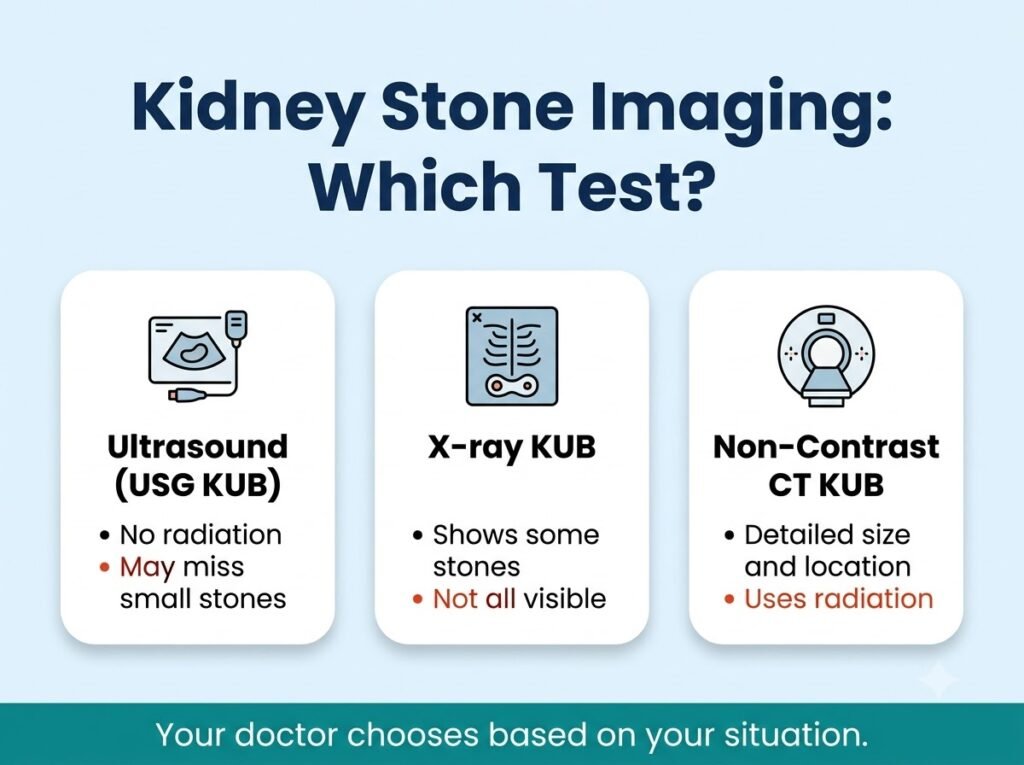
One important advantage of ultrasound is that it does not use ionizing radiation.
However, ultrasound may miss some small stones or stones located in parts of the ureter.
For this reason, a person with persistent or severe symptoms may sometimes require additional imaging.
X-Ray KUB
An X-ray of the kidneys, ureters and bladder is sometimes used to look for stones that can be seen on X-ray.
However, not every type of kidney stone is visible on an X-ray.
An X-ray may also provide less information about some stones and surrounding structures compared with CT.
Non-Contrast CT KUB
A non-contrast CT scan of the kidneys, ureters and bladder can provide detailed information about kidney stones.
It can help determine:
- Whether a stone is present
- The size of the stone
- The number of stones
- The location of the stone
- Whether urine flow may be obstructed
- Other possible causes of similar symptoms
CT involves radiation, so the decision to perform a CT scan depends on the clinical situation.
Which Kidney Stone Test Is Used When?
The appropriate test depends on the person’s symptoms and circumstances.
| Situation | Tests Doctors May Consider |
|---|---|
| Sudden severe flank pain | Urine test, blood tests and ultrasound or CT |
| Pregnancy | Ultrasound is generally preferred as an initial imaging test |
| Children | Ultrasound is commonly used first |
| Fever with suspected kidney stone | Urgent assessment, urine tests, blood tests and imaging |
| Known kidney stone follow-up | Ultrasound or X-ray depending on the stone |
| Repeated kidney stones | Blood tests, 24-hour urine testing and stone analysis |
These are general examples. The actual choice of testing depends on the individual clinical situation.
Kidney Stone Analysis
If a person passes a kidney stone or a stone is removed during treatment, doctors may recommend laboratory analysis of the stone.
Stone analysis can help identify what the stone is made of.
Knowing the composition of a stone can provide useful information for preventing future stones.
For people who develop stones repeatedly, doctors may also evaluate urine and blood factors that contribute to stone formation.
How Doctors Decide Kidney Stone Treatment
Treatment depends on several factors, including:
- Stone size
- Stone location
- Symptoms
- Urinary obstruction
- Infection
- Kidney function
- Previous history of kidney stones
- Whether the stone is likely to pass naturally
Small stones may sometimes pass through the urinary tract without a procedure.
Larger stones, stones causing significant obstruction, persistent symptoms, or stones associated with complications may require additional medical treatment or a procedure.
How to Prepare for Kidney Stone Tests
Preparation depends on the specific test.
For many blood and urine tests, your healthcare provider or laboratory will tell you whether fasting, medication adjustments or other preparation is necessary.
For imaging tests, preparation may vary depending on whether you are having an ultrasound, X-ray or CT scan.
Always follow the instructions provided by the healthcare facility.
If you are pregnant or think you may be pregnant, inform the healthcare provider before undergoing imaging.
Kidney Stone Prevention
After diagnosis, doctors may recommend steps to reduce the risk of future stones.
Depending on the type of stone and individual risk factors, prevention may include:
- Drinking adequate fluids
- Following dietary recommendations
- Managing excessive salt intake
- Addressing metabolic risk factors
- Taking prescribed medicines when required
- Completing recommended follow-up tests
Prevention recommendations can differ depending on the type of kidney stone.
When Is a Kidney Stone an Emergency?
A kidney stone requires urgent medical assessment when it is associated with concerning symptoms or complications.
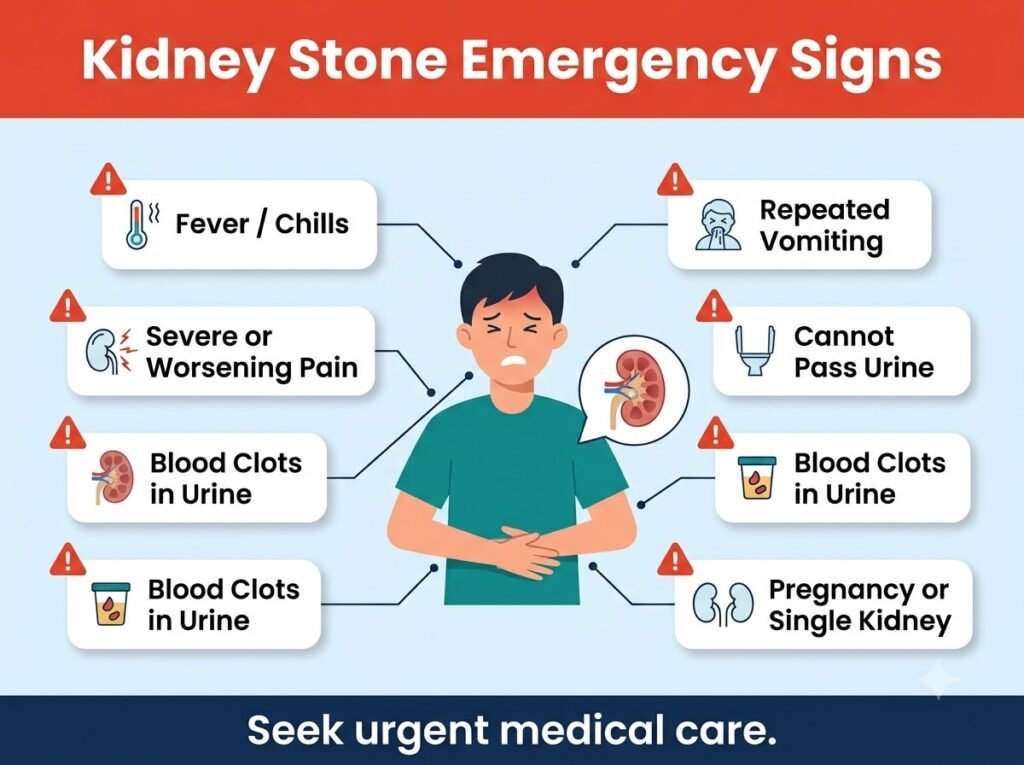
Seek urgent medical care if you experience:
- Severe or worsening pain
- Fever or chills along with suspected kidney stone symptoms
- Repeated vomiting
- Inability to pass urine
- Significant blood clots in the urine
- Known kidney disease with severe symptoms
- Only one functioning kidney with suspected obstruction
- Pregnancy with suspected kidney stone symptoms
A kidney stone together with infection or urinary obstruction can require prompt medical evaluation.
Frequently Asked Questions About Kidney Stone Tests
1. Which test is best for detecting kidney stones?
There is no single best test for every situation.
Urine and blood tests can provide supporting information, while imaging such as ultrasound or CT can help identify the stone and determine its location and size.
The appropriate test depends on the person’s symptoms and clinical situation.
2. Can a urine test detect kidney stones?
A urine test can provide clues such as blood, crystals and signs of infection.
However, a urine test generally cannot determine the exact size or location of a kidney stone.
Imaging is usually needed for that information.
3. Can an ultrasound miss a kidney stone?
Yes. Ultrasound can detect many kidney stones but may miss some small stones or stones located in parts of the ureter.
If symptoms continue or the diagnosis remains uncertain, doctors may consider additional imaging.
4. Is a CT scan safe for kidney stones?
A CT scan can provide detailed information about kidney stones, but it involves radiation.
Doctors consider the benefits and risks before recommending CT, particularly in situations such as pregnancy.
5. Are X-rays enough to diagnose kidney stones?
Not always.
Some kidney stones can be seen on X-ray, but not all stones are visible.
Other imaging tests may provide more information depending on the situation.
6. Do all kidney stones require surgery?
No.
Some smaller stones may pass naturally.
Treatment depends on factors such as stone size, location, symptoms, obstruction, infection and kidney function.
7. Can kidney stones cause no symptoms?
Yes.
Some kidney stones may remain in the kidney without causing noticeable symptoms and may be discovered during imaging performed for another reason.
8. Do I need a blood test if an ultrasound shows a kidney stone?
Not necessarily in every case.
Doctors may recommend blood tests depending on symptoms, kidney function, suspected obstruction, infection and medical history.
9. How can kidney stone pain be different from ordinary back pain?
Kidney stone pain may be severe and can occur in the side or back, sometimes moving toward the lower abdomen or groin.
However, different conditions can cause similar pain, so symptoms alone cannot confirm a kidney stone.
Medical evaluation and appropriate testing may be needed.
Final Takeaway
Kidney stone diagnosis usually involves a combination of urine tests, blood tests and imaging.
A urine routine test can identify blood, crystals and other abnormalities. Blood tests can provide information about kidney function and metabolic factors. Ultrasound can identify many stones without radiation, while X-ray can detect some types of stones. A non-contrast CT scan can provide detailed information about the size, number and location of stones and possible obstruction.
If kidney stones occur repeatedly, doctors may recommend 24-hour urine testing and stone analysis to identify factors that may contribute to future stones.
Severe pain, fever or chills, repeated vomiting, inability to pass urine, or suspected kidney stone symptoms during pregnancy should receive prompt medical attention.
Related Reading
- Kidney Function Test (KFT): Normal Range, Cost & What It Shows
- Urine Routine Test: Normal Range, Pus Cells, Blood & Report
- Complete Blood Count (CBC) Test: Normal Range & What Your Report Means
- Full Body Health Checkup in India: Tests, Cost & What Is Included
External References
- NIDDK – Diagnosis of Kidney Stones
- NIDDK – Kidney Stones
- NHS – Kidney Stones: Diagnosis
- MedlinePlus – Kidney Stones
Medical Disclaimer
This article is intended for general health education and awareness. It does not replace consultation with a qualified doctor or other healthcare professional.
Kidney stone symptoms can overlap with other medical conditions. Test selection and treatment should be decided by a healthcare professional based on individual symptoms, medical history and examination.
If you have severe pain, fever, repeated vomiting, inability to pass urine, significant bleeding, or other concerning symptoms, seek appropriate medical care promptly.
Need Help With Health Tests or Lab Bookings?
HealthPartner can help you understand available healthcare testing and assistance options.
For help with lab tests, health checkups, medicines and other healthcare services, send your requirement or prescription through WhatsApp.
📱 WhatsApp HealthPartner: +91 93479 68950