
A full body health checkup is often marketed as a simple way to understand your overall health. But a useful checkup isn’t about ordering every possible blood test — it’s about ordering the right tests for your age, symptoms, medical history, family history and risk factors.
In India, preventive screening is especially important for common non-communicable diseases (NCDs) such as high blood pressure and diabetes. The Government of India’s National Programme for Prevention and Control of Non-Communicable Diseases includes population-level screening for conditions including hypertension and diabetes, with additional investigations added when clinically indicated.
This guide explains what a full body checkup may include, who benefits from one, how to prepare, what affects the cost, and how to choose a package sensibly — instead of just picking the one with the most tests.
Quick Summary
| Test Group | What It Covers | Why It’s Checked |
|---|---|---|
| CBC | RBCs, haemoglobin, WBCs, platelets | Anaemia, infection screening |
| Blood Sugar | Fasting/PP glucose, HbA1c | Diabetes/prediabetes screening |
| Lipid Profile | Total, LDL, HDL cholesterol, triglycerides | Cardiovascular risk |
| Liver Function (LFT) | ALT/SGPT, AST/SGOT, bilirubin, ALP, protein | Liver health |
| Kidney Function (KFT) | Creatinine, urea, eGFR | Kidney health |
| Urine Routine | Physical, chemical, microscopic findings | Kidney/urinary health |
| Thyroid | TSH (±T3, T4) | Thyroid function, if indicated |
| Vitamins | B12, D | Only if diet/symptoms/history warrant it |
What Is a Full Body Health Checkup?
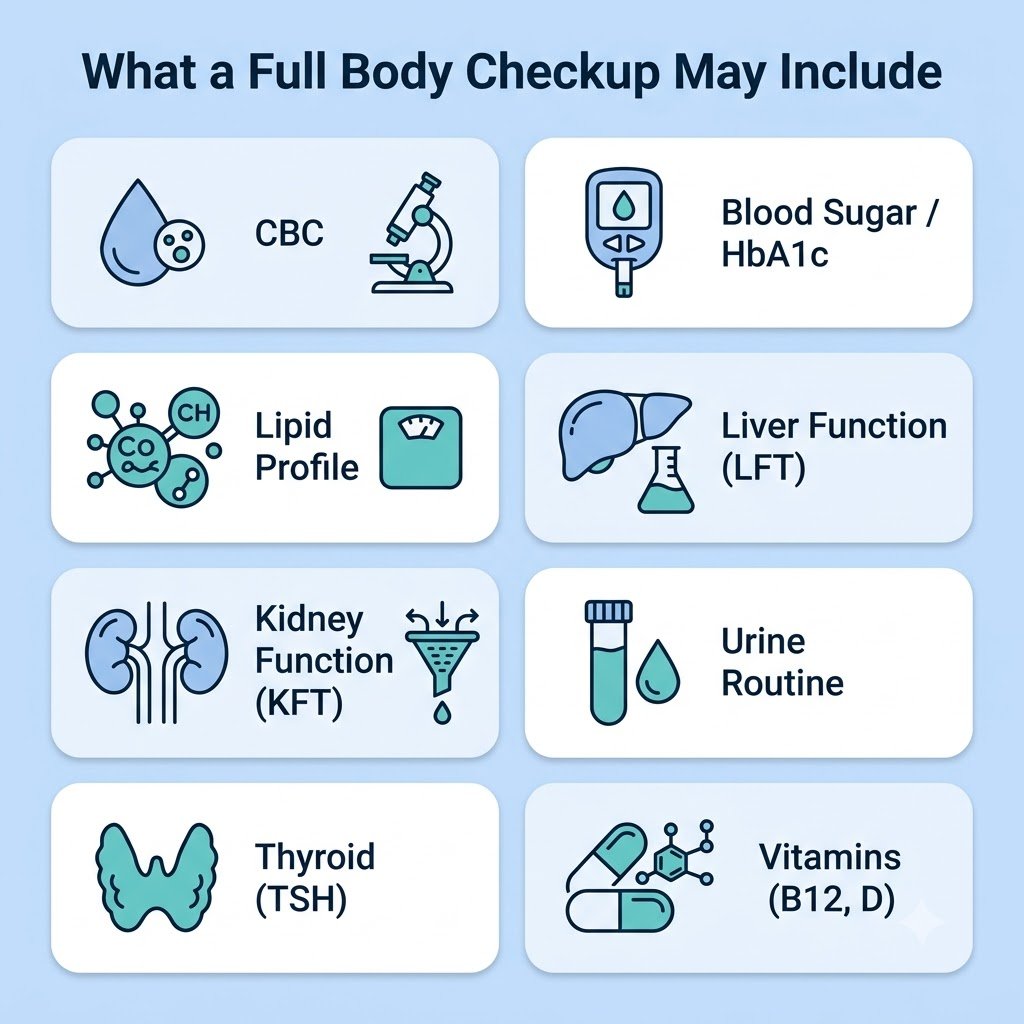
A full body health checkup is a group of health assessments and lab tests meant to screen for common health risks or abnormalities. There’s no single standard “full body” package that suits everyone — one lab’s basic package may cover only routine blood and urine work, while another adds thyroid, vitamin, liver, kidney and cholesterol panels. More tests don’t automatically mean a better checkup.
A sound preventive checkup is built around your age, risk profile and clinical needs. If you already have symptoms or a diagnosed condition, a doctor-directed set of targeted tests is usually more useful than a generic package.
What Tests Are Commonly Included?
Contents vary between labs and packages, but these are the components you’ll see most often.
For example, HbA1c can be part of diabetes screening, while kidney function testing, liver function testing and a lipid profile may be considered depending on the person’s health needs.
1. Complete Blood Count (CBC)
Measures red blood cells, haemoglobin, white blood cells and platelets. Useful for evaluating anaemia or infection — though an abnormal result alone doesn’t establish a diagnosis.
2. Blood Sugar Tests
Depending on the package, this may be fasting blood sugar, post-meal blood sugar, or HbA1c, which reflects average blood glucose over roughly the previous two to three months and is commonly used for diabetes evaluation and monitoring. If you have diabetes risk factors, the right test and testing interval should be discussed with a healthcare professional.
3. Lipid Profile
Typically measures total cholesterol, LDL, HDL and triglycerides — used to assess cardiovascular risk in the appropriate clinical context.
4. Liver Function Tests (LFT)
May include ALT/SGPT, AST/SGOT, bilirubin, alkaline phosphatase, albumin and total protein. The exact panel varies by lab.
5. Kidney Function Tests (KFT)
May include serum creatinine, urea and estimated glomerular filtration rate (eGFR), along with other tests when indicated. Urine testing adds further information on kidney and urinary health.
6. Urine Routine Examination
Looks at physical, chemical and microscopic findings. An abnormal result may prompt further testing.
7. Thyroid Tests
Some packages include TSH, sometimes with T3 and T4. Whether thyroid testing is appropriate depends on symptoms, history and risk — not simply a desire to “test everything.”
8. Vitamin Tests
Vitamin B12 and vitamin D are frequently bundled into commercial packages, but they aren’t automatically necessary for every healthy person. A clinician can help decide based on diet, symptoms and history.
Who Should Consider a Health Checkup?
There’s no rule that every adult needs the same full-body package every year — preventive care should be individualized. A checkup may be particularly useful if you:
- Have a family history of diabetes, hypertension, heart disease or other chronic conditions
- Have overweight/obesity, physical inactivity or other metabolic risk factors
- Have previously had abnormal blood pressure, blood sugar or cholesterol results
- Take long-term medicines that require monitoring
- Have symptoms that need medical evaluation
- Haven’t had a health assessment in a long time
- Fall into an age group targeted by preventive screening programmes
India’s national NCD programme places particular emphasis on screening adults aged 30 and above for common NCDs. That doesn’t mean everyone over 30 needs every test — it means age and risk assessment should guide what gets screened.
Do You Need a Full Body Checkup Every Year?
Not necessarily. The right interval depends on your age, history, risk factors and previous results. Some measurements, like blood pressure, may be checked regularly, while other tests follow intervals a clinician recommends.
Routine checks should also avoid over-testing. Screening has real benefits, but it can also lead to false positives, anxiety, unnecessary follow-up investigations and unneeded treatment when used without a clear reason. The World Health Organization emphasizes that screening should be evidence-based and designed to maximize benefit while minimizing harm.
What About People Under 30?
Being under 30 doesn’t mean preventive care is unnecessary — but a healthy young adult without symptoms or major risk factors may not need a large commercial “full body” package. Blood pressure, weight and lifestyle risk assessment can still be relevant, and additional tests can be added when symptoms, family history or medications make them appropriate.
How to Prepare for a Full Body Health Checkup
Check whether fasting is required. Some blood tests need fasting, others don’t — follow the lab’s instructions rather than assuming.
Follow the lab’s collection instructions. Ask whether you need a morning urine sample, need to avoid certain foods, or have other prep steps.
Tell the lab about medicines and supplements. Keep a list handy. Don’t stop prescription medicines for a blood test unless a qualified healthcare professional has specifically told you to.
Carry previous reports. They help a doctor spot trends in blood sugar, cholesterol, liver function, kidney function and other markers.
How Much Does a Full Body Health Checkup Cost in India?
There’s no single nationwide price — cost varies by lab, city, number of tests, whether home sample collection is included, and whether the package has specialized investigations. Basic packages cover a smaller group of routine tests; larger packages add more. Prices may also be discounted temporarily.
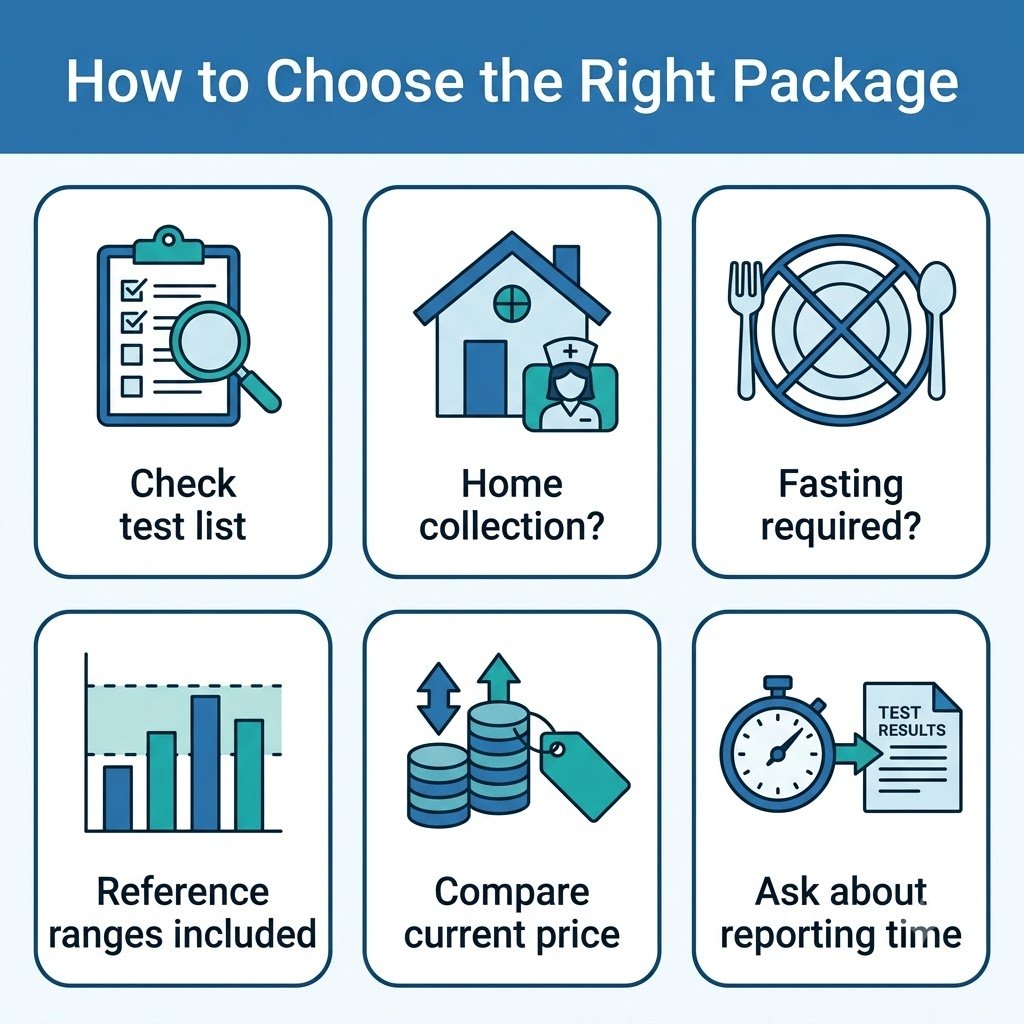
Instead of choosing a package purely on test count, compare:
- The exact list of included tests
- Whether home sample collection is available
- Whether fasting or other prep is required
- Whether the report includes reference ranges and useful interpretation
- The lab’s collection and reporting process
- The current total price and any applicable discount
Because pricing changes by location and provider, check the current price before booking rather than relying on an old quoted figure.
Full Body Checkup vs Targeted Testing
A package is convenient, but targeted testing can be more appropriate. Someone with a known thyroid condition may need specific monitoring recommended by their clinician. Someone with diabetes may need a defined set of glucose and complication-related assessments. Someone with symptoms should be evaluated based on those symptoms, not the largest available package. The goal is useful information that guides care — not the maximum number of tests.
Common Mistakes to Avoid
Stopping medicines based on a report — never start, stop or change treatment without discussing it with your prescribing clinician
Choosing the largest package automatically — more tests can mean more abnormal findings that need interpretation
Ignoring symptoms because the package was normal — a normal report doesn’t rule out every condition
Self-diagnosing from one abnormal result — lab values need clinical context and sometimes repeat testing
How HealthPartner Can Help
HealthPartner India can assist with medicine-order assistance, lab-test booking and health-checkup options. Availability, pricing and discounts can vary by location and partner. We work with partner platforms including Tata 1mg where offered, and can help you check available options and place eligible orders with applied discounts on your behalf.
Need help choosing or booking a health test? Send your prescription, test requirement or health-checkup request on WhatsApp and we’ll help you understand the available options.
Frequently Asked Questions
Is a full body health checkup necessary for everyone?
No. The appropriate tests depend on age, symptoms, medical history, family history and risk factors. A clinician can help decide which tests are right for you.
Can I eat before a full body health checkup?
It depends on the tests included — some require fasting, others don’t. Follow the specific instructions given by your lab.
Does a full body checkup detect every disease?
No. It focuses on selected measurements and screening tests, not every possible condition. New or persistent symptoms still need separate medical evaluation.
Is an annual full body checkup required after age 30?
Not necessarily the same tests every year. Adults 30+ are a focus of India’s population-based NCD screening, but individual schedules should be based on risk and clinical guidance.
Should I choose a package with more tests?
Not automatically. A smaller, relevant package can be more useful than a large one full of tests you don’t need.
What’s the difference between a full body checkup and a diabetes or cardiac-specific package?
A full body checkup screens broadly across organ systems, while a condition-specific package focuses on the markers relevant to that condition (e.g., HbA1c and lipid profile for diabetes/cardiac risk).
Does HbA1c replace fasting blood sugar testing?
Not necessarily — they measure different things. HbA1c reflects a 2–3 month average, while fasting/PP glucose reflects blood sugar at a single point in time. A doctor may use one or both depending on the situation.
Is home sample collection as accurate as visiting a lab?
Sample quality depends on proper collection and handling, not the location. Reputed labs follow the same processing standards for home-collected samples as in-clinic ones.
Can I get a full body checkup done without a doctor’s prescription?
Yes, most commercial packages don’t require a prescription. However, a doctor’s input is valuable for deciding which tests are actually relevant to you.
How soon will I get my full body checkup report?
This varies by lab and by test — routine panels are often available within 24 hours, while specialized tests can take longer.
Key Takeaway
A full body health checkup can be a convenient way to review selected aspects of your health, but there is no single package that is ideal for everyone. Focus on evidence-based screening, age and risk factors, appropriate preparation and proper interpretation of results.
If you are unsure which tests you need, speak with a qualified healthcare professional before choosing a package. HealthPartner can assist with checking available lab-test and health-checkup options and help place eligible orders with applicable discounts.
Related Reading
- HbA1c Test: Normal Range, Prediabetes & Diabetes Levels
- Kidney Function Test (KFT): Normal Range & Cost
- Liver Function Test (LFT): SGPT/SGOT Normal Range & Guide
- How to Read Your Lipid Profile Report
- Blood Pressure Range: Normal, High & Low BP Levels
External References
- Government of India — National Programme for Prevention and Control of Non-Communicable Diseases: Operational Guidelines
- World Health Organization — Screening programmes: A short guide
- WHO India — Grassroots screening to prevent and control non-communicable diseases
Follow HealthPartner India:
Medical disclaimer: This article is for general health education and does not replace diagnosis, treatment or personalized medical advice. Test requirements and screening intervals vary by individual. Always discuss abnormal results, symptoms and medication changes with a qualified healthcare professional.
Need help booking a lab test or full body health checkup? Message us on WhatsApp at +91 93479 68950 and we’ll help you find the right package.