
Dengue is a mosquito-borne viral infection that can cause fever, severe headache, body pain, nausea, vomiting, rash and tiredness. In India, doctors may recommend dengue testing when symptoms and local risk suggest the infection, but the most useful test can depend on how many days have passed since the fever started.
Many people search for a single “dengue blood test,” but dengue diagnosis may involve more than one test. NS1 antigen, dengue IgM, molecular tests such as RT-PCR/NAAT, and a complete blood count (CBC) provide different information. Test results should be interpreted together with the day of illness, symptoms, examination findings and medical advice.
📌 Quick Summary
| Question | Quick answer |
|---|---|
| Which dengue test is useful early? | NS1 antigen or a molecular test such as RT-PCR/NAAT may be useful during the first 7 days of illness. |
| When is dengue IgM useful? | IgM antibodies usually become detectable around 4–5 days after symptoms begin and become particularly useful later in the illness. |
| Why is CBC done? | CBC helps monitor platelet count, white blood cells and haematocrit, but it does not confirm dengue by itself. |
| Does one negative test rule out dengue? | No. Test timing, test type and the clinical situation matter. |
| Does low platelet count confirm severe dengue? | No. Platelet count is only one part of the overall assessment. |
| When is urgent care needed? | Bleeding, severe abdominal pain, persistent vomiting, breathing difficulty, fainting, confusion or sudden worsening require urgent medical assessment. |
What Is a Dengue Blood Test?
A dengue blood test looks for evidence of dengue virus infection or the body’s immune response to the infection.
Depending on the stage of illness, a laboratory may test for dengue viral RNA, the NS1 protein or antibodies such as IgM. A doctor may also request a CBC and other tests to monitor the person’s condition.
No single test gives the same information at every stage of dengue. A negative result, especially early in illness, does not always exclude infection. This is why it is important to tell the doctor or laboratory exactly when the fever started.
When Should Dengue Testing Be Considered?
Dengue may be considered in a person with fever who lives in or has recently travelled to an area where dengue transmission occurs.
Common symptoms include:
- High fever
- Severe headache
- Pain behind the eyes
- Muscle and joint pain
- Nausea or vomiting
- Skin rash
- Marked tiredness
These symptoms can also occur with other infections, including malaria, chikungunya and other viral or bacterial illnesses. Testing should therefore be guided by a qualified healthcare professional rather than by symptoms alone.
Which Dengue Blood Tests Are Commonly Used?
1. NS1 Antigen Test
NS1 is a protein produced by the dengue virus that can be detected in blood during the acute phase of infection. It is particularly useful during the first 7 days of illness.
A positive NS1 result supports an acute dengue infection. However, a negative NS1 result does not completely rule out dengue, particularly when testing is performed at a less suitable stage of illness.
Some laboratories offer rapid NS1 tests while others use laboratory-based methods such as ELISA. Test performance can vary between methods and kits.
2. Dengue IgM Antibody Test
Dengue IgM antibodies generally become detectable several days after symptoms begin. CDC guidance notes that IgM typically becomes detectable around days 4–5 after symptom onset.
IgM is particularly useful later in the illness and may be recommended when early NS1 or molecular testing is negative or unavailable.
A positive IgM can support a recent dengue infection, but the result should be interpreted with the timing of the sample and the patient’s clinical findings because antibody tests can sometimes cross-react with antibodies from other flavivirus infections.
3. RT-PCR or Other Molecular Tests
Molecular tests such as RT-PCR or other nucleic acid amplification tests detect dengue viral RNA. They are mainly useful during the early phase of illness, particularly within the first 7 days.
These tests may also provide information about the infecting dengue virus serotype, depending on the method used.
4. Dengue IgG Test
A single dengue IgG result is generally not preferred for diagnosing an acute dengue infection because IgG may remain detectable after a previous infection.
In selected situations, doctors may use paired samples or additional testing to determine whether an infection is recent.
5. Complete Blood Count (CBC)
A CBC does not confirm dengue. It helps doctors monitor blood counts during the illness.
Doctors may pay particular attention to:
- Platelet count
- White blood cell count
- Haematocrit
- Haemoglobin
Platelets can fall during dengue, but a low platelet count is not unique to dengue and does not by itself determine whether a person has severe dengue. Changes over time may be more useful than one isolated result.
Read our Complete Blood Count (CBC) Test guide to understand the different components of a CBC report.
Rapid Dengue Test vs ELISA: What Is the Difference?
Rapid dengue tests can provide results quickly and are widely available. However, the performance of rapid tests can vary depending on the test method and kit.
Laboratory-based methods such as ELISA are also used for dengue NS1 and antibody testing. The appropriate test depends on the illness stage, laboratory availability and clinical situation.
If a rapid test result does not match the symptoms or clinical assessment, speak with a doctor about whether additional or repeat testing is appropriate.
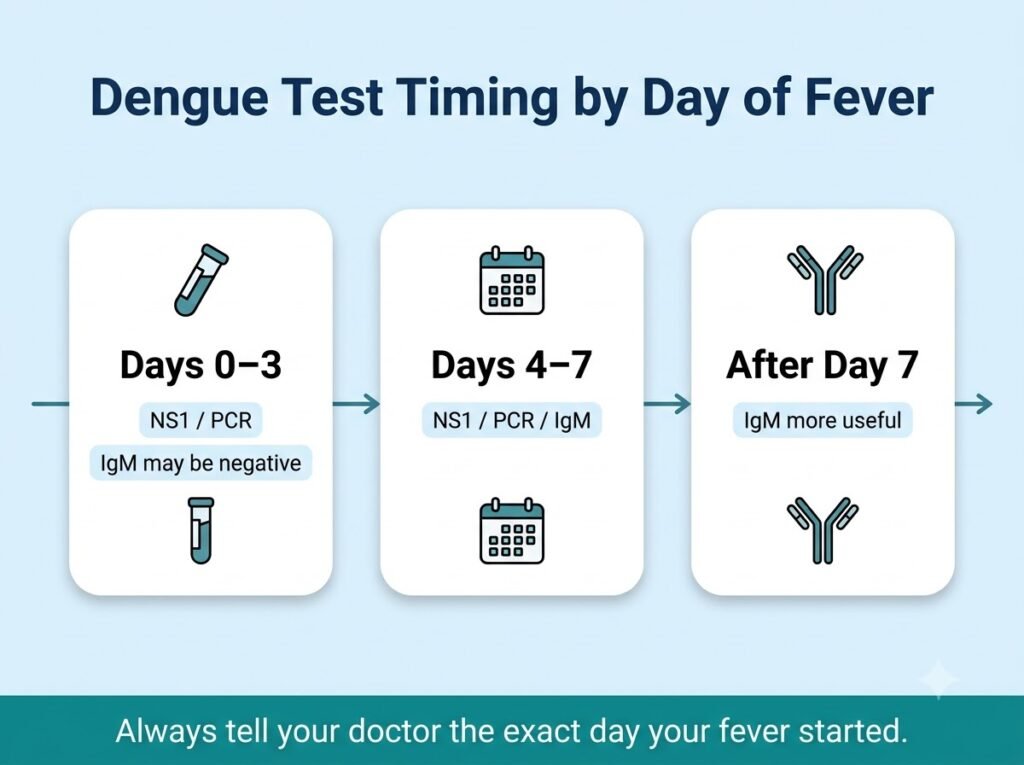
Dengue Test Timing by Day of Illness
| Approximate illness period | Tests that may be considered | Important point |
|---|---|---|
| Days 0–3 | NS1 antigen or molecular testing; IgM may still be negative | A negative early IgM does not rule out dengue. |
| Days 4–7 | NS1, molecular testing and IgM depending on the situation | Tell the doctor the exact day of fever. |
| After day 7 | IgM becomes more useful; additional testing may be considered | A negative early test may require reassessment if symptoms continue. |
This is a general guide. Testing strategies can vary according to the patient’s condition, local guidance, laboratory method and previous dengue exposure.
How Are Dengue Test Results Interpreted?
A positive NS1 or molecular test generally supports an acute dengue infection.
A positive IgM result may support a recent dengue infection, but interpretation depends on when the blood sample was collected and the patient’s clinical history.
A negative result does not always exclude dengue. For example, an NS1 test performed outside its most useful detection period may be less informative.
Do not interpret a platelet count, haematocrit or dengue marker in isolation. Doctors consider symptoms, examination findings and changes in blood results over time.
How to Prepare for a Dengue Blood Test
- Tell the doctor or laboratory when the fever started.
- Carry previous dengue or CBC reports if available.
- Tell the healthcare professional about current medicines.
- Most dengue blood tests do not require fasting, but follow the laboratory’s instructions.
- Drink fluids normally unless your doctor has advised otherwise.
- Do not stop prescribed medicines without medical advice.
Which Fever and Pain Medicines Are Used in Suspected Dengue?
Paracetamol is commonly used for fever and body pain when advised by a healthcare professional.
Aspirin and NSAIDs such as ibuprofen are generally avoided in suspected or confirmed dengue because of concerns about bleeding and other complications.
If you already take aspirin, anticoagulants or another blood-thinning medicine for a medical condition, do not stop it on your own. Ask your doctor what you should do.
Also avoid starting antibiotics, steroids, injections or other medicines without appropriate medical advice.
What Symptoms Need Urgent Medical Care?
Dengue can become more serious around the time the fever begins to settle. Warning signs can develop during this period.
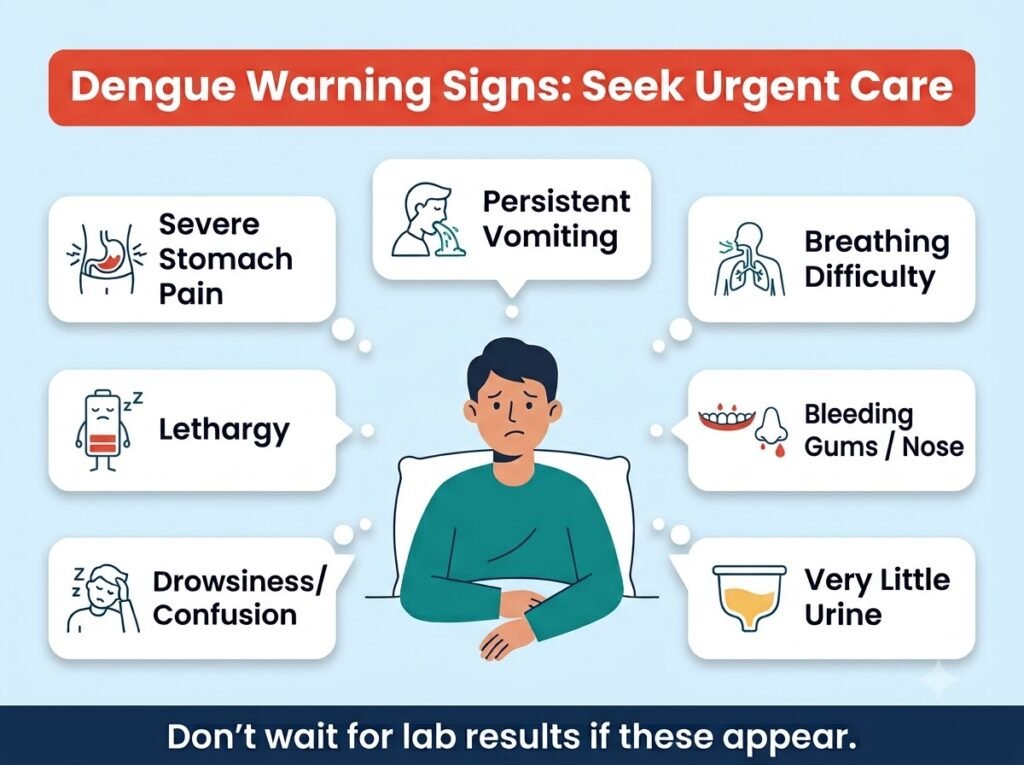
Seek urgent medical care for:
- Severe abdominal pain or tenderness
- Persistent vomiting
- Bleeding from the nose or gums
- Blood in vomit or stool
- Breathing difficulty or rapid breathing
- Marked drowsiness, restlessness or confusion
- Fainting
- Very little urine
- Cold or clammy skin
- Sudden worsening of symptoms
Do not wait for a laboratory result if warning signs are present.
What Should You Do While Waiting for Dengue Test Results?
Follow the treating clinician’s advice, rest and maintain fluids if you can drink safely.
Keep track of fever, vomiting, urine output, bleeding symptoms and any new warning signs. This information can help your doctor decide whether repeat examination or blood testing is needed.
Do not assume that the risk has completely passed just because the fever has started to improve. Warning signs can occur around or shortly after the fever settles.
How Can Dengue Be Prevented?
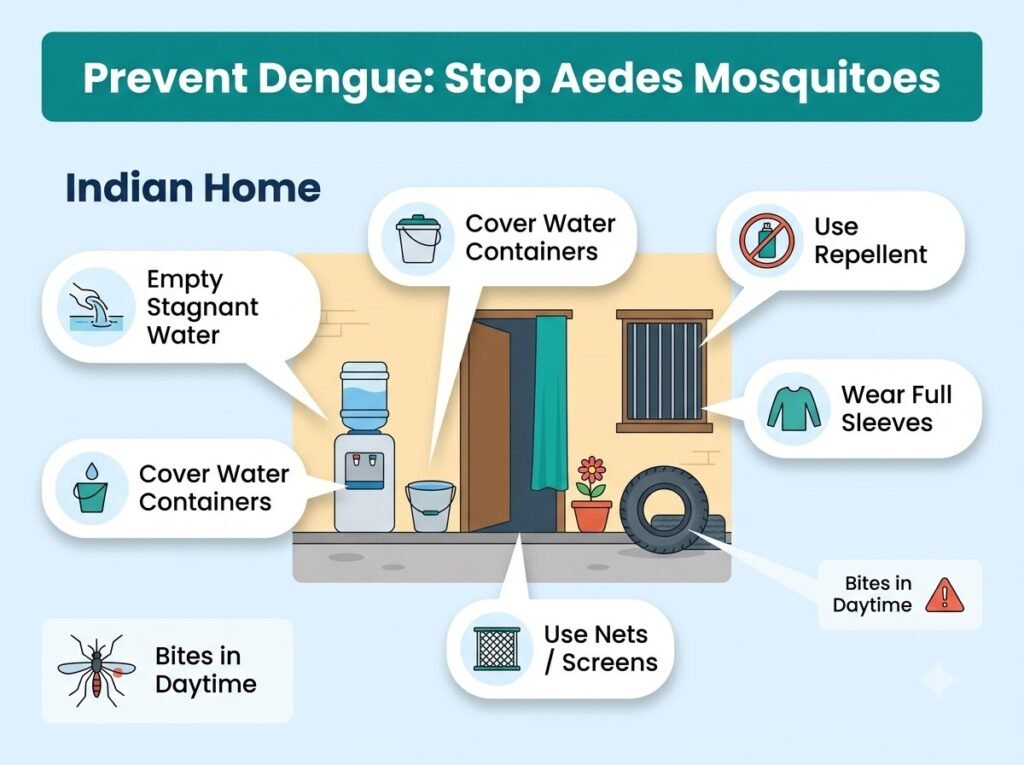
Dengue is spread mainly by Aedes mosquitoes, which commonly bite during the daytime.
- Empty and clean water containers regularly.
- Remove stagnant water from coolers, buckets, flowerpots and tyres.
- Keep water storage containers covered.
- Use mosquito repellent.
- Wear full-sleeved clothing when appropriate.
- Use window screens or mosquito nets where possible.
A person with dengue should also avoid mosquito bites as much as possible so mosquitoes do not acquire the virus and spread it to other people.
Dengue Blood Test Cost in India
The price of a dengue blood test can vary depending on the test type, laboratory, city and whether the test is performed as a rapid test or a laboratory-based test.
NS1 antigen, dengue IgM, CBC and combination dengue profiles may all have different prices. Because laboratory prices change, it is better to check the current price before booking rather than relying on one fixed amount.
If your doctor has advised dengue testing, compare the available laboratory options and confirm which test is actually required.
Frequently Asked Questions
Is NS1 positive enough to confirm dengue?
A positive NS1 result supports an acute dengue infection, particularly when it matches the clinical situation. The treating clinician should interpret the result with symptoms and timing.
Can dengue be present if NS1 is negative?
Yes. A negative NS1 result does not completely rule out dengue. Test timing and the method used are important.
Is a CBC enough to diagnose dengue?
No. A CBC helps monitor blood counts but does not confirm dengue. Specific dengue testing may be needed.
When should dengue IgM be done?
IgM usually becomes detectable several days after symptoms begin and becomes particularly useful later in the illness. Your doctor can advise the appropriate timing.
Does a low platelet count always mean severe dengue?
No. Platelet count is only one part of dengue assessment. Doctors also consider symptoms, warning signs, haematocrit, hydration and changes over time.
Does dengue testing require fasting?
Most dengue blood tests do not require fasting, but follow the instructions provided by the laboratory.
Can dengue test results be negative in the early stage?
Yes. Some tests may be negative if performed before the relevant marker becomes detectable. If clinical suspicion remains high, the doctor may recommend additional or repeat testing.
Can I take ibuprofen if I have suspected dengue?
NSAIDs such as ibuprofen are generally avoided in suspected dengue because of bleeding concerns. Ask your doctor or pharmacist about the safest option for fever and pain.
When should I repeat a dengue blood test?
The need for repeat testing depends on the day of illness, the first test result and your symptoms. Follow the testing plan provided by your doctor.
Can dengue become serious after the fever goes down?
Yes. Warning signs can appear around the time the fever settles or during the following 24–48 hours. Continue monitoring symptoms and seek urgent care if warning signs develop.
Final Takeaway
A dengue blood test is not always a single test. NS1, molecular tests, IgM and CBC provide different information at different stages of illness. The day of fever, symptoms and changes in blood counts all matter when interpreting results.
A negative test does not always rule out dengue, and a low platelet count alone does not determine disease severity. If warning signs such as severe abdominal pain, persistent vomiting, bleeding or breathing difficulty occur, seek urgent medical care.
🔗 Related Reading
- Complete Blood Count (CBC) Test: Normal Range & How to Read Your Report
- Full Body Health Checkup in India: Tests, Preparation & Cost
- Urine Routine Test: Normal Range, Pus Cells & How to Read Your Report
📚 External References
- CDC: Clinical Testing Guidance for Dengue
- CDC: NS1 Antigen Tests for Dengue Virus
- WHO: Laboratory Testing for Dengue Virus
- CDC: Clinical Care of Dengue
⚕️ Medical Disclaimer
This article is for general education only and does not provide a diagnosis, treatment plan or personal medical advice. Dengue test selection and result interpretation depend on symptoms, illness day, examination findings, laboratory method and clinical judgement. Please consult a qualified healthcare professional and seek urgent medical care if warning signs develop.
Need Help With Health Tests?
HealthPartner India can help you enquire about available healthcare options through Tata 1mg where offered. Medicine-order and lab-test services depend on location, availability and the provider’s current terms. Contact us on WhatsApp to ask about the next steps.
Send your test requirement on WhatsApp: +91 93479 68950