
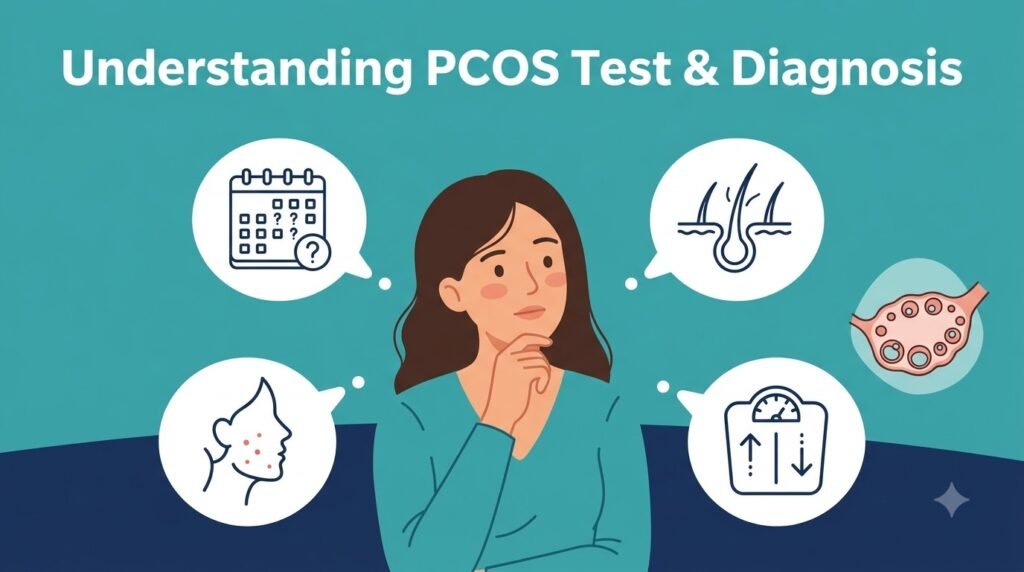
Polycystic ovary syndrome (PCOS) is one of the most common hormonal and metabolic conditions in women of reproductive age. There is no single blood test that confirms it — diagnosis is built from your symptoms, menstrual pattern, laboratory evidence of androgen (male hormone) excess, and, in adults, an ultrasound or AMH result when needed. This guide walks through which tests are actually used, what they check for, and how doctors put the pieces together.
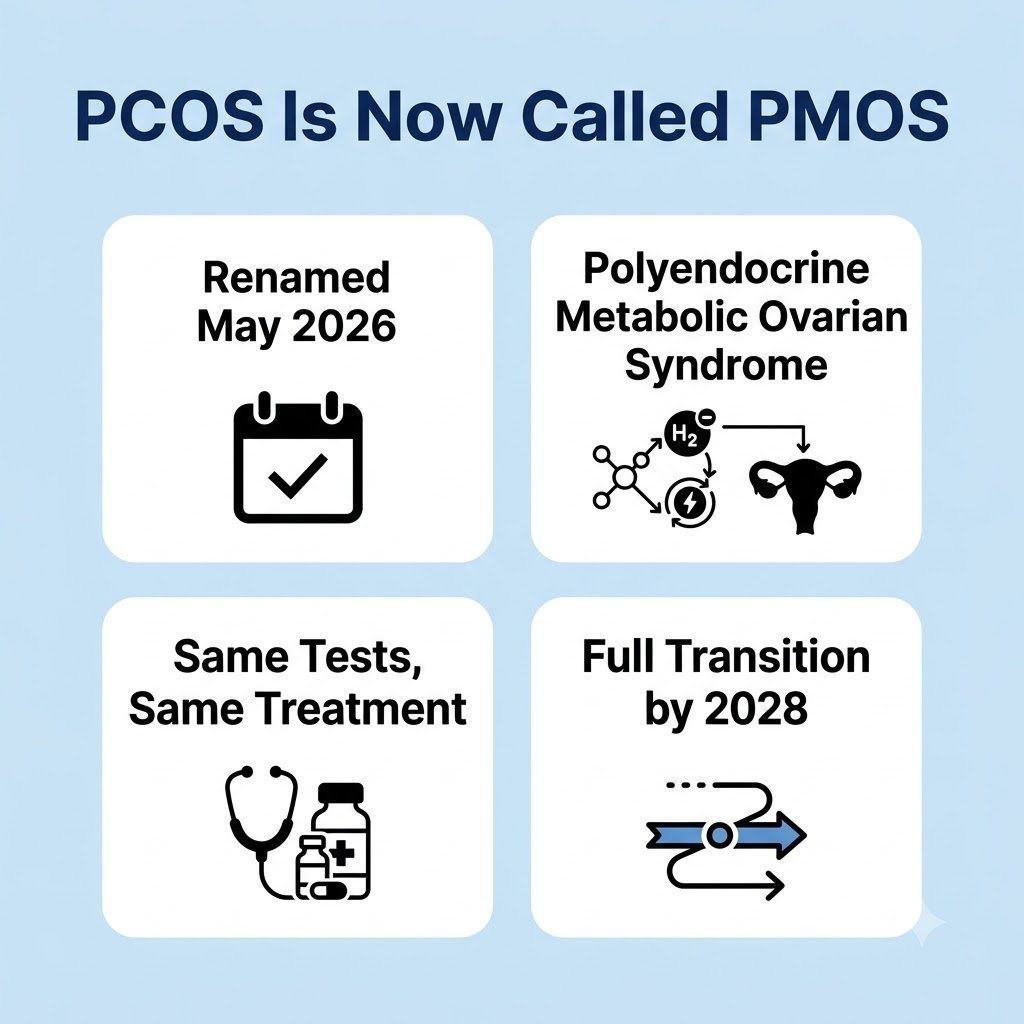
A quick note before you read on: in May 2026, PCOS was officially given a new clinical name — Polyendocrine Metabolic Ovarian Syndrome, or PMOS. We explain what that means for you further down this article, but nothing about how the condition is tested or diagnosed has changed, so the rest of this guide uses “PCOS,” the name most people still search for and the one your reports may still show.
What Symptoms May Lead to PCOS Testing?
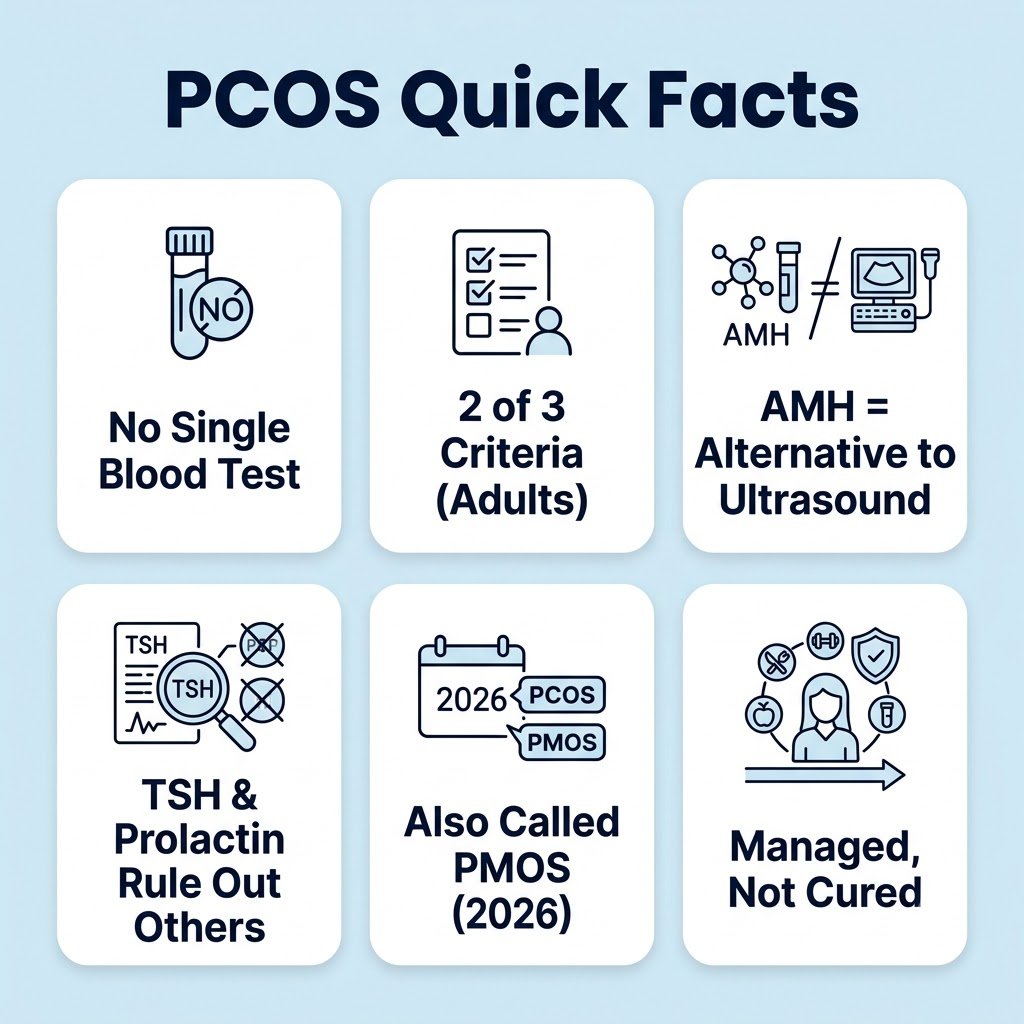
Doctors usually consider PCOS testing when someone has a combination of:
- Irregular or infrequent periods, or none at all
- Excess facial or body hair (hirsutism)
- Persistent acne or oily skin that doesn’t respond to usual treatment
- Thinning hair on the scalp
- Difficulty conceiving or irregular ovulation
- Weight gain or other metabolic changes
These symptoms can point to several other conditions too, which is exactly why testing needs to be individualized rather than based on a fixed package.
Which Blood Tests Are Used for PCOS?
1. Testosterone and Other Androgens
Total and free testosterone are the main biochemical markers used to check for androgen excess. If testosterone looks normal but symptoms strongly suggest PCOS, a doctor may look at other androgens such as androstenedione or DHEAS.
2. TSH (Thyroid-Stimulating Hormone)
Thyroid disorders can cause irregular periods and other changes that closely resemble PCOS, so TSH is often checked to rule this out. If your results come back abnormal, our guide to thyroid symptoms and causes explains what the different patterns mean.
3. Prolactin
Raised prolactin can also disrupt periods, so this is tested when the clinical picture needs it.
4. 17-Hydroxyprogesterone
This test helps rule out a less common condition — non-classic congenital adrenal hyperplasia — that can look similar to PCOS.
5. LH and FSH (Luteinizing and Follicle-Stimulating Hormone)
Many labs include LH and FSH in a PCOS panel because, in some women with PCOS, the LH-to-FSH ratio is skewed higher than usual. This ratio is a supporting clue, not a stand-alone diagnostic test on its own — it’s interpreted together with the other findings, and a normal ratio doesn’t rule PCOS out.
6. Glucose and Metabolic Screening
PCOS carries a higher long-term risk of insulin resistance and type 2 diabetes, so blood glucose is usually assessed alongside weight, blood pressure, and a lipid profile. If you’re not sure how these tests connect, our guides on normal blood sugar levels, type 1 vs type 2 diabetes, and blood pressure ranges go into more detail on each of these.
What Does a Typical PCOS/PCOD Test Panel Include?
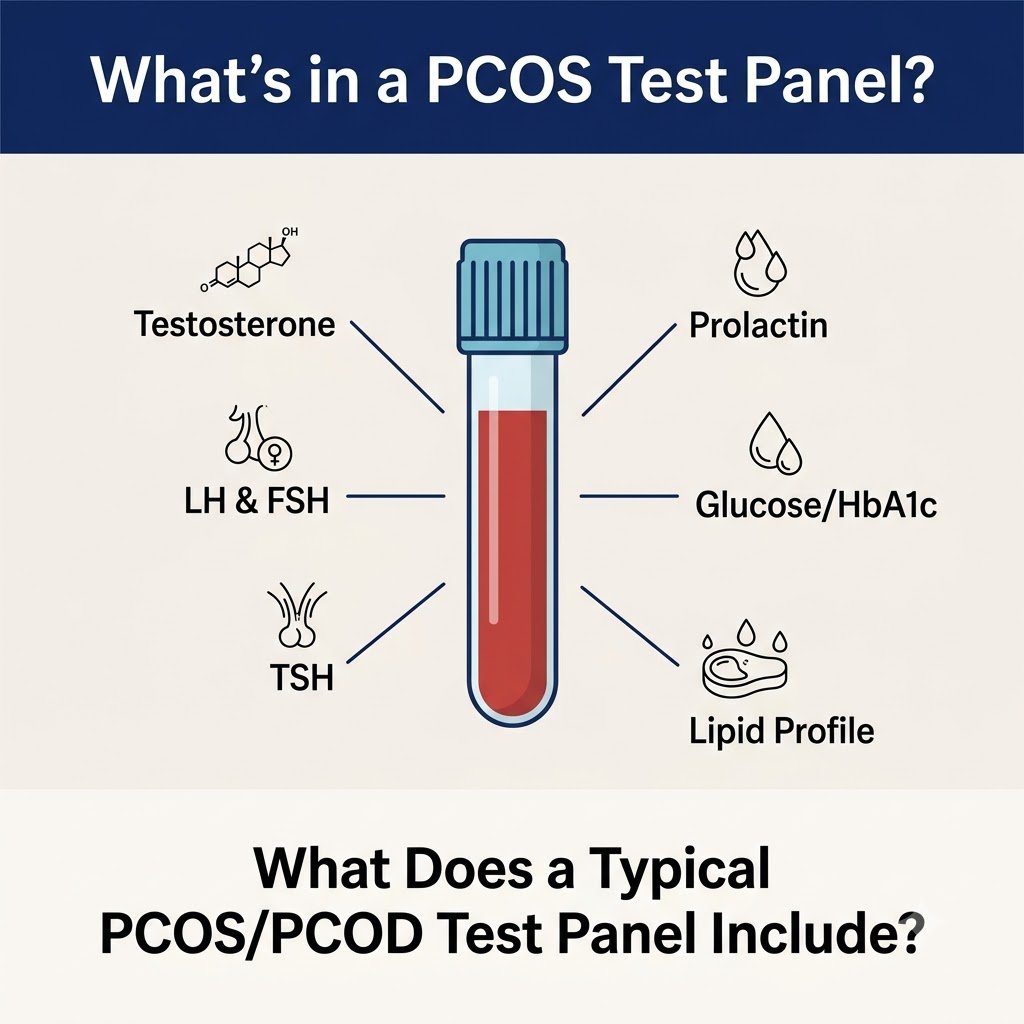
If your doctor has asked for a “PCOS profile” or “PCOD panel,” it usually isn’t one single test but a small group of them ordered together. A common starting panel includes:
- Testosterone (total and/or free)
- LH and FSH
- TSH
- Prolactin
- Fasting blood glucose or an HbA1c
- Sometimes a lipid profile, depending on your risk factors
Not every panel needs every item on this list, and not every lab bundles them the same way — your doctor will tailor the exact combination to your symptoms. Panel pricing also varies by lab and by which tests are included, so it’s worth confirming the exact panel and cost before booking rather than assuming a fixed price. If you’d like help understanding what a specific panel includes or arranging one, you can ask on WhatsApp.
PCOS and Insulin Resistance
Insulin resistance is one of the most under-discussed parts of PCOS, but it’s central to why the condition carries long-term metabolic risk. When cells respond less efficiently to insulin, the body compensates by producing more of it, and higher insulin levels can, in turn, worsen androgen-related symptoms like acne and excess hair growth. This is part of why a glucose or insulin-related test is often included alongside the hormone panel rather than treated as a separate, unrelated check — the two are connected in how PCOS actually behaves in the body.
Is an Ultrasound Required for PCOS?
Not always. In adults, if irregular cycles and clear signs of androgen excess are both present — and other causes have already been ruled out — current guidance says ultrasound isn’t required to make the diagnosis. It’s still useful when only one of the two main features is present, or when another pelvic condition needs to be checked.
When an ultrasound is done, the report may describe a bilateral polycystic ovarian pattern — meaning both ovaries show the follicle pattern associated with PCOS. On its own, this description is a finding, not a diagnosis; it’s only meaningful when read together with your symptoms and hormone results.
What Is AMH and Can It Diagnose PCOS?
Anti-Müllerian hormone (AMH) can be used as an alternative to ultrasound to help identify the ovarian pattern seen in PCOS, in adults. It shouldn’t be treated as a stand-alone “PCOS test” on its own — it’s one piece of a larger clinical picture, not a diagnosis by itself.
How Is PCOS Diagnosed in Adults?
In adults, diagnosis generally requires two of three features, after other causes have been excluded:
- Clinical or biochemical signs of androgen excess
- Ovulatory dysfunction (irregular or absent ovulation)
- Polycystic ovaries on ultrasound, or an elevated AMH level
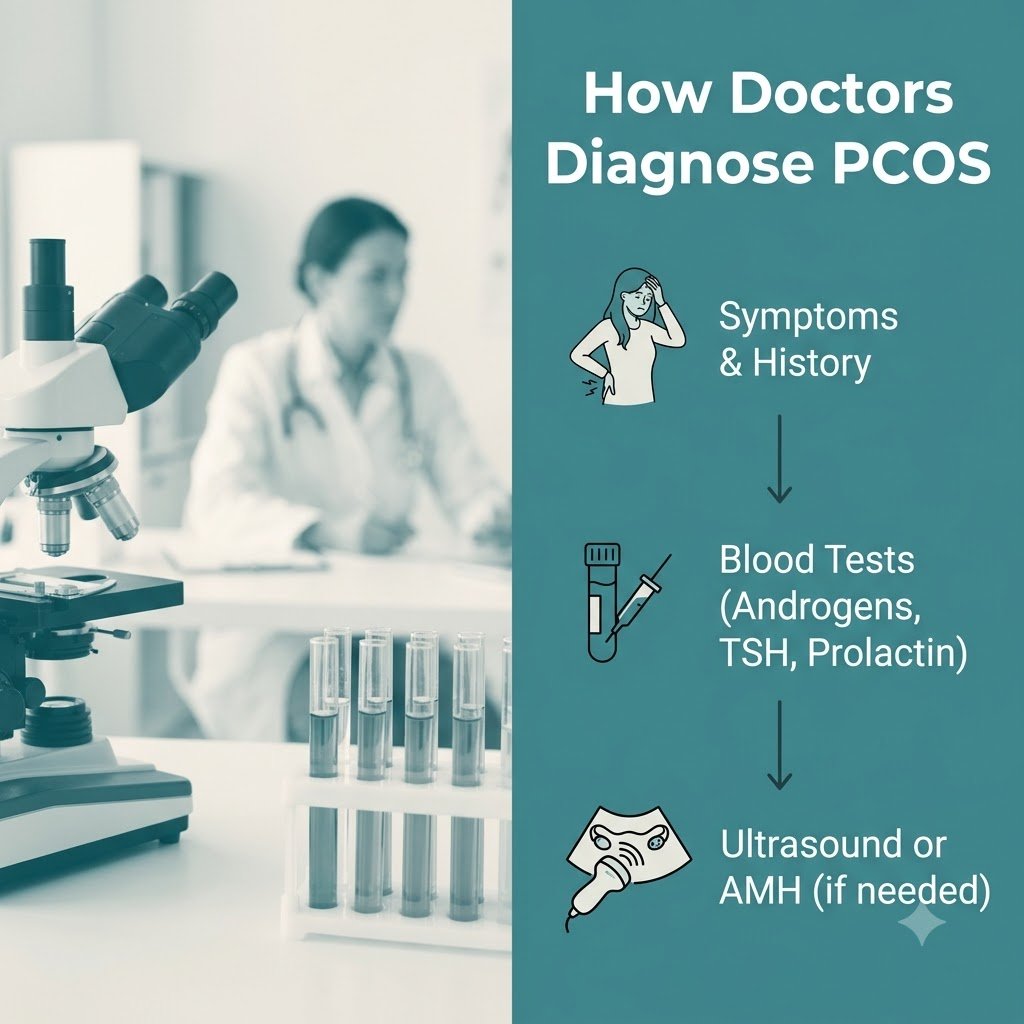
If irregular cycles and androgen excess are already clearly established, ovarian imaging isn’t required to confirm the diagnosis.
What About PCOS Testing in Teenagers?
Diagnosis in adolescents is handled more cautiously, because irregular cycles and ovarian appearance can overlap with normal puberty. Current guidance recommends both androgen excess and ovulatory dysfunction being present for a diagnosis in teenagers, and does not recommend ultrasound or AMH for diagnosis in this age group, since these have limited reliability before the body has fully matured.
Do PCOS Tests Require Fasting?
There’s no single fasting rule that applies to every PCOS-related test. Some metabolic tests have specific preparation requirements, while many hormone tests don’t need fasting at all. Always follow the instructions given by your lab or clinician for the exact panel you’ve been asked to take.
PCOS Has Been Renamed PMOS — What That Means for You
In May 2026, a global coalition of medical societies published a consensus in The Lancet officially renaming polycystic ovary syndrome to polyendocrine metabolic ovarian syndrome (PMOS). The change was led by the same Monash University research group behind the international PCOS diagnostic guideline, following 14 years of work involving thousands of patients and clinicians worldwide.
A few things worth knowing:
- Nothing about diagnosis or testing has changed. The same blood tests, ultrasound criteria, and AMH thresholds described above still apply — the rename doesn’t add or remove any test.
- The name was changed because many people with the condition don’t actually have ovarian cysts, and the old name overemphasized the ovaries while underselling the hormonal and metabolic side of the condition — the side that drives most of the long-term health risks.
- The transition is gradual. Both “PCOS” and “PMOS” will appear on reports, in clinics, and in search results for the next few years, with full adoption expected by the time the next international guideline update is published in 2028.
- If your report, prescription, or an older article still says “PCOS,” that’s completely normal for now — an existing PCOS diagnosis remains valid under the new name, and there’s no need to get retested because of the name change alone.
Why PCOS Testing Can Involve Several Different Tests
PCOS (or PMOS) is a syndrome, meaning it shows up differently from person to person. One person may mainly have irregular periods and acne; another may have more pronounced androgen symptoms alongside metabolic risk factors. Testing is used to build a full picture and rule out conditions that mimic PCOS, rather than to tick a single box.
What Happens at a PCOS Evaluation?
A clinician will typically ask about your cycle length, the date of your last period, acne, excess hair growth, scalp hair changes, weight history, pregnancy history, and fertility goals. They’ll usually also check blood pressure, weight, and other metabolic measurements.
It helps to bring any previous hormone reports, ultrasound reports, and a list of medicines you’re currently taking. Hormonal contraceptives can affect how androgen results are interpreted, so mention if you’re on the pill or any other hormonal medicine.
Why Excluding Other Conditions Matters
Irregular periods and androgen-related symptoms don’t automatically mean PCOS. Depending on your presentation, a doctor may also check for thyroid disease, high prolactin, or other endocrine causes before confirming a diagnosis. Very rapid or severe androgen-related changes need prompt evaluation, since these can sometimes point to a different underlying cause.
PCOS and Diabetes Risk
PCOS is linked to a higher long-term risk of insulin resistance and metabolic issues. Depending on your individual profile, a doctor may check glucose tolerance or another marker of glycaemic status, alongside weight, blood pressure, and lipid profile as part of a broader cardiovascular risk review.
Does an Ovarian Cyst Mean PCOS?
No — and this is one of the most common misunderstandings. PCOS isn’t diagnosed just because an ultrasound report mentions “cyst-like follicles.” Ovarian appearance is only one possible piece of the diagnostic picture in adults, and it has to be read alongside symptoms and other test results, not on its own.
Can You Have PCOS With Regular Periods?
Yes, in some cases. Ovulatory dysfunction can occur even when cycles seem regular on the surface. If other clinical features point toward PCOS, a doctor may still recommend further assessment rather than ruling it out purely because your cycle length looks normal.
Can PCOS Be Cured?
PCOS is generally considered a long-term condition that’s managed rather than cured. Treatment is tailored to what matters most to you — regulating your cycle, managing acne or excess hair, supporting fertility, or reducing metabolic risk. This may involve lifestyle changes, medicines, or fertility treatment, depending on your situation.
PCOS and Fertility Testing
If pregnancy is your main concern, a PCOS evaluation is usually just one part of a broader fertility workup. Ovulation, sperm factors, tubal factors, and age-related fertility considerations can all play a role, so a PCOS diagnosis shouldn’t automatically be assumed to explain every fertility difficulty on its own.
Why Online “PCOS Packages” Can Be Misleading
Commercial test packages often bundle in a long list of hormones, vitamins, and scans. More tests don’t necessarily lead to a better diagnosis. The most useful tests are the ones that answer a specific clinical question for your situation and are interpreted together with your history and examination — not a one-size-fits-all panel.
When Should You See a Doctor?
Consider a medical evaluation if your periods are persistently irregular, you’re noticing new or worsening excess hair growth or acne, you’re having difficulty conceiving, or you have other metabolic risk factors. Sudden, severe androgen-related changes — such as rapid voice deepening or very fast hair growth — need prompt evaluation, since these can have causes other than PCOS.
Key Takeaways
- There is no single blood test that confirms PCOS (now also called PMOS).
- Diagnosis combines your menstrual/ovulatory history, androgen assessment, and ovarian assessment when needed.
- TSH, prolactin, and 17-hydroxyprogesterone help rule out other conditions with similar symptoms.
- Metabolic screening (glucose, lipids, blood pressure) is an important part of ongoing PCOS care.
- Ultrasound and AMH aren’t automatically required for every adult diagnosis.
- The name change to PMOS doesn’t change how the condition is tested or treated.
If you need help understanding the next steps for arranging a test or enquiring about related services, HealthPartner India can help you enquire about Tata 1mg options where available. You can also read how HealthPartner works or message us directly. Test selection and medical decisions should be discussed with your healthcare professional.
Book a PCOS test panel or ask a question on WhatsApp: +91 93479 68950
FAQs
1. What is the first test for PCOS? There’s no single “first” test — doctors usually start with a menstrual and symptom history, followed by targeted blood tests (like testosterone and TSH) based on what that history suggests.
2. Is PCOS the same as PMOS? Yes. PMOS (polyendocrine metabolic ovarian syndrome) is the new official name for the condition previously called PCOS, adopted in May 2026. The condition, its tests, and its treatment haven’t changed — only the name has.
3. Can PCOS be confirmed by blood test alone? Not usually. Blood tests provide important evidence, but diagnosis in adults typically also considers your menstrual pattern and, when needed, an ultrasound or AMH result.
4. What is a normal AMH level for PCOS? AMH levels vary by lab and age, and there isn’t one universal cutoff. Your report will usually include the reference range used by that specific lab — discuss your result with your doctor rather than comparing it to a number found online.
5. Do I need an ultrasound to diagnose PCOS? Not always. If irregular cycles and clear androgen excess are both already established, an ultrasound may not be required. It becomes more useful when only one of the two features is present.
6. Can PCOS be diagnosed without a pelvic ultrasound? Yes, in many cases, especially in adolescents, where ultrasound isn’t recommended for diagnosis at all.
7. What blood tests rule out conditions that look like PCOS? TSH (thyroid), prolactin, and 17-hydroxyprogesterone are commonly used to exclude other conditions that can mimic PCOS symptoms.
8. Is fasting required before a PCOS test? It depends on the specific test. Some metabolic tests need fasting; many hormone tests don’t. Follow your lab’s specific instructions for the panel you’ve been prescribed.
9. Can you have PCOS with regular periods? Yes. Ovulatory dysfunction can sometimes occur even when your cycle length appears normal, so other symptoms are still worth discussing with a doctor.
10. Does PCOS testing look different in teenagers? Yes. Diagnosis in adolescents is more cautious and generally doesn’t rely on ultrasound or AMH, since ovarian appearance can naturally look different during puberty.
11. How much does a PCOS test panel usually involve? This varies by what your doctor recommends, but a typical starting panel may include testosterone, TSH, prolactin, and a metabolic check — rather than a large, non-specific hormone bundle.
12. Can PCOS/PMOS be cured? No, but it can be managed effectively. Treatment focuses on the symptoms and goals that matter most to you, whether that’s cycle regulation, skin/hair symptoms, fertility, or metabolic health.
13. What does a PCOS/PCOD test panel usually include? A common starting panel includes testosterone, LH, FSH, TSH, prolactin, and a glucose or HbA1c check, sometimes alongside a lipid profile. The exact combination and cost depend on your doctor’s recommendation and the lab you use.
14. Is insulin resistance part of a PCOS test? A glucose or metabolic check is often included alongside the hormone panel because insulin resistance is closely linked to PCOS, but it’s tested separately from the hormone tests rather than being one combined test.
15. What does “bilateral polycystic ovarian pattern” mean on an ultrasound report? It means both ovaries show the follicle pattern often seen in PCOS. It’s one finding among several, not a diagnosis by itself — your doctor will read it alongside your symptoms and blood results.
Medical References
PCOS is diagnosed using clinical history, examination and appropriate investigations; no single blood test or ultrasound result confirms every case. Recommendations can differ by age, symptoms and pregnancy goals. These sources provide further clinical information.
- NICHD — Polycystic Ovary Syndrome (PCOS)
- NHS — Polycystic Ovary Syndrome
- Monash University — International Evidence-based PCOS Guideline
Medical Disclaimer
This article is for general education only and does not replace diagnosis or treatment from a qualified healthcare professional. Test selection and interpretation should be based on your symptoms, age, medical history and clinician advice.
Follow HealthPartner India: Instagram @healthpartner.india | Facebook @healthpartnerindia