
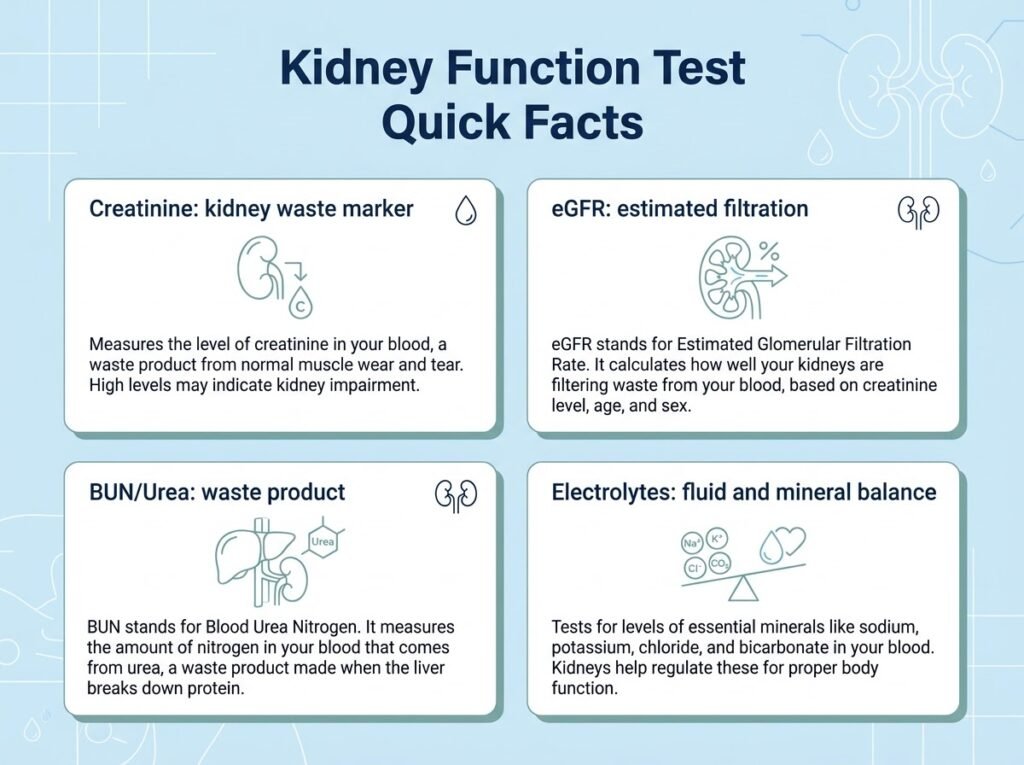
A kidney function test (KFT), also called a renal function test (RFT), is a group of laboratory tests used to assess kidney health. A report may contain creatinine, eGFR, urea or BUN, uric acid and electrolytes.
Seeing a number such as creatinine 1.4 mg/dL or eGFR 72 can be confusing. This guide explains what the common markers mean, how reference ranges are used, whether fasting is required and what can affect results.
Important: A single abnormal kidney result does not by itself diagnose kidney disease. Trends, urine tests, medical history and clinical assessment may all be important.
KFT Quick Summary
| Parameter | What it indicates | Common reference point |
|---|---|---|
| Creatinine | Waste product filtered by kidneys | Lab-specific; often around 0.6–1.3 mg/dL in adults |
| eGFR | Estimated kidney filtration | ≥90 is generally normal/high; interpretation depends on context |
| BUN/Urea | Nitrogenous waste | Lab-specific |
| Uric acid | Purine breakdown product | Lab-specific |
| Sodium/Potassium | Fluid and electrolyte balance | Lab-specific |
What Is a Kidney Function Test?
KFT/RFT is not one single test. It may combine blood and urine investigations that help assess kidney filtration and related functions. Many full-body checkups pair a KFT with a liver function test for a broader picture of organ health.
Common components include serum creatinine, eGFR, urea/BUN, uric acid and electrolytes. Depending on the reason for testing, a doctor may also request a urine albumin-to-creatinine ratio (UACR) or other urine tests.
For people at risk of chronic kidney disease, eGFR and urine albumin assessment can provide important information.
Creatinine: What Does It Mean?
Creatinine is produced through normal muscle metabolism and is removed from the blood by the kidneys.
Reference ranges vary with laboratory method, age, sex, muscle mass and other factors. A commonly used adult reference range is approximately 0.6–1.3 mg/dL, but your report’s own reference interval should be used.
A raised creatinine can occur with reduced kidney filtration, but dehydration, recent intense exercise, high meat/protein intake and some medicines can also affect the result.
eGFR: What Does Your Number Mean?
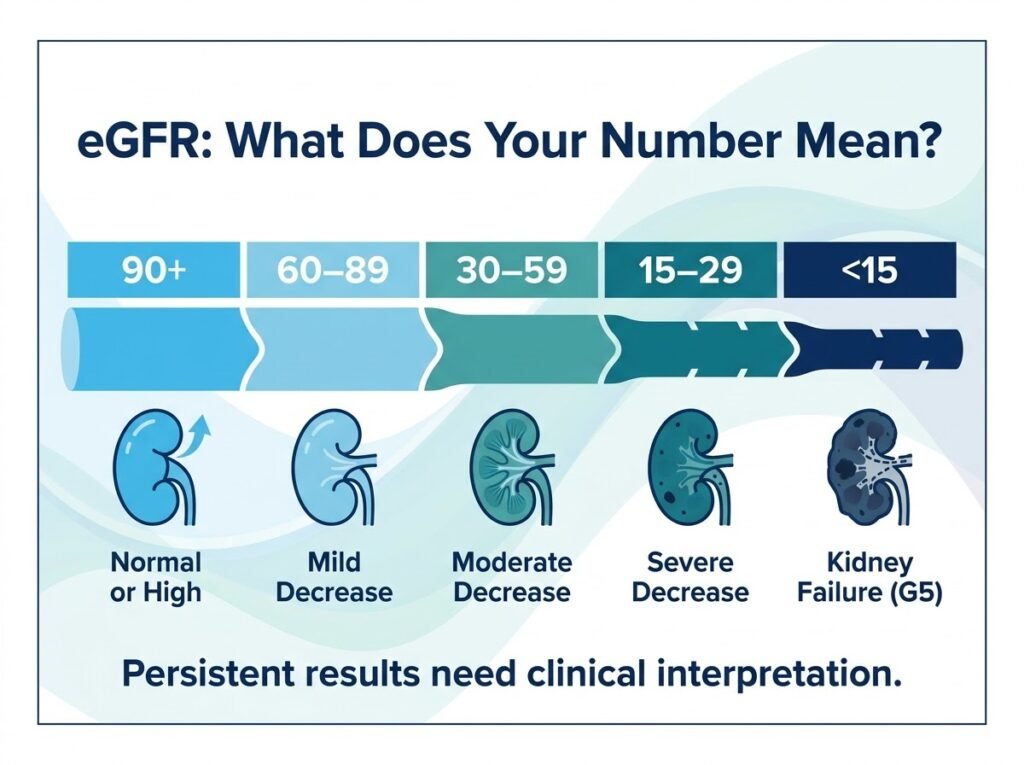
eGFR estimates how efficiently the kidneys filter blood. It is calculated using creatinine and other factors.
A simplified interpretation is:
| eGFR | General interpretation |
|---|---|
| 90 or above | Usually normal/high |
| 60–89 | Mildly decreased; may be normal in some people depending on age and other findings |
| 30–59 | Moderately decreased |
| 15–29 | Severely decreased |
| Below 15 | Kidney failure range |
An eGFR below 60 that persists for at least three months can be an important sign of chronic kidney disease, but diagnosis requires clinical assessment. A single low result should not be interpreted in isolation.
BUN / Urea
BUN measures nitrogen in the blood that comes from urea. Urea is produced when the body breaks down protein.
High BUN can occur with kidney impairment, but dehydration, high protein intake, gastrointestinal bleeding and other factors can also affect it. Doctors usually interpret BUN alongside creatinine and eGFR.
Uric Acid
Uric acid is produced when the body breaks down purines. The kidneys remove much of it through urine.
High uric acid may be associated with gout and kidney stones in some people, but a high result alone does not diagnose either condition.
Electrolytes: Sodium and Potassium
Kidneys help regulate sodium, potassium and other electrolytes. Significant kidney dysfunction can disturb electrolyte balance.
Abnormal potassium can sometimes be medically urgent, so do not ignore a markedly abnormal result or symptoms such as severe weakness, palpitations or fainting.
Do You Need to Fast Before a KFT?
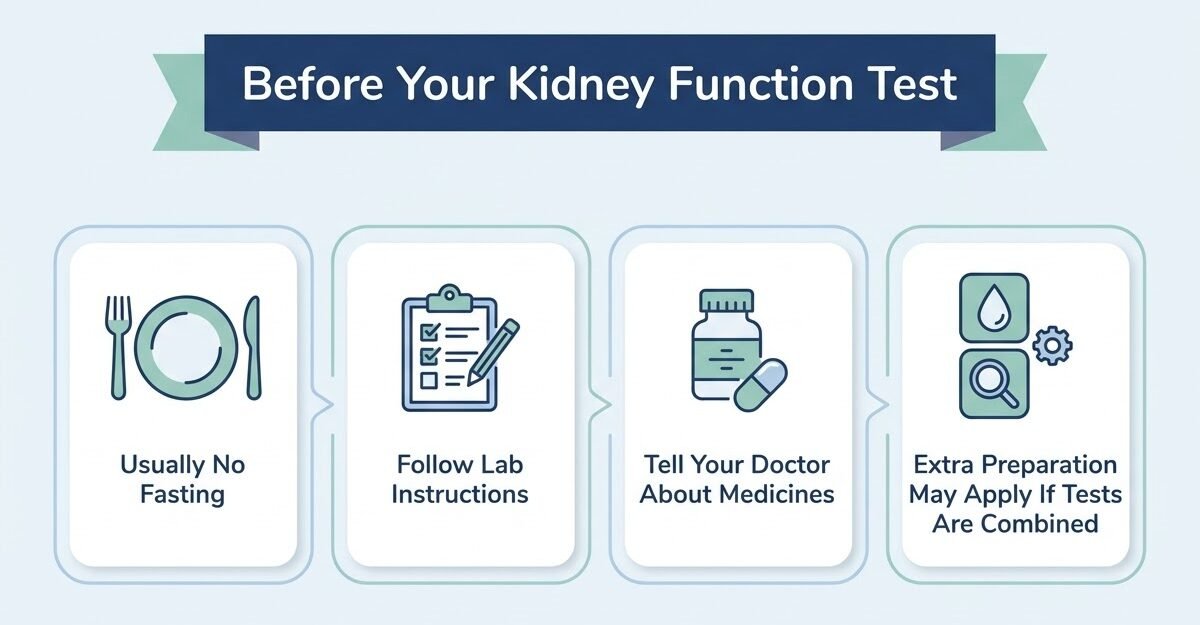
A standard KFT usually does not require fasting. However, if the same blood draw includes fasting glucose, a lipid profile or another fasting investigation, follow the combined preparation instructions.
Always follow the instructions from your testing laboratory or doctor.
What If Creatinine Is High or eGFR Is Low?
Do not assume that one abnormal number means kidney failure.
A doctor may consider:
- repeating the test;
- reviewing hydration and recent exercise;
- checking medicines and supplements;
- assessing blood pressure and blood sugar;
- ordering urine tests such as UACR;
- considering kidney imaging when clinically indicated.
Persistent abnormalities deserve medical evaluation.
Who May Need a Kidney Function Test?
Testing may be particularly important for people with:
- diabetes — an HbA1c test alongside a KFT is often used to monitor diabetes-related kidney risk;
- high blood pressure;
- a family history of kidney disease;
- known cardiovascular disease, including abnormal results on a lipid profile or cholesterol test;
- symptoms such as swelling or changes in urination;
- medicines that require kidney-function monitoring.
Kidney Function Test Cost in India
KFT prices vary by city, laboratory, number of parameters and provider, and can change over time. It’s best to confirm the current price and included parameters before booking rather than relying on a number you saw online.
HealthPartner India works with trusted diagnostic partners — including Tata 1mg, PharmEasy, Netmeds and Torus Health — so you don’t have to compare options yourself. Message us on WhatsApp with your city and requirement, and we’ll check current pricing and availability with our partners and place the booking on your behalf.
WhatsApp: +91 93479 68950
Note: a KFT is a blood draw processed at a partner lab, not a device — there’s no equipment purchase involved here, so this test always routes through the WhatsApp booking flow above rather than a direct link.
About the Author
Ravikiran, M.Pharm 10+ years of experience in healthcare & clinical practice. Focus: lab tests, diagnostics and patient education. Reviewed by HealthPartner India | Published: September 7, 2026
Medical Disclaimer
This article is for general educational and informational purposes only and does not constitute medical advice, diagnosis or treatment. Reference ranges for creatinine, eGFR, BUN and electrolytes are indicative and can vary by laboratory, testing method, age, sex, muscle mass and other individual factors — always rely on the range printed on your own report. A single abnormal result should not be used to self-diagnose kidney disease or to start, stop or change any treatment. If you experience symptoms such as severe weakness, palpitations, fainting, marked swelling, or a sudden change or stoppage in urination, seek emergency medical care immediately. HealthPartner India is a healthcare assistance service; we help customers access and book diagnostic tests through our partner network but do not provide medical diagnosis or treatment.
Medical references
- NIDDK, Tests for Chronic Kidney Disease: https://www.niddk.nih.gov/health-information/kidney-disease/chronic-kidney-disease-ckd/tests-diagnosis
- National Kidney Foundation, Estimated Glomerular Filtration Rate (eGFR): https://www.kidney.org/atoz/content/gfr
We are proud to partner with Tata 1mg, PharmEasy, Netmeds and Torus Health to help our customers access diagnostic testing.
FAQ
What is a kidney function test?
A KFT/RFT is a group of blood and sometimes urine tests used to assess kidney filtration and related functions.
What is the normal creatinine range?
Creatinine reference ranges vary by laboratory and patient factors. A commonly used adult range is approximately 0.6–1.3 mg/dL, but use the reference interval printed on your report.
Do I need to fast before a KFT?
A standard KFT usually does not require fasting. Combined tests may require fasting.
What does low eGFR mean?
A low eGFR can indicate reduced kidney filtration, but a single result does not establish chronic kidney disease. Persistent changes require medical assessment.
How much does a kidney function test cost in India?
The cost varies by city, provider and the number of tests included. Message HealthPartner India on WhatsApp and we’ll check the current price with our partner labs for you.
HealthPartner CTA
Need help checking a KFT/RFT test from home? Send your requirement to HealthPartner India on WhatsApp and we’ll check current availability and pricing with our diagnostic partners and place the booking on your behalf.
WhatsApp: +91 93479 68950
HealthPartner India books your test through our partner network — including Tata 1mg, PharmEasy, Netmeds and Torus Health — on your behalf; test availability, pricing, sample collection and fulfilment depend on the selected partner.