
Quick Summary
- CRP stands for C-reactive protein, a protein made mainly by the liver in response to inflammation.
- A CRP blood test helps indicate how much inflammation may be present in the body.
- CRP is a non-specific marker. A high CRP does not tell you exactly where the inflammation is or what caused it.
- CRP may increase with infections, inflammatory conditions and several other health problems.
- hs-CRP is a more sensitive test used in certain situations to help assess cardiovascular risk.
- CRP results should be interpreted together with symptoms, medical history and other tests such as CBC or ESR.
What Is a CRP Test?
A CRP test measures the amount of C-reactive protein in your blood.
CRP is produced mainly by the liver. Its level can increase when the body has inflammation caused by infection, injury or other health conditions.
CRP is therefore commonly used as a marker of inflammation.
However, a CRP test cannot identify the exact cause or location of inflammation on its own.
CRP Full Form
CRP full form: C-reactive protein.
Common search terms for the same test include:
- CRP test
- CRP blood test
- C-reactive protein test
- C reactive protein test
- CRP inflammation test
Standard CRP vs hs-CRP
There are two commonly discussed forms of CRP testing.
Standard CRP Test
A standard CRP test is mainly used when doctors are evaluating significant inflammation or monitoring an inflammatory or infectious condition.
High-Sensitivity CRP (hs-CRP)
An hs-CRP test can measure much smaller amounts of CRP.
It may be used as part of an assessment of cardiovascular disease risk.
hs-CRP should not be confused with the standard CRP test because they are used for different clinical purposes.
Why Do Doctors Order a CRP Test?
A doctor may recommend a CRP blood test to:
- Evaluate suspected inflammation
- Help assess certain infections
- Monitor inflammatory conditions
- Monitor response to treatment
- Investigate symptoms such as fever or chills
- Support evaluation of autoimmune or inflammatory diseases
- Monitor certain conditions after surgery
- Assess cardiovascular risk using hs-CRP when appropriate
CRP is usually interpreted together with symptoms and other test results.
CRP Test Normal Range
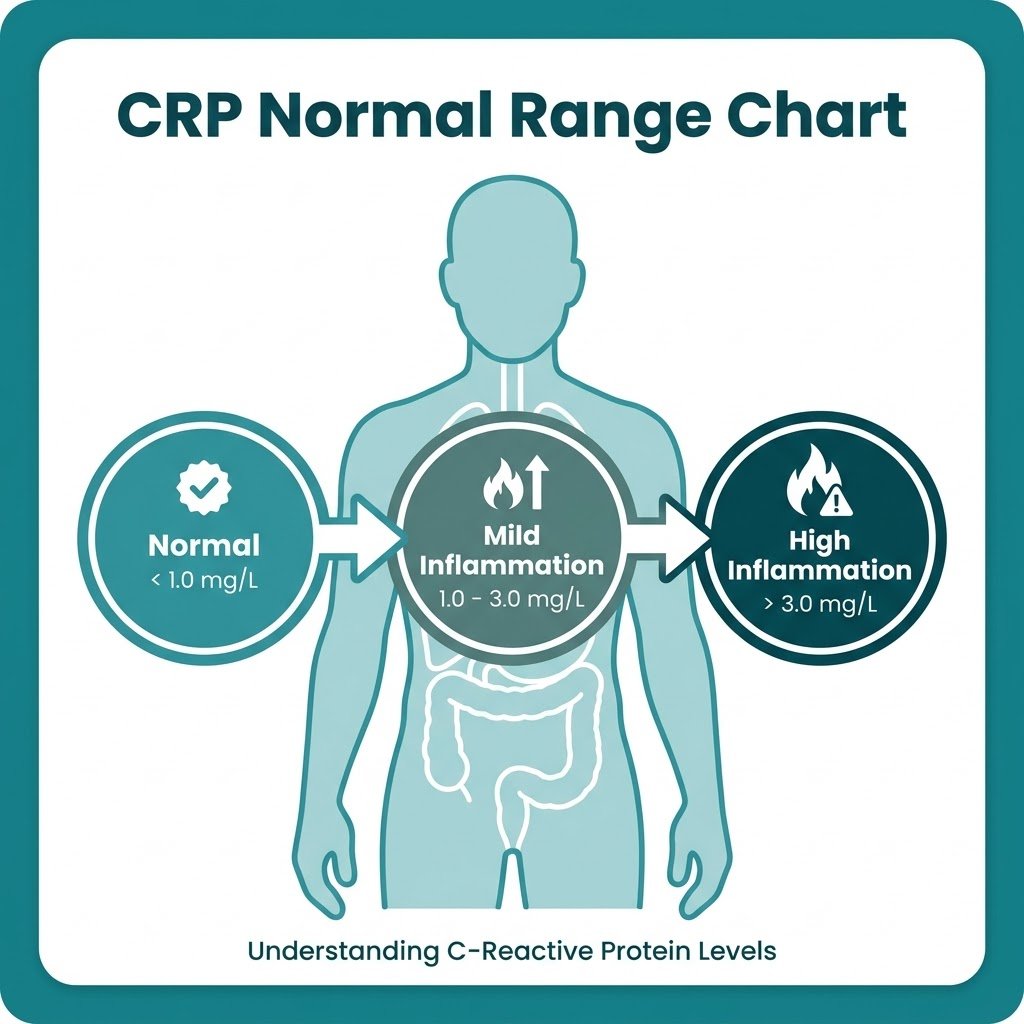
CRP reference ranges vary between laboratories and may be reported in different units (mg/L or mg/dL).
MedlinePlus states that the majority of healthy adults have CRP levels less than 0.3 mg/dL (approximately 3 mg/L). It also notes that a minor rise of 0.3–1 mg/dL is of unclear significance, while levels from 1–10 mg/dL are considered a moderate increase and levels above 10 mg/dL a marked increase.
Separately, many Indian diagnostic labs report their own standard reference range as CRP below 10 mg/L, using a single combined cut-off rather than MedlinePlus’s tiered breakdown — this is a commonly cited clinical range and is fine to use alongside the figures above, but it is a different (broader) cut-off, so the two shouldn’t be conflated as the same number.
| CRP Result | General Interpretation |
|---|---|
| Low/within laboratory reference range | No significant CRP elevation detected |
| Above laboratory reference range | May indicate inflammation |
| Very high result | May occur with significant inflammation or infection and requires clinical evaluation |
Important: A CRP number by itself cannot tell you whether you have a bacterial infection, viral infection, autoimmune disease or another condition.
Always use the reference range and units printed on your laboratory report.
What Does a High CRP Mean?
A high CRP means that CRP is elevated in your blood.
It can occur with:
- Bacterial infections
- Viral infections
- Autoimmune diseases
- Rheumatoid arthritis
- Lupus
- Vasculitis
- Inflammatory bowel disease
- Injury
- Inflammation after surgery
- Obesity and metabolic conditions
- Smoking and some environmental exposures
- Other inflammatory conditions
A high CRP does not automatically mean that you have a serious disease.
Your doctor may consider your symptoms, physical examination, medical history and other blood tests.
Is High CRP Dangerous?
Not necessarily.
CRP is a marker of inflammation rather than a diagnosis.
A high CRP can occur because of a temporary infection or other inflammatory condition. The importance of the result depends on how high it is, how you feel and what other findings are present.
If your CRP is significantly elevated or you have symptoms such as high fever, breathing difficulty, severe weakness, confusion or rapidly worsening illness, seek medical attention promptly.
What Does a Low CRP Mean?
A low CRP generally means that there is no significant elevation of CRP at the time of testing.
However, a normal CRP does not rule out every disease or every form of inflammation.
Your doctor will interpret the result in context.
CRP and Infection
CRP can increase during infections.
It may be elevated in both bacterial and viral infections, so CRP alone cannot reliably tell you which type of infection you have.
Doctors may combine CRP with:
- Symptoms
- Physical examination
- CBC
- WBC differential
- ESR
- Other tests
CRP and Inflammation
CRP is a useful marker of inflammation because levels can change as inflammation increases or decreases.
If CRP falls during treatment, it may indicate that inflammation is decreasing.
However, CRP should always be interpreted in the context of the condition being treated.
CRP vs ESR
Both CRP and ESR can be used when doctors are evaluating inflammation, but they behave differently.
| CRP | ESR |
|---|---|
| Measures C-reactive protein | Measures how quickly red blood cells settle |
| Can change relatively quickly with inflammation | Usually changes more slowly |
| Can help monitor inflammation | Can help evaluate and monitor inflammatory conditions |
| Does not identify the cause by itself | Does not identify the cause by itself |
Read our detailed ESR Test Guide.
CBC vs CRP vs ESR
| Test | Main Information |
|---|---|
| CBC | Blood-cell counts and related measurements |
| CRP | C-reactive protein and inflammation |
| ESR | Sedimentation rate associated with inflammation |
A doctor may order two or all three tests depending on the symptoms and clinical situation.
Read our CBC Test Guide.
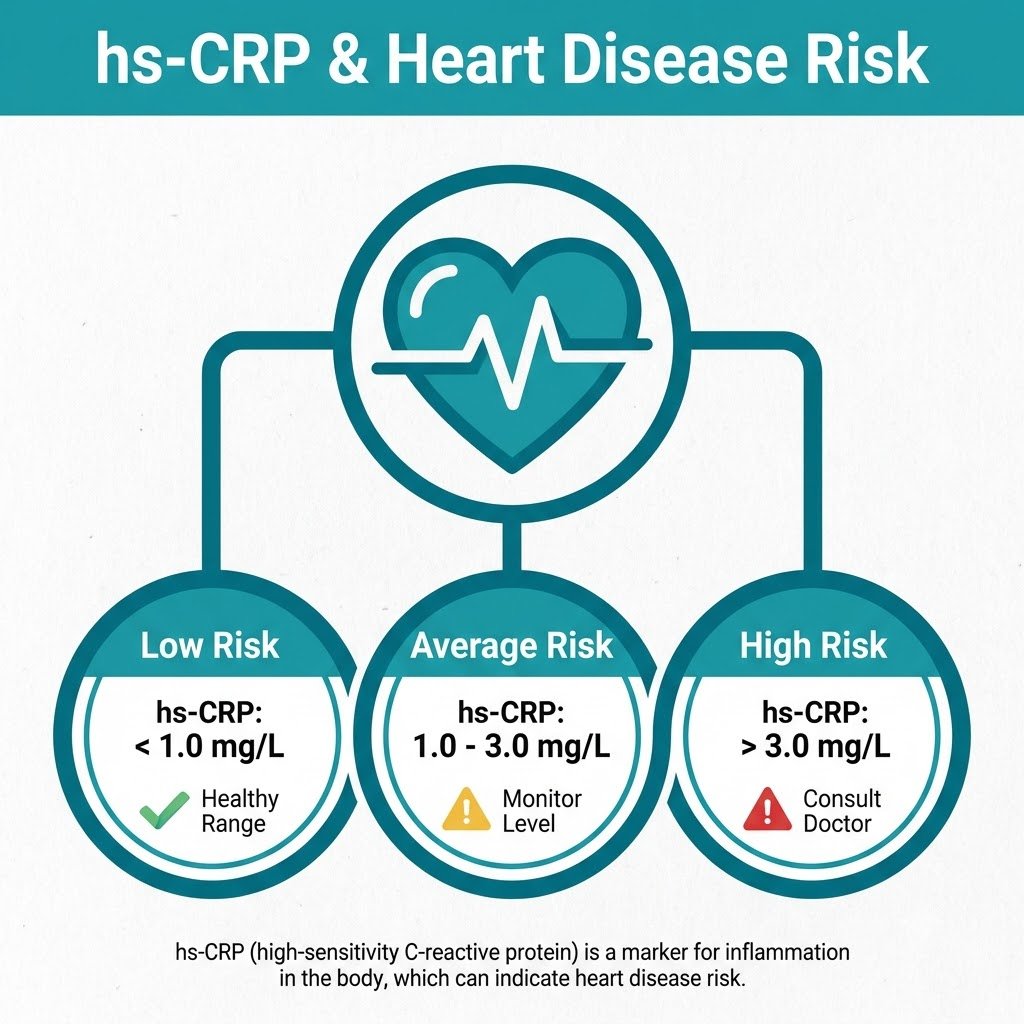
hs-CRP and Heart Disease Risk
An hs-CRP test measures very small changes in CRP.
It may be used as one part of cardiovascular risk assessment.
An elevated hs-CRP does not mean that a person definitely has heart disease.
Cardiovascular risk depends on several factors, including:
- Blood pressure
- Cholesterol
- Smoking
- Diabetes
- Family history
- Age
- Weight
- Physical activity
- Other medical conditions
Your doctor should interpret hs-CRP alongside your overall cardiovascular risk profile.
Symptoms That May Lead to a CRP Test
A doctor may consider a CRP test when symptoms or clinical findings suggest inflammation or infection, such as:
- Fever
- Chills
- Rapid breathing
- Rapid heart rate
- Joint pain
- Joint swelling
- Persistent inflammation
- Symptoms of an autoimmune condition
- Infection that is not improving
These symptoms can have many causes.
How Is the CRP Test Done?
A healthcare professional collects a small blood sample from a vein, usually in the arm.
The sample is sent to a laboratory for testing.
The blood collection generally takes only a few minutes.
Is Fasting Required for a CRP Test?
Fasting is generally not required for a CRP test alone.
However, if other blood tests are ordered at the same time, you may receive fasting instructions.
Always follow the instructions given by your healthcare provider or laboratory.
CRP Test Cost in India
The price varies by laboratory, city, test type and location.
A standard CRP test may commonly cost around ₹300–₹500, while hs-CRP may have a different price.
Prices can change, so check the current local price before booking.
When Should You Take a CRP Test?
A CRP test may be recommended when your doctor is evaluating:
- Suspected infection
- Inflammation
- Autoimmune disease
- Inflammatory conditions
- Treatment response
- Certain post-surgical conditions
An hs-CRP may be considered in specific cardiovascular risk assessments.
Compare CRP Test Prices & Get Booking Assistance
CRP and hs-CRP test prices can vary between laboratories and locations.
Health Partner India, in partnership with Tata 1mg and Torus Health, can help you check available diagnostic test options and get assistance with booking.
👉 Chat with us on WhatsApp for current CRP test prices and availability.
Frequently Asked Questions
1. What is the normal CRP level?
CRP reference ranges vary between laboratories. Healthy people generally have very low CRP levels. Always compare your result with the reference range and units printed on your report.
2. What does high CRP mean?
High CRP means that CRP is elevated and may indicate inflammation. It can occur with infections, autoimmune conditions, injuries and other health conditions.
3. Is high CRP always dangerous?
No. High CRP does not automatically mean a dangerous disease. The result must be interpreted alongside symptoms and other tests.
4. Does high CRP always mean infection?
No. CRP can increase with infections, autoimmune conditions, injuries and several other causes of inflammation.
5. What is hs-CRP?
hs-CRP stands for high-sensitivity C-reactive protein. It detects smaller changes in CRP and may be used as part of cardiovascular risk assessment.
6. Is CRP the same as ESR?
No. Both are inflammation-related blood tests, but they measure different things. CRP measures C-reactive protein, while ESR measures how quickly red blood cells settle.
7. Why are CRP, ESR and CBC ordered together?
They provide different information. CBC looks at blood cells, while CRP and ESR provide information related to inflammation.
8. Is fasting required for a CRP test?
Usually no for CRP alone. Fasting may be required if other tests are performed at the same time.
9. How much does a CRP test cost in India?
A standard CRP test may commonly cost around ₹300–₹500, but prices vary by laboratory and location.
10. Can CRP diagnose cancer?
No. CRP is a non-specific inflammation marker and cannot diagnose cancer by itself.
Medical References
- MedlinePlus — C-Reactive Protein (CRP) Test
- MedlinePlus — C-Reactive Protein
This article is for informational purposes only and does not replace advice from a qualified healthcare provider. Always discuss your test results with your doctor.
📲 Follow Health Partner India: