
If your blood test report shows ESR, you may wonder what the result means and whether a high ESR is dangerous.
The ESR blood test, also called the erythrocyte sedimentation rate or sed rate test, is commonly used to look for signs of inflammation in the body. However, ESR cannot identify the exact disease causing the inflammation. Doctors usually interpret it along with symptoms, medical history and other blood tests such as CBC and CRP.
This guide explains the ESR test normal range by age and sex, high ESR causes, low ESR meaning, ESR values such as 20, 30, 50 and 100 mm/hr, ESR vs CRP, test preparation, cost, and when you should discuss the result with a doctor.
Quick Summary
| ESR Test Information | Details |
|---|---|
| Full form | Erythrocyte Sedimentation Rate |
| Also called | ESR, sed rate, sedimentation rate |
| Sample required | Blood sample |
| Unit | mm/hr |
| Main purpose | Helps detect and monitor inflammation |
| Fasting | Usually not required for ESR alone |
| High ESR | Can occur with inflammation, infection and several other conditions |
| Low ESR | Can occur with certain blood and other medical conditions |
| Important limitation | ESR alone cannot diagnose a specific disease |
Important: A high ESR does not automatically mean cancer, infection or another serious disease. ESR is a non-specific test and must be interpreted in context.
What Is an ESR Test?
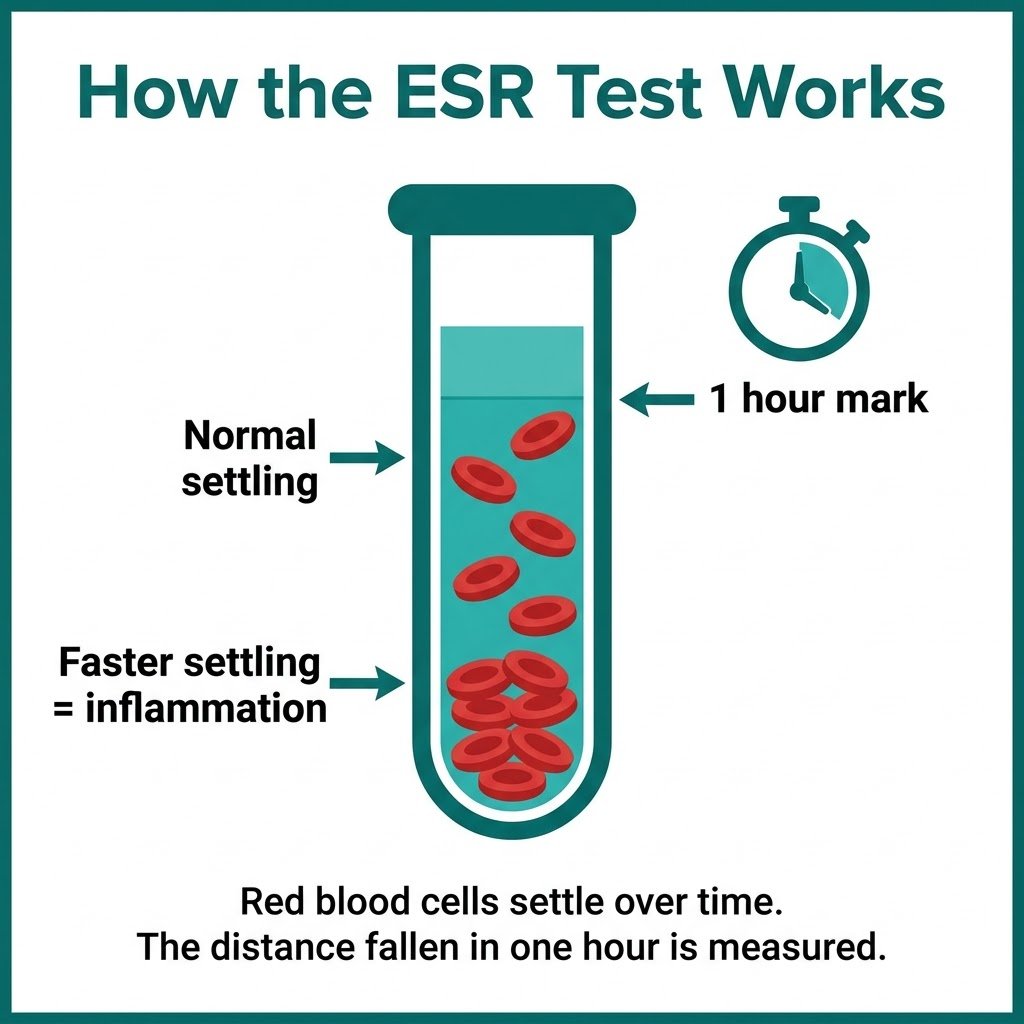
An ESR test measures how quickly red blood cells, also called erythrocytes, settle at the bottom of a tall tube containing a blood sample over one hour.
When inflammation is present, changes in proteins in the blood can cause red blood cells to stick together and form groups. These groups can settle faster than individual red blood cells, so a faster-than-expected sedimentation rate can be associated with inflammation.
The test is useful for helping doctors investigate or monitor inflammatory conditions, but ESR cannot tell exactly where the inflammation is or what caused it.
ESR Full Form
ESR stands for Erythrocyte Sedimentation Rate.
- Erythrocyte = red blood cell
- Sedimentation = settling of cells
- Rate = the speed at which the cells settle
The result is generally reported as millimetres per hour (mm/hr), and the test is also commonly called the sed rate or sedimentation rate test.
Why Is an ESR Test Done?
Doctors may recommend an ESR blood test when they suspect inflammation or want to monitor an inflammatory condition. Common reasons include:
- Unexplained fever
- Joint pain, stiffness or swelling
- Muscle pain
- Persistent fatigue or unexplained weight loss
- Loss of appetite
- Headaches in certain clinical situations
- Suspected autoimmune or inflammatory disease
- Monitoring an existing inflammatory condition or treatment response
Conditions associated with an elevated ESR include certain infections, arthritis, vasculitis, inflammatory bowel disease and autoimmune disorders. An ESR test is generally not used alone to diagnose a disease.
ESR Normal Range
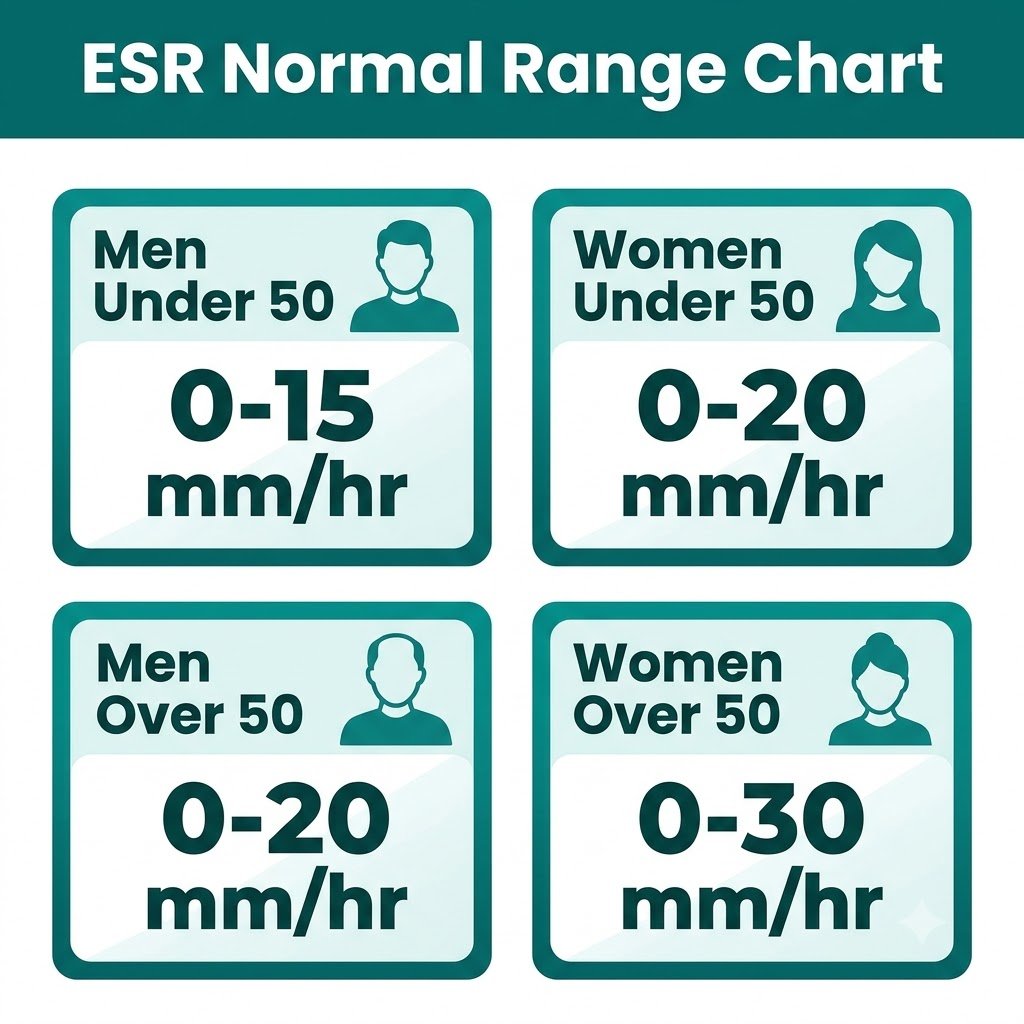
The ESR normal range depends on factors such as age, sex and the laboratory method used. For the commonly used Westergren method, MedlinePlus lists the following adult reference values:
| Age / Sex | ESR Reference Range |
|---|---|
| Men under 50 years | Less than 15 mm/hr |
| Men over 50 years | Less than 20 mm/hr |
| Women under 50 years | Less than 20 mm/hr |
| Women over 50 years | Less than 30 mm/hr |
| Newborns | 0–2 mm/hr |
| Children (newborn to puberty) | 3–13 mm/hr |
Important Note About ESR Normal Values
These are general reference values — your laboratory may use a different reference range depending on its testing method and equipment. Always compare your ESR result with the reference range printed on your own laboratory report, since age, sex, pregnancy and other factors can affect results.
Does ESR Increase With Age?
Yes. ESR tends to increase with age, and women can also have higher reference limits than men. This means an ESR number that looks high compared with a young adult’s range may not have the same significance in an older person — which is why doctors don’t interpret ESR using a single number for everyone.
What Does a High ESR Mean?
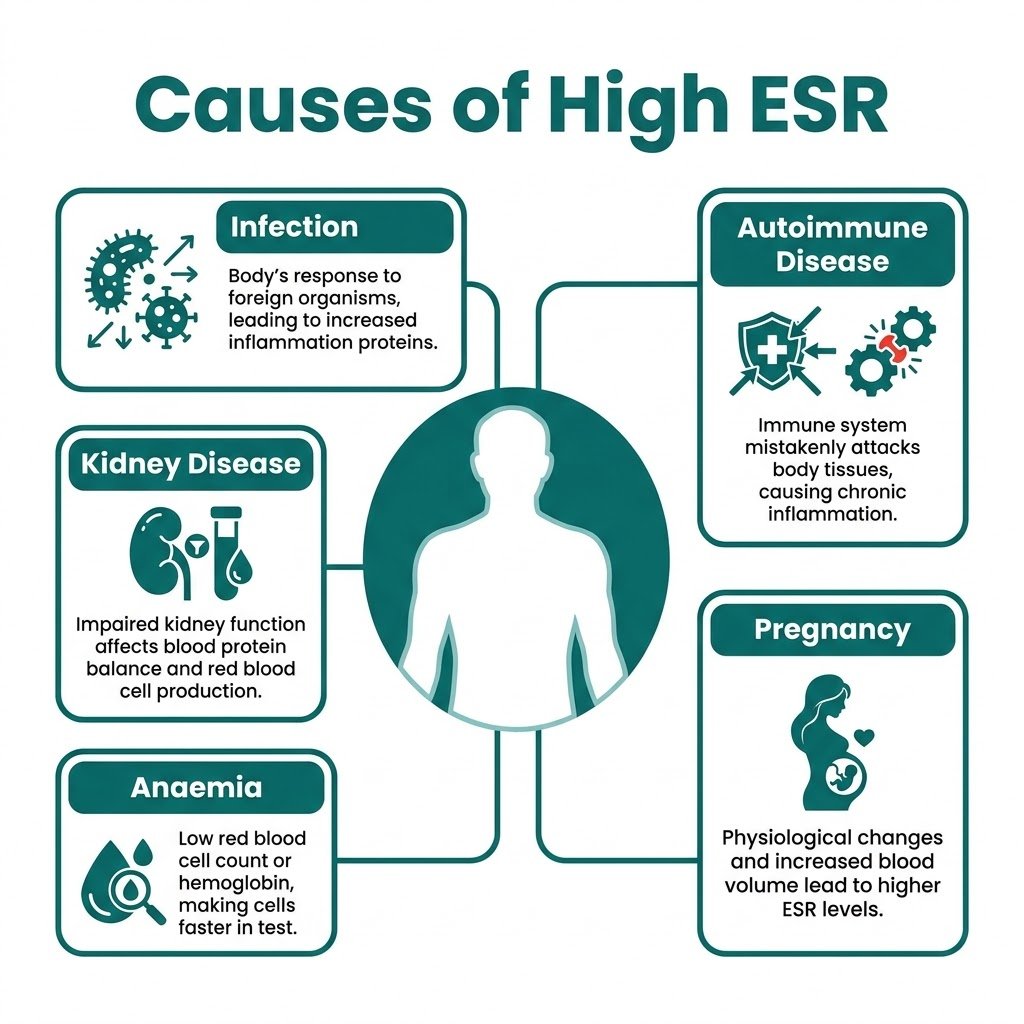
A high ESR means red blood cells are settling faster than expected. This can occur when inflammation changes the proteins in the blood, but a high ESR is not a diagnosis. Possible causes include:
1. Infections
Some bacterial, viral and other infections can cause an elevated ESR.
2. Autoimmune and Inflammatory Diseases
ESR can be elevated in conditions such as rheumatoid arthritis, lupus, vasculitis, polymyalgia rheumatica and other inflammatory disorders.
3. Anaemia
Anaemia can affect ESR results and may contribute to an elevated ESR. If your ESR is high, your doctor may look at your CBC and haemoglobin results as part of the evaluation. Read more: Iron Deficiency: Symptoms, Causes & Test Guide.
4. Kidney Disease
Some kidney conditions can be associated with a high ESR.
5. Pregnancy
ESR can increase during pregnancy, so pregnancy status is important when interpreting the result.
6. Certain Cancers
Some cancers can be associated with a significantly elevated ESR. However, a high ESR does not mean that you have cancer — many non-cancerous conditions, including infections, inflammation and anaemia, can also raise ESR.
7. Other Factors
ESR may also be influenced by age, obesity, menstrual cycle, exercise, certain medicines and supplements, and other medical conditions.
What Does ESR 20 Mean?
An ESR of 20 mm/hr cannot be labelled simply as normal or abnormal without knowing your age, sex and laboratory reference range. For example, using the commonly cited Westergren adult ranges, a man under 50 may have an ESR of 20 mm/hr that is above the typical reference limit, while a woman over 50 may have an ESR of 20 mm/hr that falls within the commonly used reference range. ESR 20 should be interpreted using your laboratory’s reference range and your clinical situation.
What Does ESR 30 Mean?
An ESR of 30 mm/hr may be normal for some people and elevated for others. For example, a woman over 50 may have a reference upper limit around 30 mm/hr under commonly used Westergren ranges, while a younger man may have a lower reference limit. An ESR of 30 does not by itself indicate a particular disease.
What Does ESR 50 Mean?
An ESR of 50 mm/hr is above the commonly cited adult reference ranges and may indicate an inflammatory process, but it does not identify the cause. Possible explanations include infection, autoimmune disease, inflammatory disease, anaemia, kidney disease, pregnancy or other medical conditions. Your doctor may consider additional tests such as CBC, CRP and other investigations depending on your symptoms.
What Does ESR 100 Mean?
An ESR of 100 mm/hr or higher is a marked elevation. Very high ESR values can occur with significant infections, inflammatory or autoimmune diseases and some cancers — but the result alone cannot tell which condition is responsible. If your ESR is around or above 100 mm/hr, particularly with symptoms such as persistent fever, unexplained weight loss, severe weakness or significant pain, discuss the result with a healthcare professional. Do not use an ESR value alone to diagnose cancer, tuberculosis or another specific disease.
Can High ESR Occur Without Symptoms?
Yes. Some people may have an elevated ESR without obvious symptoms, since ESR can be affected by several factors other than active inflammation, including age, anaemia, pregnancy and other medical conditions. If your ESR is unexpectedly high, your healthcare provider may repeat the test or order additional investigations depending on your medical history and symptoms.
What Does a Low ESR Mean?
A low ESR generally receives less attention than a markedly elevated ESR, but it can occur for several reasons, including polycythemia, sickle cell disease, a very high white blood cell count, certain blood disorders, heart failure, and some kidney or liver conditions. A low ESR does not automatically indicate that something is wrong — your doctor will interpret it together with your symptoms and other test results.
ESR vs CRP: What Is the Difference?
ESR and CRP are both used to assess inflammation, but they are different tests.
| Feature | ESR | CRP |
|---|---|---|
| Full form | Erythrocyte Sedimentation Rate | C-Reactive Protein |
| What it measures | Red blood cell settling rate | C-reactive protein level |
| Inflammation marker | Yes | Yes |
| Changes over time | Relatively slower | Generally responds faster |
| Specific for one disease? | No | No |
| Can be affected by other factors? | Yes | Yes |
CRP often responds more quickly to changes in inflammation, while ESR can remain elevated for longer. Doctors may request ESR and CRP together because the two tests provide complementary information. Read more: CRP Test: Normal Range & What It Means.
ESR vs CBC: What’s the Difference?
ESR and CBC are not the same test. A CBC (Complete Blood Count) measures and provides information about blood cells, including red blood cells, haemoglobin, white blood cells, platelets and other blood-cell measurements. An ESR test measures the rate at which red blood cells settle and provides indirect information that may be associated with inflammation. Doctors may order both tests because they provide different information. Read more: Complete Blood Count (CBC) Test: Normal Range Guide.
How Is the ESR Test Done?
An ESR blood test requires a small blood sample. A healthcare professional generally cleans the skin, inserts a small needle into a vein, collects blood into a tube or vial, and sends the sample to the laboratory to measure how quickly the red blood cells settle. The blood collection generally takes only a few minutes. You may experience a brief sting or mild discomfort, and minor bruising can sometimes occur at the site.
Is Fasting Required for an ESR Test?
Usually, no. You generally do not need special preparation or fasting for an ESR test alone. However, if your doctor orders ESR together with other blood tests, some of those tests may require fasting — always follow the instructions provided by your doctor or laboratory.
How Long Does an ESR Test Take?
Blood collection usually takes only a few minutes. The laboratory then processes the sample and reports the ESR value in mm/hr. The exact time required to receive the report can vary between laboratories and locations, so check the laboratory’s current report-delivery time when booking.
Is the ESR Test Painful?
ESR requires a normal blood draw from a vein. You may feel a brief needle prick, mild discomfort, or minor bruising in some cases. Serious complications from a routine blood draw are uncommon.
What Can Affect ESR Results?
Several factors can influence ESR, including age, sex, pregnancy, anaemia, certain blood disorders, kidney or liver conditions, infection, inflammatory conditions, obesity, menstrual cycle, exercise, and some medicines and supplements. This is why a single ESR number should not be interpreted without considering the complete clinical picture.
Can ESR Be Normal Even If You Have Inflammation?
Yes. A normal ESR does not completely rule out inflammation. Some inflammatory conditions may have a normal ESR, particularly depending on the timing and type of condition. Doctors may use other tests, such as CRP, when additional information is needed.
Can Anaemia Increase ESR?
Yes. Anaemia can influence ESR and may result in an elevated value even when it is not being used as a direct measure of inflammation. This is one reason doctors may consider ESR together with a CBC, haemoglobin and other relevant blood tests.
When Should You Talk to a Doctor About a High ESR?
Speak with a healthcare professional if your ESR is significantly above the laboratory reference range, remains elevated on repeat testing, or is markedly elevated (particularly around or above 100 mm/hr) — especially alongside unexplained fever, persistent joint pain or swelling, unexplained weight loss, persistent fatigue or weakness, or symptoms suggesting an autoimmune or inflammatory condition. The appropriate next step depends on your symptoms and medical history.
Does a High ESR Always Require Treatment?
No. ESR itself is a laboratory measurement. Treatment, if required, is directed at the underlying condition causing the abnormal result, not at the ESR number itself. For example, if an infection is responsible, the healthcare provider will evaluate and treat the infection appropriately; if an autoimmune or inflammatory condition is suspected, further evaluation may be needed. Do not start or stop medication based only on your ESR report.
ESR Test Cost in India
The ESR test price in India varies depending on the diagnostic laboratory, city, whether home sample collection is chosen, the laboratory package, current discounts or offers, and whether ESR is ordered as an individual test or part of a health package. Because prices change, it is better to check the current local price rather than relying on an old price published online.
Need Help Finding an ESR Test?
Health Partner India works with trusted diagnostic partners including Tata 1mg and Torus Health to help you compare ESR test prices and book at the best available rate, with home sample collection available in most locations.
👉 Chat with HealthPartner India on WhatsApp for current availability and pricing near you.
You can also visit HealthPartner India — Health Information & Assistance.
How to Prepare for an ESR Blood Test
For ESR alone, special preparation is generally not required. Before your test: follow your laboratory’s instructions, tell your healthcare provider about medicines and supplements you take, inform the healthcare professional if you are pregnant, ask whether fasting is required if other blood tests are ordered at the same time, and take your usual medicines unless your doctor tells you otherwise. Do not stop prescribed medication simply because you are going for an ESR test.
Frequently Asked Questions About ESR
1. What is the ESR full form? ESR stands for Erythrocyte Sedimentation Rate.
2. What is a normal ESR value? For adults using commonly cited Westergren reference ranges, men under 50 generally have an upper reference value of less than 15 mm/hr, men over 50 less than 20 mm/hr, women under 50 less than 20 mm/hr and women over 50 less than 30 mm/hr. Laboratory ranges may vary.
3. What does high ESR mean? A high ESR can indicate an inflammatory process, but it cannot identify the exact cause. Infections, autoimmune diseases, anaemia, pregnancy, kidney disease and several other conditions can affect ESR.
4. Is ESR a test for infection? ESR can become elevated during some infections, but ESR is not an infection-specific test. Additional tests are usually needed to determine the cause.
5. Is ESR a test for cancer? No. ESR cannot diagnose cancer. Some cancers can be associated with high ESR, but many non-cancerous conditions can also raise ESR.
6. Is ESR the same as CRP? No. ESR and CRP are different inflammation-related blood tests. CRP generally changes more quickly, while ESR is influenced by several additional factors. Doctors may use both tests.
7. Does ESR increase with age? Yes. ESR tends to increase with age, which is why reference ranges differ according to age and sex.
8. Is fasting required for an ESR blood test? Usually not. ESR alone generally does not require fasting. If other tests are being performed, fasting may be required for those tests.
9. What does ESR 20 mean? ESR 20 mm/hr may be normal or elevated depending on age, sex and the laboratory’s reference range.
10. What does ESR 30 mean? ESR 30 mm/hr may fall within the reference range for some older women but may be above the usual reference range for some younger adults. The laboratory reference range should be used.
11. What does ESR 50 mean? ESR 50 mm/hr is above commonly cited adult reference ranges and may indicate inflammation or another condition affecting ESR. It does not identify the cause by itself.
12. What does ESR 100 mean? ESR 100 mm/hr or higher is a marked elevation and can occur with significant infection, inflammatory disease and some cancers. It requires clinical interpretation rather than self-diagnosis.
13. Can ESR be normal when inflammation is present? Yes. A normal ESR does not completely rule out inflammation. Doctors may use CRP and other tests when appropriate.
14. Can anaemia increase ESR? Yes. Anaemia can influence ESR and is one of the factors doctors consider when interpreting an elevated result.
15. Is a low ESR dangerous? A low ESR is not necessarily dangerous. It can occur due to certain blood disorders and other medical conditions. The result should be interpreted along with other findings.
16. Is ESR testing safe? Yes. ESR is a routine blood test. A small amount of blood is collected from a vein, and temporary discomfort or minor bruising may occur.
Key Takeaways
- ESR means Erythrocyte Sedimentation Rate.
- ESR is a blood test used to help identify or monitor inflammation.
- The ESR normal range varies by age, sex and laboratory method.
- A high ESR does not automatically mean a serious disease.
- Infection, autoimmune disease, anaemia, pregnancy, kidney disease and several other conditions can affect ESR.
- ESR cannot diagnose a specific disease by itself.
- ESR and CRP are different tests and may sometimes be ordered together.
- Fasting is generally not required for ESR alone.
- A markedly elevated ESR should be discussed with a healthcare professional.
- Always interpret your ESR result together with your symptoms and other test results.
Related Reading
- CRP Test: Normal Range & What It Means
- Complete Blood Count (CBC) Test: Normal Range Guide
- Iron Deficiency: Symptoms, Causes & Test Guide
Medical References
- MedlinePlus (U.S. National Library of Medicine) — Erythrocyte Sedimentation Rate (ESR)
- MedlinePlus Medical Encyclopedia — ESR — Erythrocyte Sedimentation Rate
- Mayo Clinic — Sed Rate (Erythrocyte Sedimentation Rate)
Medical Disclaimer
This article is provided for general health education and informational purposes only. It does not replace consultation with a qualified doctor or other healthcare professional. ESR results should be interpreted together with your symptoms, medical history and other laboratory or diagnostic findings. Do not start, stop or change any medicine based only on an ESR result. If you have concerning or worsening symptoms, seek appropriate medical care.
This article is for informational purposes only and does not replace advice from a qualified healthcare provider. Always discuss your test results with your doctor.
📲 Follow us for more health tips: Instagram | Facebook | WhatsApp