
Do you snore loudly, wake up gasping for air, or feel tired even after a full night of sleep? These symptoms may sometimes indicate sleep apnoea (sleep apnea), a sleep-related condition in which breathing repeatedly stops or becomes shallow during sleep.
Sleep apnoea can disturb normal sleep, affect daytime alertness and make everyday activities more difficult. Some people are unaware that their breathing is interrupted until a family member or partner notices unusual breathing patterns during the night.
However, snoring alone does not mean you have sleep apnoea, and not everyone with this condition snores. Understanding the warning signs, possible causes and available treatment options can help you decide when to seek medical advice.
This guide explains the types of sleep apnoea, common symptoms, risk factors, diagnostic tests, treatment options and practical steps that may support better sleep. If you are also planning general health tests, you may find our guide on which health checkup tests to consider after 30 useful.
📌 Quick Summary
- What is sleep apnoea? A condition in which breathing repeatedly pauses or becomes reduced during sleep.
- Common symptoms: Loud snoring, observed breathing pauses, gasping, morning headaches and daytime sleepiness.
- Main types: Obstructive sleep apnoea and central sleep apnoea.
- How is it diagnosed? A healthcare professional may recommend a sleep study or a suitable home sleep test.
- Treatment options: Positive airway pressure therapy, selected oral appliances, lifestyle measures and specialist treatments.
- When to seek medical advice: Consult a healthcare professional if someone notices breathing pauses during your sleep or persistent sleepiness affects your daily activities.
💬 Need help arranging a doctor consultation, lab test or health checkup? Message Health Partner India on WhatsApp (+91 93479 68950) and our team will assist you. Follow us on Instagram and Facebook for daily health tips.
What Is Sleep Apnoea?
Sleep apnoea is a disorder in which breathing repeatedly stops or becomes unusually shallow while a person sleeps. These episodes can interrupt normal sleep and may reduce oxygen levels in the blood.
Some people briefly wake up many times during the night without remembering it the following morning. As a result, they may experience unrefreshing sleep, fatigue, poor concentration or difficulty staying alert during the day.
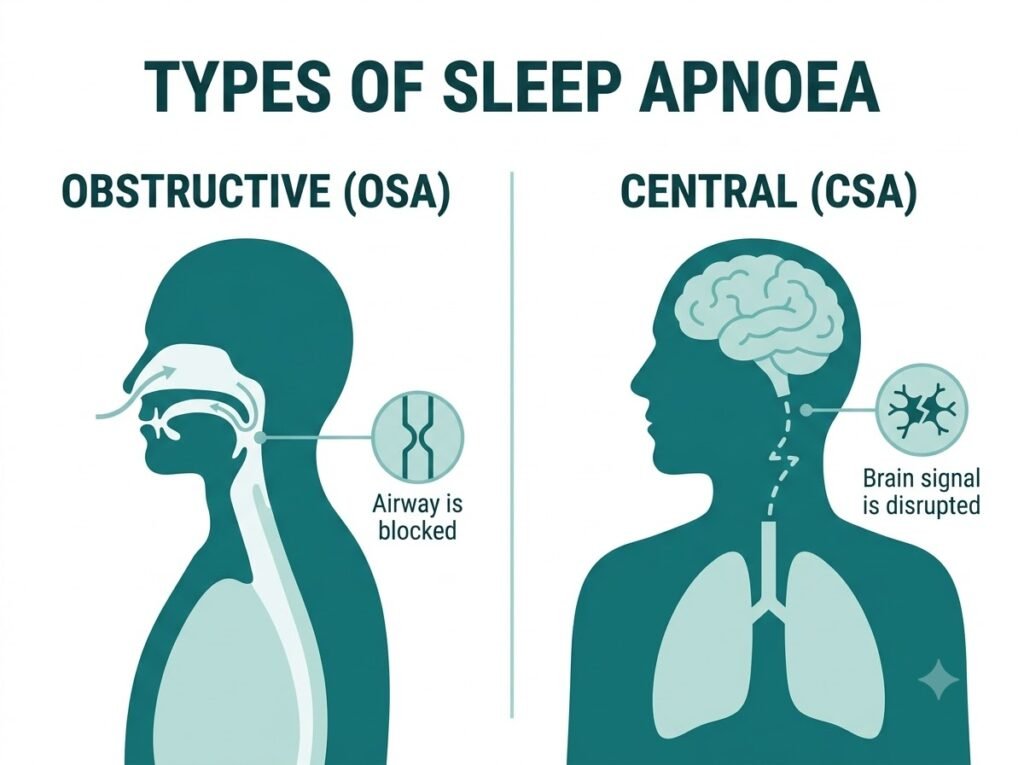
There are two main types of sleep apnoea.
1. Obstructive Sleep Apnoea (OSA)
Obstructive sleep apnoea is the most common type. It occurs when the muscles and soft tissues around the upper airway relax during sleep, narrowing or temporarily blocking the passage through which air flows.
A person may snore, gasp or experience repeated interruptions in breathing.
2. Central Sleep Apnoea (CSA)
Central sleep apnoea occurs when the brain does not consistently send the signals needed to control breathing during sleep.
It can be associated with certain medical conditions, medicines or other factors. Because its underlying mechanism differs from obstructive sleep apnoea, it may require a different approach to assessment and treatment.
A healthcare professional can help determine whether your symptoms suggest sleep apnoea or another condition affecting sleep.
Common Symptoms of Sleep Apnoea
Symptoms vary between individuals. Some are noticeable during sleep, while others become apparent during the day.
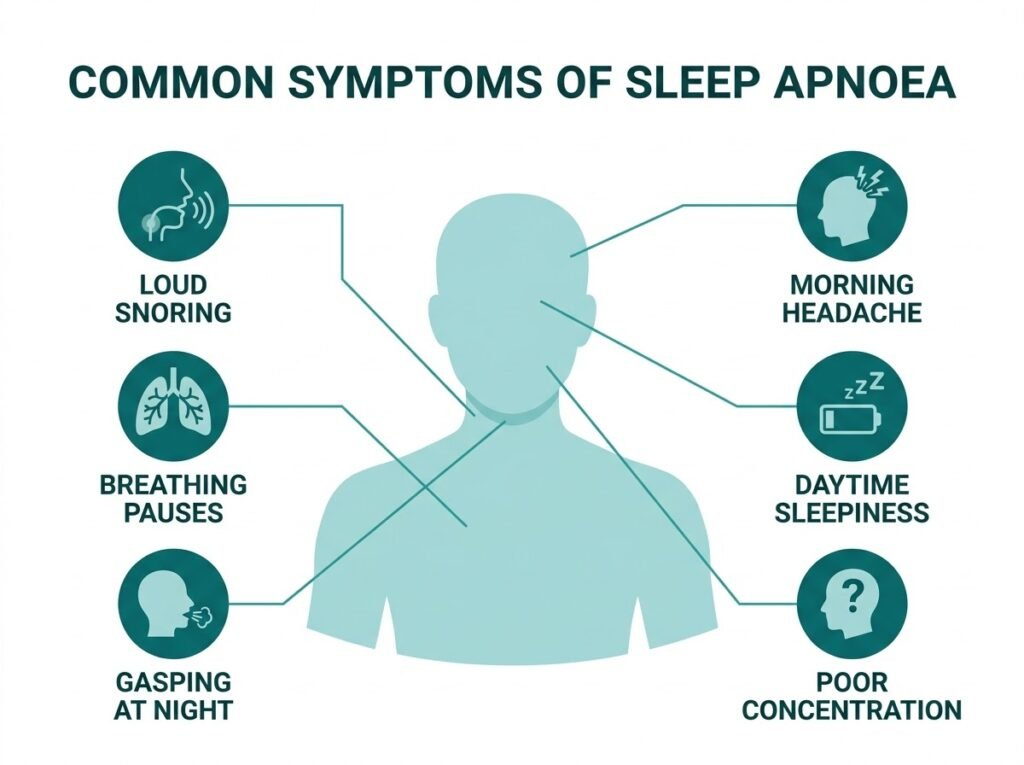
Common warning signs include:
- Loud or frequent snoring.
- Breathing pauses noticed by a partner or family member.
- Gasping, choking or snorting during sleep.
- Waking with a dry mouth or sore throat.
- Morning headaches.
- Repeated waking during the night.
- Feeling tired despite spending enough time in bed.
- Excessive daytime sleepiness.
- Difficulty concentrating, remembering information or staying alert.
- Irritability or changes in mood.
- Frequently waking at night to urinate.
These symptoms can have causes other than sleep apnoea. Some people with sleep apnoea may also have few obvious symptoms.
When should you pay attention? If you regularly feel sleepy during the day, wake up gasping or have been told that your breathing stops during sleep, arrange a medical assessment.
Do not assume that persistent tiredness is simply the result of a busy schedule or poor sleep habits.
Causes and Risk Factors of Sleep Apnoea
The causes depend on the type of sleep apnoea.
Risk Factors for Obstructive Sleep Apnoea
Obstructive sleep apnoea develops when the upper airway becomes narrowed or blocked during sleep. Several factors can increase the likelihood of this happening.
- Excess body weight: Extra tissue around the neck and upper airway may contribute to airway narrowing in some people.
- Airway anatomy: A naturally narrow airway, enlarged tonsils or certain jaw and facial structures may increase the risk.
- Increasing age: The likelihood of obstructive sleep apnoea can increase with age, although it can occur in younger people too.
- Family history: Some people may have an increased risk because of inherited anatomical features or other familial factors.
- Nasal congestion: Persistent nasal blockage may make breathing during sleep more difficult.
- Alcohol and sedating medicines: These can worsen breathing problems during sleep in some individuals. Discuss concerns about prescribed medicines with your clinician rather than stopping them yourself.
- Smoking: Smoking is associated with an increased risk of obstructive sleep apnoea and may contribute to airway inflammation.
Having one or more risk factors does not confirm the condition. Sleep apnoea can also affect people who are not overweight.
Risk Factors for Central Sleep Apnoea
Central sleep apnoea involves changes in the brain’s control of breathing.
Possible associated factors include certain heart or neurological conditions, opioid-type pain medicines, exposure to high altitudes and some other medical circumstances.
The cause is not the same in every person. Medical assessment is important to identify relevant conditions and determine appropriate treatment.
Why Should Sleep Apnoea Be Taken Seriously?
Sleep apnoea can affect more than the quality of your sleep.
Repeated sleep interruptions may contribute to:
- Difficulty concentrating and remembering information.
- Daytime fatigue and reduced alertness.
- Changes in mood and everyday functioning.
- Increased risk of road traffic or workplace accidents due to excessive sleepiness.
Untreated sleep apnoea is also associated with high blood pressure and cardiovascular problems. The level of risk varies between individuals, and these associations do not mean that everyone who snores has a serious medical condition. If you want to understand your numbers better, read our guide on the blood pressure range: normal, high and low BP levels.
Recognising persistent symptoms and obtaining an appropriate assessment can help identify the problem and guide treatment.
Important safety advice: If you struggle to stay awake while driving, stop driving and arrange a safer way to travel. Seek urgent medical attention for severe or sudden breathing difficulty while awake, chest pain, fainting or other serious symptoms.
How Is Sleep Apnoea Diagnosed?
Diagnosis usually begins with a consultation. A healthcare professional may ask about your sleeping habits, snoring, daytime sleepiness, medical history, medicines and other symptoms.
If someone shares your bedroom, their observations about your breathing during sleep may also be useful.
Depending on the findings, your clinician may recommend a sleep study.
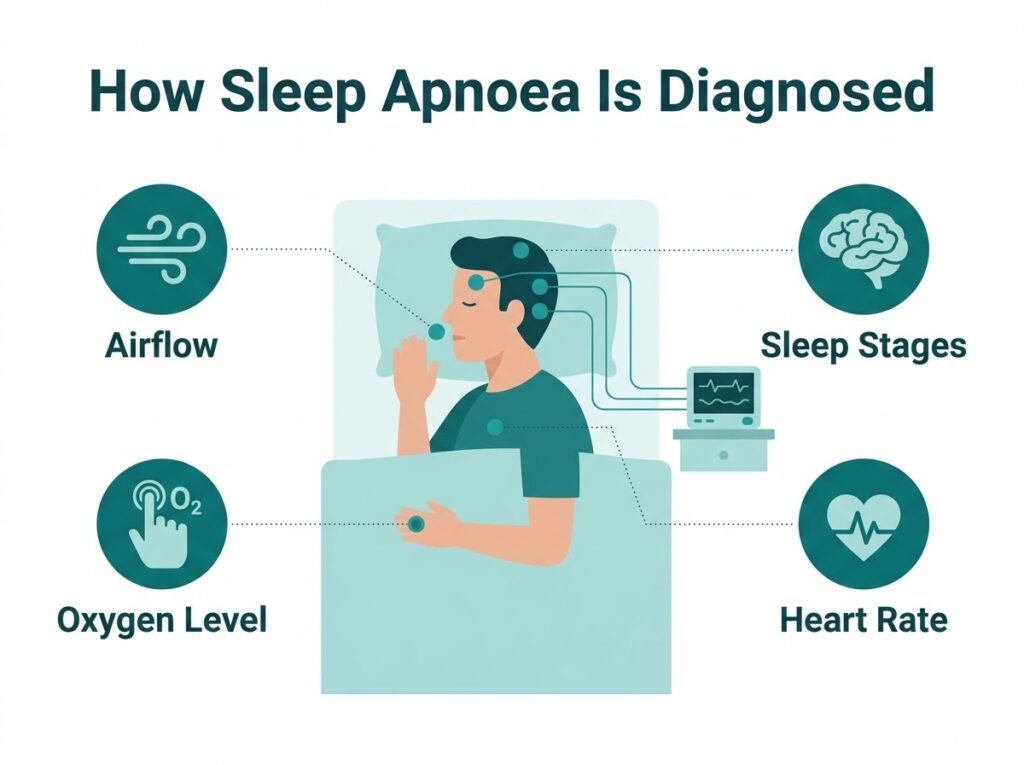
1. Overnight Sleep Study (Polysomnography)
Polysomnography is a diagnostic test that records several body functions during sleep.
Depending on the setup, it may monitor:
- Breathing patterns and airflow.
- Blood oxygen levels.
- Heart rate.
- Chest and abdominal movements.
- Brain activity and sleep stages.
- Other signals that help assess sleep and breathing.
The results can help clinicians identify sleep apnoea, assess its severity and distinguish it from certain other sleep disorders.
2. Home Sleep Apnoea Test
A home sleep apnoea test may be suitable for selected adults with suspected obstructive sleep apnoea.
It generally uses portable equipment to record a more limited set of breathing-related measurements than a full laboratory sleep study.
A home test is not appropriate for everyone. If the result is negative or inconclusive despite continuing symptoms, a clinician may recommend further testing.
Follow the instructions provided by your healthcare professional and the testing service.
3. Can a Blood Test Diagnose Sleep Apnoea?
There is no single routine blood test that confirms sleep apnoea. Other tests may be recommended when a clinician needs to investigate a suspected underlying or alternative medical condition. A broader full body health checkup may sometimes help your doctor look at the wider picture, but it cannot replace a sleep study.
Smartwatches, phone applications and other consumer devices may provide information about sleep or oxygen levels, but they cannot independently rule out sleep apnoea or replace appropriate diagnostic testing.
Sleep Apnoea Treatment Options
Treatment depends on the type of sleep apnoea, its severity, the symptoms experienced and the person’s overall health.
A healthcare professional can explain which options are suitable and whether follow-up testing is necessary.
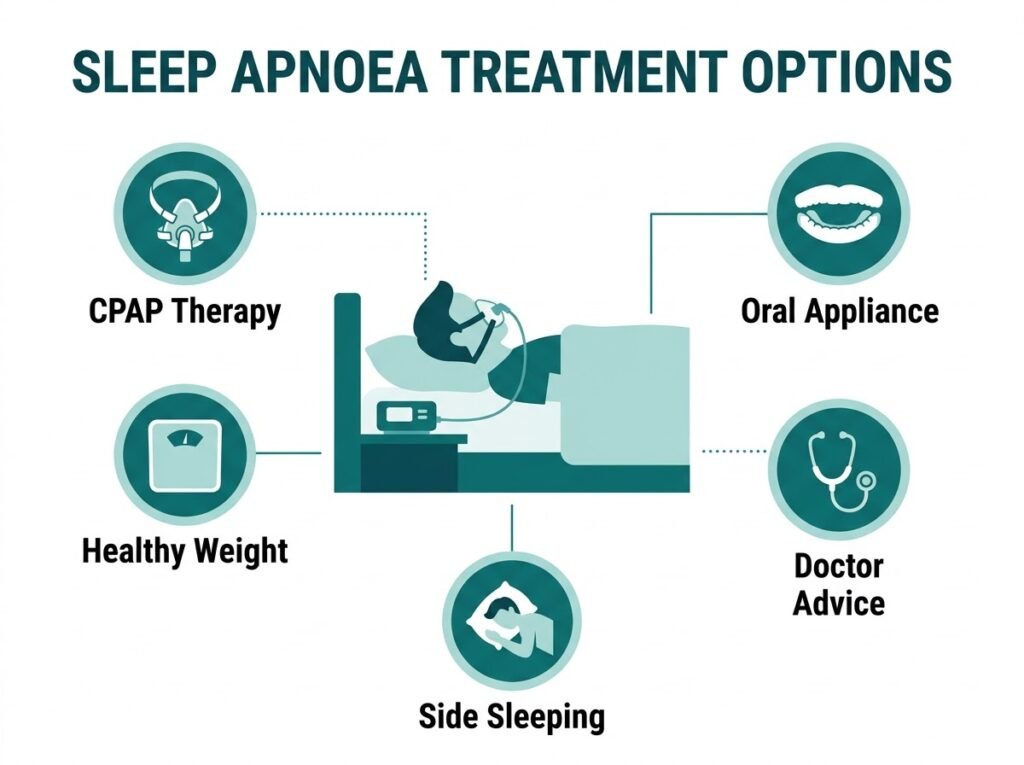
1. Positive Airway Pressure Therapy
Positive airway pressure (PAP) therapy delivers pressurised air through a mask to help maintain an open airway during sleep.
Continuous positive airway pressure (CPAP) is a commonly used treatment for obstructive sleep apnoea.
Some people need time to become comfortable with the mask or device. Mask fit, air pressure, dryness and comfort can be discussed with the treating team.
Do not change prescribed device settings or discontinue treatment without appropriate medical guidance.
2. Custom Oral Appliances
A custom oral appliance may be recommended for selected people with obstructive sleep apnoea.
These devices are usually fitted under the supervision of a suitably qualified dental professional. Depending on the design, an appliance may reposition the lower jaw or help maintain airflow during sleep.
Suitability varies, and professional fitting and follow-up are important.
3. Lifestyle Measures
Certain lifestyle measures may help manage obstructive sleep apnoea in some individuals.
These include:
- Maintaining a healthy weight where appropriate.
- Engaging in regular physical activity.
- Avoiding smoking.
- Avoiding alcohol close to bedtime, particularly if it worsens symptoms.
- Maintaining a regular sleep schedule.
- Discussing persistent nasal congestion with a healthcare professional.
Lifestyle measures are not a substitute for prescribed treatment when treatment is needed.
4. Positional Therapy
Some people experience more breathing interruptions when sleeping on their backs.
For these individuals, strategies that encourage side sleeping may help reduce position-related obstruction.
However, positional therapy does not work equally well for everyone. A clinician can help determine whether it is appropriate based on the individual’s symptoms and test results.
5. Specialist Procedures and Other Treatments
Some people may be considered for surgery or other specialist treatments when standard options are unsuitable or ineffective.
The appropriate approach depends on airway anatomy, the type and severity of sleep apnoea, other health conditions and previous treatment outcomes.
Central sleep apnoea may require investigation and management of its underlying cause. Treatment decisions should be made with an appropriate healthcare professional.
Practical Steps to Take If You Suspect Sleep Apnoea
If you recognise possible warning signs, a few practical steps can help you prepare for a medical consultation.
1. Keep a sleep diary. Record your usual sleep and wake times, nighttime awakenings, morning headaches and daytime sleepiness.
2. Ask about observed symptoms. A partner or family member may have noticed loud snoring, gasping or pauses in breathing that you do not remember.
3. Review your medicines with your clinician. Mention any medicines that may affect sleep or breathing. Do not stop prescribed medicines without medical advice.
4. Maintain a regular sleep routine. Going to bed and waking up at consistent times may support better sleep habits, although it does not treat every cause of sleep apnoea.
5. Make appropriate lifestyle changes. Physical activity, smoking cessation and weight management where relevant may support overall health and help some people with obstructive sleep apnoea.
6. Follow prescribed treatment. If you have been prescribed a CPAP device or another treatment, use it as directed and attend recommended follow-up appointments.
7. Avoid relying on home remedies alone. A product, supplement or mobile application should not be used as a replacement for assessment when warning signs are present.
When Should You Consult a Doctor?
Arrange a medical appointment if you experience any of the following:
- Frequent loud snoring accompanied by tiredness.
- Breathing pauses noticed by someone else during sleep.
- Repeated gasping or choking at night.
- Persistent daytime sleepiness despite allowing enough time for sleep.
- Difficulty concentrating or staying alert during everyday activities.
- Sleep-related symptoms that interfere with work, study or daily life.
Your healthcare professional can assess your symptoms and determine whether a sleep study or referral to a sleep specialist is appropriate.
Seek urgent medical attention for severe or sudden breathing difficulty while awake, chest pain, fainting or other emergency symptoms.
If you are struggling to stay awake, do not drive or operate machinery.
How Health Partner India Can Help
Health Partner India supports you with healthcare assistance, including doctor consultation guidance, lab test and health checkup package bookings, and help with ordering prescribed medicines and healthcare products. If you or a family member needs help arranging tests or a consultation for sleep-related concerns, message our team on WhatsApp and we will place the request on your behalf.
- WhatsApp: Chat with Health Partner India on WhatsApp (+91 93479 68950)
- Instagram: @healthpartner.india
- Facebook: Health Partner India on Facebook
Frequently Asked Questions About Sleep Apnoea
1. Does everyone who snores have sleep apnoea?
No. Snoring can occur without sleep apnoea. However, habitual loud snoring accompanied by gasping, observed breathing pauses or excessive daytime sleepiness should be discussed with a healthcare professional.
2. Can sleep apnoea affect people who are not overweight?
Yes. Excess body weight is one risk factor, but airway anatomy, age, family history and other factors can also contribute. Being slim does not rule out the condition.
3. Is a sleep study painful?
A sleep study is generally non-invasive. Sensors record sleep and breathing-related signals. A home test uses portable equipment when clinically appropriate. The testing team can explain the procedure and what you should expect.
4. Can a smartwatch detect sleep apnoea?
Some wearable devices provide sleep-related measurements or alerts. However, these measurements alone cannot establish or exclude a diagnosis. Consult a healthcare professional if you have symptoms or concerns.
5. Is sleep apnoea curable?
The outcome depends on the type, underlying causes and individual circumstances. Many people can manage the condition effectively with appropriate treatment. Some may need long-term treatment and follow-up.
6. Should I stop using CPAP if I feel better?
Do not stop prescribed CPAP treatment without discussing it with your treating clinician. Feeling better may indicate that treatment is helping. Your clinician can advise whether reassessment or a change in treatment is appropriate.
7. Can sleep apnoea affect daytime concentration?
Yes. Repeated sleep interruptions and excessive daytime sleepiness can affect attention, memory and alertness. Persistent problems should be assessed rather than automatically attributed to stress or a busy lifestyle.
8. What is the difference between obstructive and central sleep apnoea?
Obstructive sleep apnoea occurs when the upper airway becomes narrowed or blocked during sleep. Central sleep apnoea occurs when the brain’s signals controlling breathing are disrupted. The distinction matters because evaluation and treatment may differ.
📲 Questions about sleep tests, consultations or health checkups? Chat with us on WhatsApp or follow Health Partner India on Instagram and Facebook.
Final Takeaway
Sleep apnoea is a sleep-related breathing disorder that can affect sleep quality, daytime alertness and overall health. Persistent loud snoring, observed breathing pauses, nighttime gasping and excessive daytime sleepiness are important warning signs that deserve attention.
A healthcare professional can assess your symptoms and determine whether a sleep study is necessary. Treatment may include CPAP, a suitable oral appliance, lifestyle measures or other specialist options, depending on the diagnosis.
If you recognise these symptoms in yourself or a family member, seek appropriate medical advice instead of relying on snoring alone, wearable data or home remedies.
Related Reading (Internal Links)
- Health Checkup After 30: Which Tests Should You Consider?
- Blood Pressure Range: Normal, High and Low BP Levels
- Full Body Health Checkup: What’s Included and Who Needs One?
- More health guides on the Health Partner India blog
Reliable Medical References (External Links)
For further information, consult these established medical resources:
- National Heart, Lung, and Blood Institute (NHLBI): Sleep Apnea Overview
- NHLBI: Sleep Apnea Symptoms
- NHLBI: Sleep Apnea Diagnosis
- NHLBI: Sleep Apnea Treatment
- Mayo Clinic: Sleep Apnea Symptoms and Causes
- Mayo Clinic: Sleep Apnea Diagnosis and Treatment
- NHS: Sleep Apnoea Overview
- MedlinePlus (US National Library of Medicine): Sleep Apnea
- American Academy of Sleep Medicine – Sleep Education: Sleep Apnea
Medical Disclaimer: This article is intended for general educational purposes only. It does not replace professional medical advice, diagnosis or treatment. Symptoms and treatment needs vary between individuals. Consult a qualified healthcare professional about concerns involving sleep, breathing or medicines.
Health Partner India helps readers explore healthcare information and available healthcare options. Diagnostic tests, consultations and treatments are provided by the relevant healthcare professionals and service providers.