
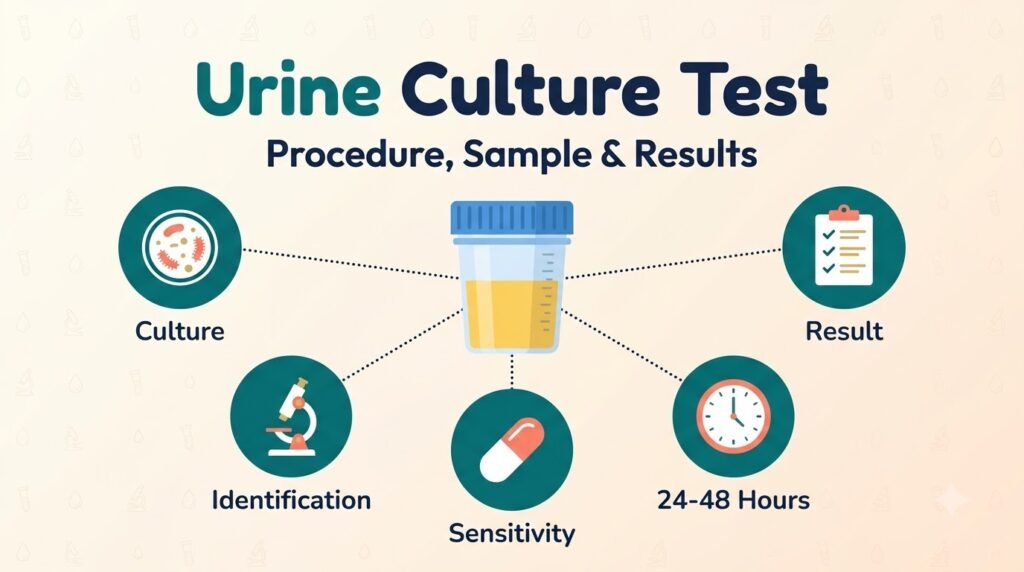
If you have burning while urinating, frequent urges to pass urine, or urinary symptoms that keep returning, your doctor may recommend a urine culture test. Unlike a routine urine examination, a culture checks whether bacteria or certain other microorganisms grow from the sample. A related antibiotic sensitivity test can help clinicians understand which antibiotics may work against the organism found.
This guide explains when a urine culture is used, how to collect a sample correctly, what “no growth” or a positive result may mean, how long results can take, and when medical advice is important. A report must always be interpreted with symptoms, medical history and the clinician’s assessment.
📌 Quick Summary
| Question | Short answer |
|---|---|
| What is a urine culture? | A laboratory test that checks whether microorganisms grow from a urine sample. |
| Why is it done? | Often to help assess a suspected urinary tract infection (UTI), especially when a culture result may guide treatment. |
| How is the sample collected? | Usually in a sterile container using the clean-catch midstream method, following the laboratory’s instructions. |
| Does it require fasting? | Usually not, but follow any instructions given for other tests being done at the same time. |
| When are results available? | Many routine cultures take around 24 to 48 hours, though some take longer depending on growth and laboratory procedures. |
| Does a positive result always mean antibiotics are needed? | No. Symptoms, pregnancy status, medical history and the type of growth all matter. |
What Is a Urine Culture Test?
A urine culture test is a microbiology test in which a urine sample is placed on or in laboratory media to see whether bacteria or certain other microorganisms grow. If growth is found, the laboratory may identify the organism and perform an antibiotic susceptibility (sensitivity) test when appropriate. This is why you will often see it written as “urine culture and sensitivity”.
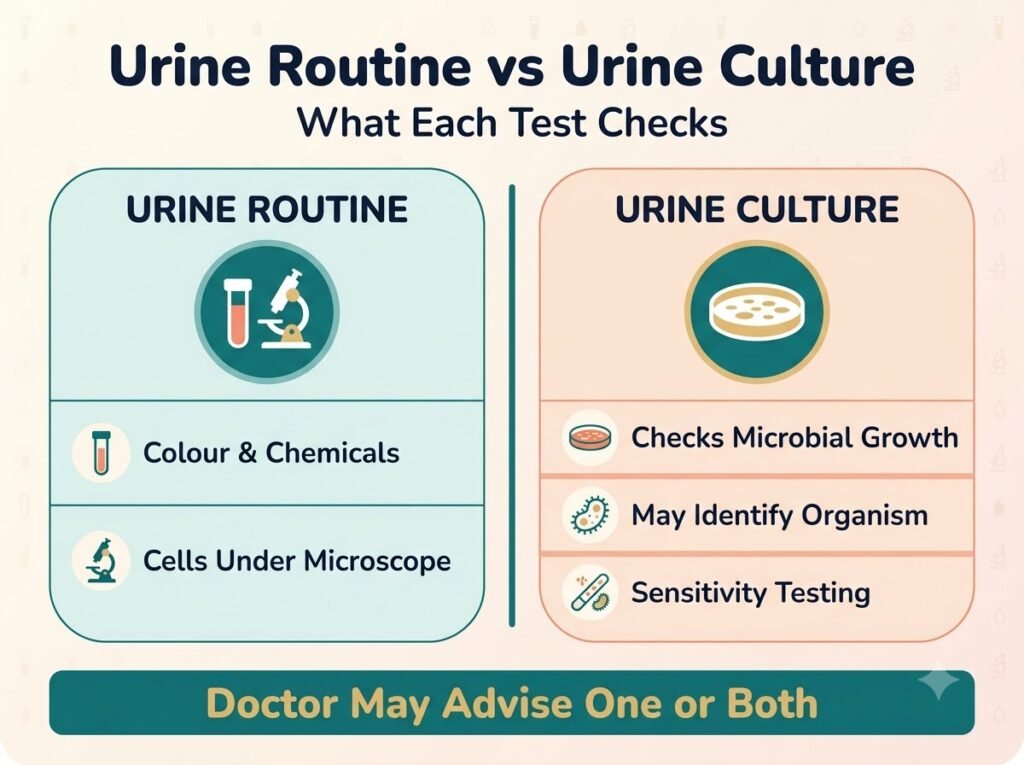
It is different from a urine routine test. A routine examination may check colour, concentration, chemical markers and cells under a microscope. A culture looks for microbial growth and may help identify the organism associated with an infection. A doctor may request one test or both, depending on the situation.
Why Might a Doctor Recommend a Urine Culture?
A clinician may consider a urine culture when urinary symptoms suggest an infection, when symptoms return, when an earlier treatment has not helped as expected, or when knowing the organism could influence treatment. It may also be considered in selected higher-risk situations, such as pregnancy or certain complicated urinary infections, based on clinical guidance.
- Burning or pain while passing urine.
- Passing urine more often or feeling an urgent need to go.
- Lower abdominal discomfort alongside urinary symptoms.
- Symptoms that persist or return after treatment.
- Suspected kidney infection, particularly when fever or side or back pain is present.
- Specific clinical situations where culture results can guide care, including some pregnancy-related assessments.
Not everyone with urinary symptoms needs the same tests. Your doctor decides whether a culture is appropriate after considering your symptoms and health history. Do not use a test result alone to decide whether to start or stop an antibiotic.
Urine Culture vs Urine Routine Test
| Feature | Urine routine examination | Urine culture |
|---|---|---|
| Main purpose | Checks physical, chemical and microscopic features of urine. | Checks whether organisms grow from the sample and may identify them. |
| What it may show | White blood cells, red blood cells, protein, glucose, bacteria seen on microscopy and other findings. | No growth or growth of a particular organism, with additional details where testing is performed. |
| Antibiotic guidance | Does not directly establish which antibiotic is likely to work. | Susceptibility testing may help the clinician select an appropriate antibiotic when treatment is needed. |
| Can it diagnose every UTI by itself? | No. Results must be interpreted with symptoms and other information. | No. A positive or negative result also needs clinical context. |
How to Prepare for a Urine Culture
Most people do not need fasting for a urine culture alone. Tell the clinician or laboratory about medicines you take, particularly antibiotics, and follow their specific collection instructions. Do not stop a prescribed medicine on your own just to get a test done.
If you have already taken antibiotics, let the clinician know. Antibiotics can affect microbial growth and may contribute to a negative culture even when symptoms are present. The clinician will decide the best timing and next steps.
How to Collect a Clean-Catch Urine Sample
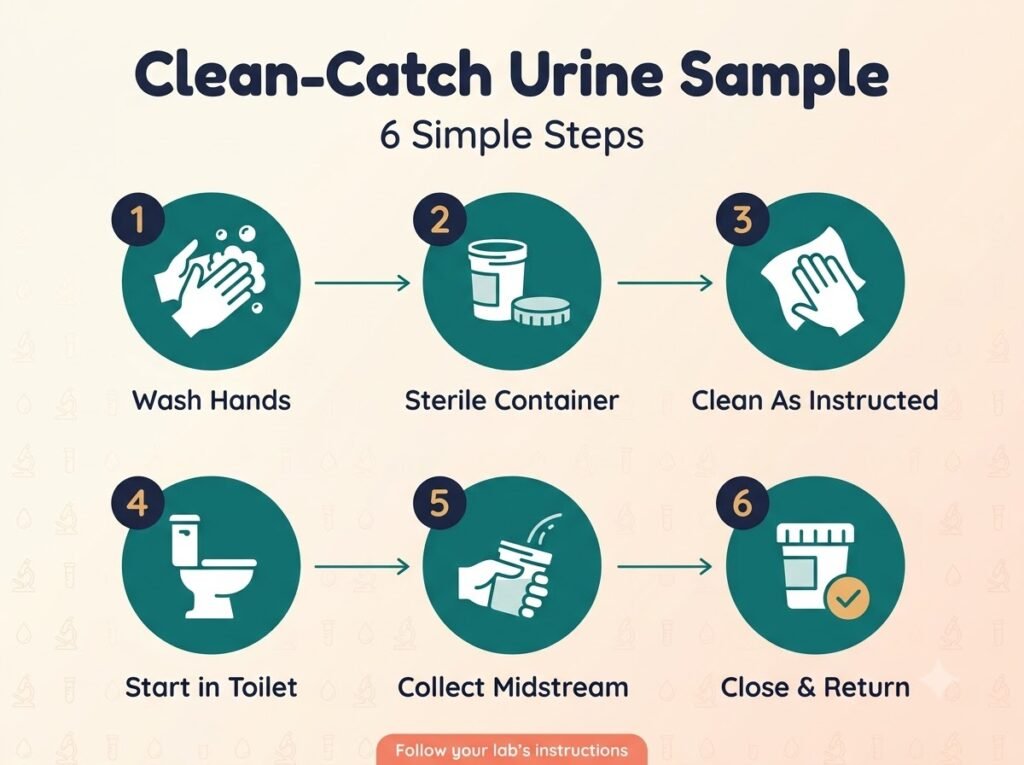
Correct collection helps reduce contamination from skin or nearby genital areas. The exact instructions can differ by laboratory, so follow the kit or staff guidance.
- Wash your hands with soap and water.
- Use the sterile container provided by the laboratory. Avoid touching the inside of the container or lid.
- Clean the genital area as instructed by the laboratory. Use any wipes supplied with the collection kit.
- Begin urinating into the toilet.
- Without stopping the stream if possible, collect the middle portion of urine in the sterile container.
- Finish urinating into the toilet and close the container securely.
- Return the sample promptly as instructed. If there will be a delay, ask the laboratory how it should be stored.
For children, people who cannot provide a clean-catch sample, or patients with a urinary catheter, a healthcare professional may recommend a different collection method. Do not collect a sample from a drainage bag unless a clinician specifically instructs you how to do so.
How Long Does a Urine Culture Take?
Many routine urine culture reports are available in approximately 24 to 48 hours. The exact turnaround time depends on whether organisms grow, whether identification or susceptibility testing is needed, and the laboratory’s process. Some reports may take longer. Ask the laboratory when and how the result will be available.
Urine Culture Test Cost in India
The cost varies by city, laboratory and whether antibiotic sensitivity testing is included in the price. Some labs quote one price for “culture and sensitivity”, while others charge separately if an organism grows. Before booking, ask the laboratory what the price includes and how the sample should be collected.
Urine Culture Results: What Do They Mean?
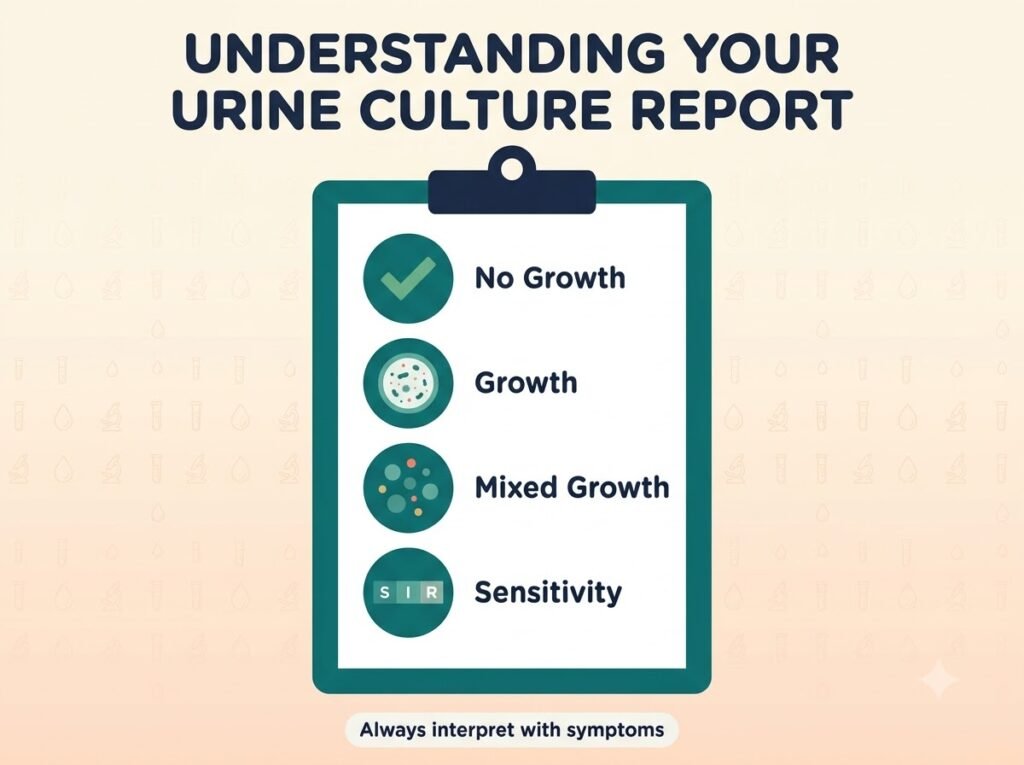
1. No growth
“No growth” generally means the laboratory did not detect significant microbial growth under the test conditions. It does not always rule out infection. Timing, previous antibiotic use, sample quality and the person’s symptoms can affect interpretation. If symptoms continue despite a negative report, follow up with your clinician rather than assuming there is no problem.
2. Growth of a microorganism
Growth may indicate a urinary infection, but the meaning depends on the organism, amount of growth, sample quality, symptoms and the patient’s circumstances. Sometimes bacteria enter the sample during collection. Bacteria may also be present in urine without causing symptoms. This is not the same as a symptomatic infection, and it does not always require antibiotics.
3. Mixed growth or possible contamination
If a report mentions mixed growth or possible contamination, organisms from the surrounding skin or genital area may have entered the sample. The clinician may compare the result with symptoms and decide whether a repeat sample is needed. Do not interpret “mixed growth” as proof of a UTI on its own.
4. Antibiotic sensitivity or susceptibility report
If an organism is identified, the laboratory may test it against selected antibiotics. The report can use terms such as “susceptible,” “intermediate” or “resistant,” according to the laboratory’s method and standards. These terms help the clinician assess options, but the final choice also depends on the site and severity of infection, allergies, kidney function, pregnancy status, other medicines and local guidance.
Do not self-prescribe antibiotics from the sensitivity table. The most suitable medicine and duration must be decided by a qualified healthcare professional. Unnecessary or incorrectly chosen antibiotics can cause side effects and contribute to antimicrobial resistance.
Common report terms at a glance
| Term in report | General meaning |
|---|---|
| No growth | No significant microbial growth detected in the sample |
| Growth / organism isolated | A microorganism grew and may be named in the report |
| Mixed growth | Several types of organisms grew, which may suggest contamination |
| Susceptible | The organism is likely to be affected by that antibiotic in the lab test |
| Intermediate | Result is borderline and needs clinical judgement |
| Resistant | The organism is less likely to be controlled by that antibiotic |
Laboratories may use different formats, so ask your doctor to explain your specific report.
What Can Affect the Accuracy of the Result?
- Sample contamination: collection without the recommended clean-catch steps may affect interpretation.
- Antibiotics before collection: these may reduce growth and affect the result.
- Delay or incorrect storage: follow the laboratory’s instructions for transporting and storing the sample.
- Symptoms and clinical context: a result must be considered alongside symptoms, examination and relevant medical history.
When Should You Seek Medical Care?
Contact a healthcare professional if urinary symptoms persist, return, or worsen, or if you have questions about your report. Seek prompt medical assessment if urinary symptoms occur with fever or chills, pain in the back or side, vomiting, marked weakness, or feeling seriously unwell. These symptoms can indicate a more significant infection or another condition that needs timely assessment.
Pregnant people with urinary symptoms should contact their healthcare professional promptly. Infants, older adults who are acutely unwell, and people with significant kidney problems or weakened immunity may need individual assessment.

Frequently Asked Questions
Is a urine culture the same as a urine routine test?
No. A routine test examines urine characteristics and may include microscopy. A culture checks for microbial growth and may identify the organism causing an infection.
Do I need to fast before a urine culture?
Usually not for a urine culture alone. Follow instructions from the laboratory if other tests are being done at the same time.
Can I give a urine sample at home?
Some laboratories allow home collection with a sterile container and clear instructions. Confirm the collection, storage and delivery requirements with the laboratory before collecting it.
Does a positive urine culture always mean I have a UTI?
Not necessarily. The result must be interpreted with symptoms and the possibility of contamination or bacteria without symptoms. A clinician determines whether treatment is needed.
Can a urine culture be negative even if I have symptoms?
Yes. Previous antibiotic use, collection issues and other factors may affect results. If symptoms continue, discuss the report with your clinician.
Should I start antibiotics when the report says bacteria are present?
No. Do not start leftover or non-prescribed antibiotics. A healthcare professional should interpret the report and decide whether treatment is appropriate.
Final Takeaway
A urine culture test helps check for microbial growth in a urine sample and, when appropriate, can provide antibiotic susceptibility information. Accurate collection matters, and a report should never be interpreted in isolation. If you have urinary symptoms or an abnormal result, discuss it with a qualified healthcare professional.
🔗 Related Reading
- Urine Routine Test: Normal Range, Pus Cells & How to Read Your Report
- Kidney Stone Tests: Urine Test, Ultrasound, CT Scan & Diagnosis
- Kidney Function Test (KFT): Normal Range & Cost
- Full Body Health Checkup: What’s Included, Who Needs It & Cost
⚕️ Medical Disclaimer
This article is for general educational purposes and is not a substitute for professional medical advice, diagnosis or treatment. Test methods and reporting practices can vary between laboratories. Always discuss your report and treatment options with a qualified healthcare professional.
📚 Medical References
- MedlinePlus Medical Encyclopedia: Urine Culture
- MedlinePlus Medical Encyclopedia: Clean-Catch Urine Sample
- MedlinePlus Medical Encyclopedia: Asymptomatic Bacteriuria
- CDC: Urinary Tract Infection Basics
- World Health Organization: Antimicrobial Resistance
Need Help With Health Tests or Lab Bookings?
HealthPartner India can help you enquire about available testing and assistance options through Tata 1mg where offered, subject to location, availability and provider terms. Contact us on WhatsApp to ask about the next steps.
For help with lab tests, health checkups, medicines and other healthcare services, send your requirement or prescription through WhatsApp.
📱 WhatsApp Health Partner India: +91 93479 68950
Follow Health Partner India: Instagram | Facebook
Health Partner India shares healthcare information to help readers make informed decisions and explore healthcare services through its partner network. It does not replace consultation with a qualified medical professional.