
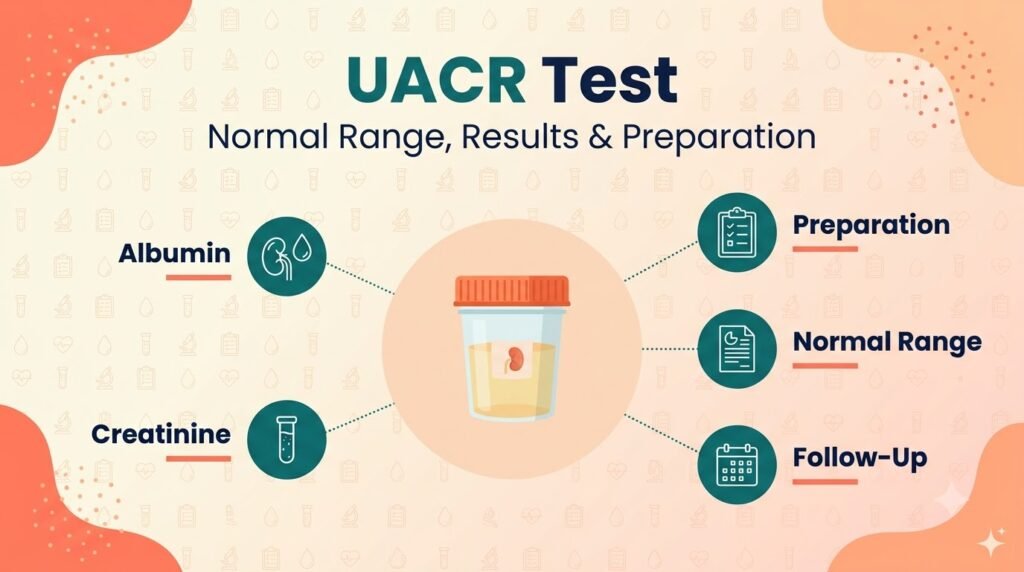
The urine albumin-to-creatinine ratio (UACR) test measures the amount of albumin, a protein in the blood, compared with creatinine in a urine sample. The UACR test normal range is commonly below 30 mg/g (below 3 mg/mmol) when the report uses these units. The test helps identify possible early signs of kidney damage, including in people who have diabetes, high blood pressure or other risk factors for kidney disease. This guide explains the UACR test normal range, what a high result means, how to prepare and when repeat testing may be needed.
Kidney damage may develop without noticeable symptoms in its early stages. A UACR test can help detect albumin in the urine before some other signs of kidney problems become apparent. Doctors commonly interpret this test alongside estimated glomerular filtration rate (eGFR), blood pressure, blood sugar levels and medical history.
A high UACR result does not automatically mean you have chronic kidney disease (CKD). Temporary conditions can affect the result, and repeat testing may be necessary.
📌 Quick Summary
| Question | Answer |
|---|---|
| What does UACR measure? | The ratio of albumin to creatinine in urine. |
| Why is the test performed? | To detect possible kidney damage and monitor kidney health. |
| How is the sample collected? | Usually from a single urine sample. |
| Is fasting required? | Usually not for UACR alone. |
| UACR test normal range | Less than 30 mg/g (below 3 mg/mmol) when the report uses these units. |
| Does a high result confirm kidney disease? | No. Clinical assessment and sometimes repeat testing are needed. |
Important: Reference ranges and reporting units can vary between laboratories. Always check the units printed on your report and discuss abnormal findings with a qualified healthcare professional.
What Is a UACR Test?
UACR stands for urine albumin-to-creatinine ratio. It measures two substances in the same urine sample:
- Albumin: A protein normally present in the blood. Healthy kidneys retain most albumin in the bloodstream.
- Creatinine: A waste product generated through normal muscle metabolism and removed from the body through the kidneys.
When the kidney’s filtering structures become damaged, more albumin than expected may pass into the urine. The UACR test compares urine albumin with urine creatinine to help account for differences in urine concentration.
You may see this investigation listed as UACR, uACR, urine ACR, albumin-to-creatinine ratio or urine microalbumin-to-creatinine ratio. Although these names are sometimes used interchangeably, a test measuring albumin alone is not the same as a test calculating the albumin-to-creatinine ratio.
How Is UACR Different From a Routine Urine Test?
A routine urine examination may include a dipstick test for protein, blood and other findings. However, a standard dipstick may not detect small amounts of albumin.
UACR gives a quantitative measurement of albumin relative to creatinine. This makes it useful for detecting moderately increased albumin excretion that a routine dipstick might miss. Your doctor may recommend UACR, a routine urine examination or both, depending on your symptoms, risk factors and previous results.
Why Is the UACR Test Recommended?
Kidney disease can develop gradually without obvious symptoms. UACR testing helps healthcare professionals look for evidence of kidney damage, particularly in people with an increased risk. Your doctor may recommend the test if you have:
- Diabetes: Both Type 1 and Type 2 diabetes can affect the kidneys over time. See our guide to diabetes symptoms, causes and tests.
- High blood pressure: Persistently raised pressure can damage the kidney’s filtering structures. See our guide to hypertension.
- Known kidney disease: UACR helps monitor changes over time.
- Heart or blood-vessel disease: These conditions may be associated with a higher risk of kidney problems.
- A family history of significant kidney disease.
UACR Testing for People With Diabetes
People with diabetes are commonly monitored with both urine albumin assessment and eGFR. They provide different information:
- UACR checks for increased albumin in the urine.
- eGFR estimates how effectively the kidneys filter waste from the blood.
A person may have an elevated UACR even when eGFR is within its expected range. Blood creatinine, which eGFR relies on, can also be influenced by muscle mass, so a normal eGFR does not always rule out early kidney damage. For adults with diabetes, kidney screening is generally recommended at least once a year, but the schedule depends on the type of diabetes, how long you have had it, previous results and clinical guidance. Your healthcare professional can advise the right schedule for you. Our HbA1c test guide explains another key test used in diabetes monitoring.
How Is the UACR Test Performed?
The UACR test usually needs a urine sample in a clean container, and a single sample is usually sufficient. A laboratory may accept a random spot sample. An early-morning sample may be preferred in some situations because it reduces variation in urine concentration. A 24-hour urine collection is not routinely needed.
Home UACR kits also exist. They may help you monitor between visits, but they should not replace the tests done through your doctor or laboratory.
Steps for Collecting a Urine Sample
Follow your laboratory’s instructions. A typical clean-catch collection involves these steps:
- Wash your hands thoroughly.
- Clean the genital area according to the laboratory’s instructions, if cleaning materials are provided.
- Begin urinating into the toilet.
- Collect the requested portion of urine in the container without touching its inside.
- Finish urinating into the toilet.
- Close the container securely and return it as instructed.
If you cannot give the sample at the requested time or are unsure how to collect it, ask the laboratory staff for guidance.
How to Prepare for a UACR Test
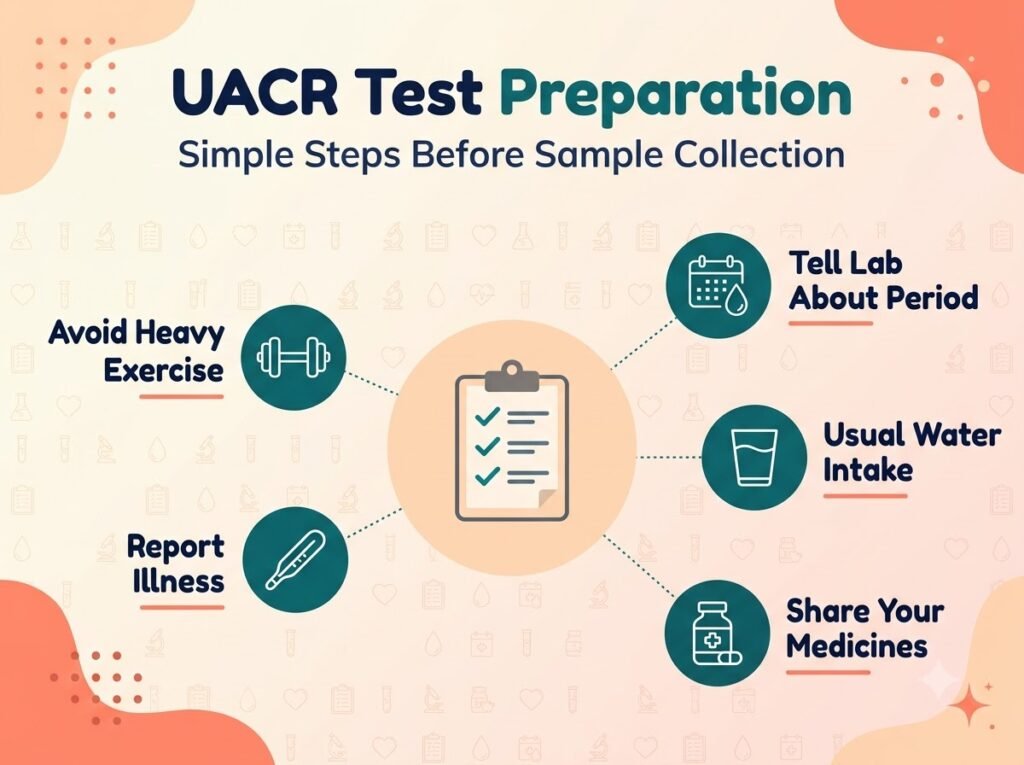
UACR alone usually does not require fasting. Your preparation may differ if the same appointment includes other tests, such as fasting blood glucose.
1. Ask About Strenuous Exercise
Intense physical activity can temporarily increase urine albumin. Your doctor or laboratory may advise avoiding strenuous exercise for about 24 hours before collection.
2. Tell the Doctor About Illness
Fever, a urinary tract infection and some acute illnesses can affect urine albumin. Tell your healthcare professional if you are unwell or have symptoms such as burning urination, fever or frequent urination. They can decide whether to test now or later.
3. Report Menstruation or Blood in the Urine
Menstrual blood or visible blood in the urine may affect interpretation. Ask the laboratory or clinician whether the sample should be collected at another time.
4. Keep Your Usual Fluid Intake
Drink your usual amount of water unless told otherwise. Avoid deliberately drinking excess water or restricting fluids to influence the result.
5. Tell the Doctor About Your Medicines
Inform your healthcare professional about prescribed medicines, over-the-counter products and supplements. Do not stop or change any prescribed medicine just because you are having a UACR test.
Preparation reminder: If your appointment includes several blood and urine investigations, follow the complete set of instructions your laboratory gives you.
UACR Test Normal Range and Result Interpretation
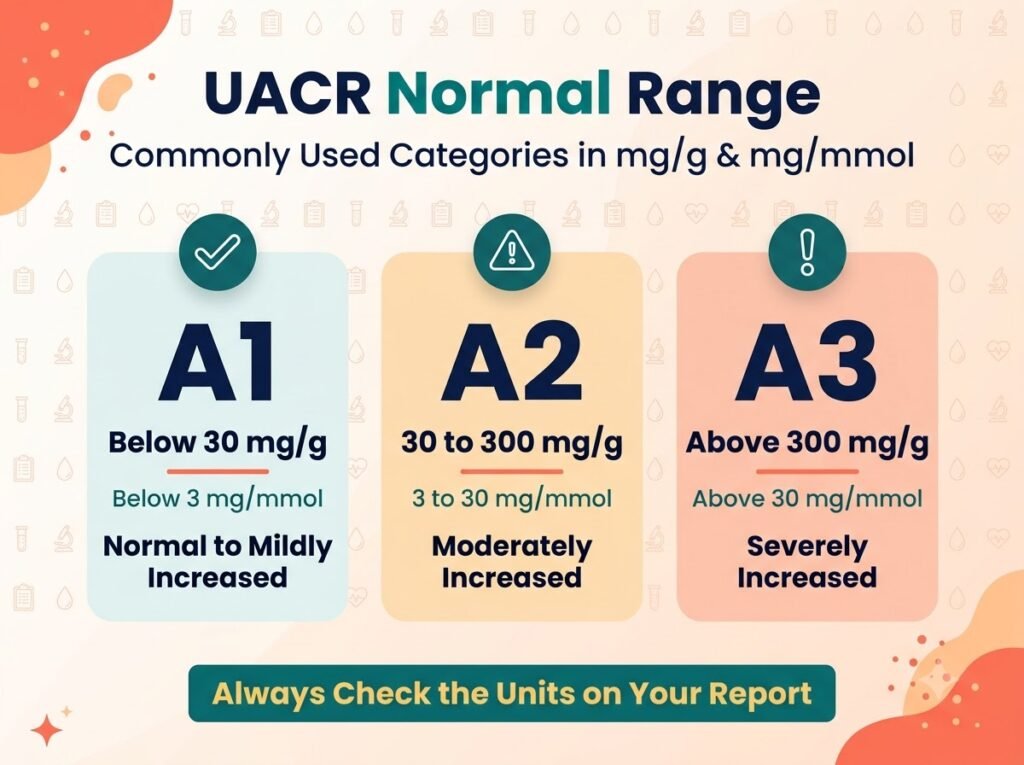
Many laboratories report UACR in milligrams of albumin per gram of creatinine (mg/g). Adult kidney-health guidelines commonly classify results into three categories.
| UACR (mg/g) | UACR (mg/mmol) | Category | General interpretation |
|---|---|---|---|
| Less than 30 | Less than 3 | A1: Normal to mildly increased | Lower albumin excretion. Kidney disease is not ruled out by this result alone. |
| 30 to less than 300 | 3 to less than 30 | A2: Moderately increased | Higher albumin excretion that needs clinical interpretation. |
| 300 or above | 30 or above | A3: Severely increased | Substantially raised albumin excretion needing timely medical assessment. |
These categories are general reference points, not a diagnosis. Some laboratories report in milligrams per millimole (mg/mmol), where the numbers are about ten times smaller. Do not compare results across units without a proper conversion.
How to Read Your UACR Report
- Check the unit (mg/g or mg/mmol) before looking at the number.
- Find your category (A1, A2 or A3) using the table above.
- Look at your eGFR from the kidney function test. Doctors consider the two together.
- Compare with earlier reports. Trends matter more than a single value.
- Share the report with your doctor, especially if the result is above the laboratory range.
UACR Test Normal Range: What Does a Normal Result Mean?
A UACR below 30 mg/g is generally classified as normal to mildly increased when the report uses mg/g. This suggests urine albumin excretion was not significantly raised at the time of testing. However, a normal UACR does not exclude every kidney condition. Kidney problems can exist without increased albumin excretion, so your doctor may also consider eGFR, blood creatinine and urine findings.
What Does a High UACR Result Mean?
A raised UACR means more albumin than expected was detected relative to creatinine. It may indicate that the kidney’s filtering structures are allowing albumin into the urine, and it can occur even when eGFR is not reduced.
Possible explanations include:
- Diabetes-related kidney damage
- Kidney damage associated with high blood pressure
- Other forms of kidney disease
- Temporary changes from fever, infection or strenuous exercise
- Blood in the urine or menstrual contamination
- Changes in blood glucose, blood pressure or hydration
A high result does not identify the exact cause, establish the stage of kidney disease or determine the right treatment. Your doctor may review your history, assess kidney function and arrange repeat testing.
Why Might a UACR Test Need to Be Repeated?
Urine albumin can vary between samples, so a single elevated result may reflect a temporary change rather than persistent kidney damage. Depending on your situation, your healthcare professional may ask for another sample and compare it with your eGFR, blood creatinine, blood pressure and other information.
Chronic kidney disease is generally defined by abnormalities of kidney structure or function that persist for at least three months and affect health. For people with diabetes, guidance from the American Diabetes Association describes using at least two abnormal results among three UACR samples collected over three to six months to help establish persistent albuminuria.
The exact plan depends on the individual. Do not wait three months to seek advice just because repeat testing may be needed. Your doctor can decide whether an earlier review or further investigation is appropriate.
UACR vs KFT vs Routine Urine Test
| Test | What it measures | Main purpose |
|---|---|---|
| UACR test | Albumin relative to creatinine in urine | Detects increased albumin excretion that may indicate kidney damage. |
| Kidney function test (KFT) | Commonly blood creatinine and eGFR; other components vary | Assesses kidney filtration and, depending on the panel, related measurements. |
| Routine urine examination | Appearance, dipstick testing and microscopy | Looks for blood, cells, protein and other urine abnormalities. |
These tests complement one another rather than replacing one another. For a broader explanation of blood creatinine and eGFR, read our guide to the Kidney Function Test (KFT): Normal Range, Cost & How to Read Your Report.
What Happens If Your UACR Result Is High?
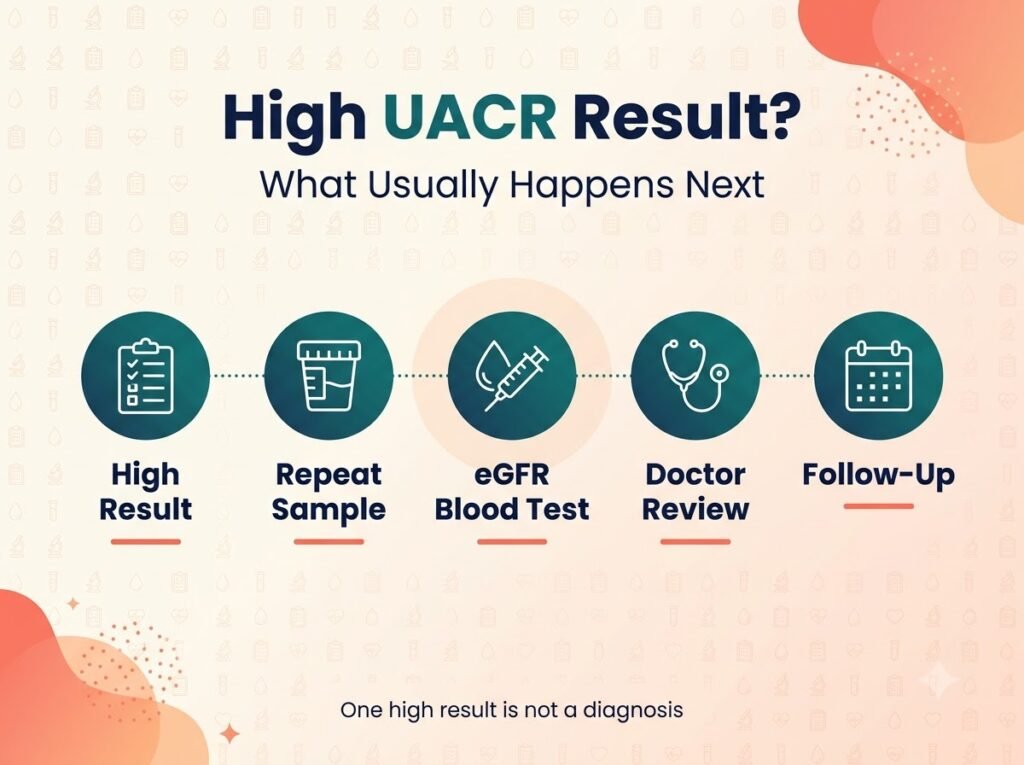
If your UACR is elevated, your doctor will decide whether more investigation or monitoring is needed. Depending on your result and history, next steps may include:
- Reviewing your blood pressure, blood glucose and medical history.
- Checking blood creatinine and eGFR.
- Reviewing medicines and other factors that could affect the result.
- Repeating UACR with another urine sample.
- Investigating possible kidney disease or other causes of albumin in the urine.
Treatment, when needed, depends on the underlying cause and your overall health. Do not start, stop or adjust prescription medicines or supplements based only on an online explanation of a laboratory report.
Protecting Your Kidney Health: General Lifestyle Points
These are general habits that support kidney health. Your doctor will give you personal advice.
- Keep blood sugar and blood pressure within the targets your doctor sets.
- Attend scheduled kidney check-ups, even when you feel well.
- Do not use over-the-counter painkillers, herbal products or supplements regularly without medical advice, as some can strain the kidneys.
- Do not smoke, and limit alcohol.
- Stay physically active and work toward a healthy weight if your doctor advises it.
- Follow a balanced diet that is low in salt and processed foods, as advised by your healthcare team.
When Should You Seek Medical Advice?
Arrange a medical review if:
- Your UACR is above the reference range given by the laboratory.
- Your doctor has advised repeat urine or kidney-function testing.
- You have diabetes or high blood pressure and are overdue for kidney screening.
- You have had abnormal kidney tests before and need follow-up.
Seek urgent medical care if you develop severe shortness of breath, rapidly increasing swelling, a marked reduction in urine output or other severe or rapidly worsening symptoms. Visible blood in the urine, especially with fever, pain or feeling very unwell, also needs prompt assessment. These symptoms have several possible causes and should not be self-diagnosed from a UACR result.
Frequently Asked Questions About the UACR Test
1. Is the UACR test the same as a urine microalbumin test?
The terms are often used together, but the exact test matters. UACR compares urine albumin with urine creatinine, while an albumin-only test measures albumin without necessarily calculating this ratio. Check the test name and units on your report.
2. Does a UACR test require fasting?
Usually not. Fasting is generally unnecessary for UACR alone. If your appointment includes other tests that need fasting, follow your laboratory’s instructions.
3. Can UACR be high when blood creatinine and eGFR are normal?
Yes. UACR and eGFR assess different aspects of kidney health. Albumin can be raised in urine even when eGFR is within its expected range, which is why doctors may use both tests.
4. Does one high UACR result mean I have kidney disease?
No. Temporary conditions can raise urine albumin, and a repeat sample may be needed. Your doctor will interpret the result with your history, kidney-function tests and other findings.
5. How often should people with diabetes have UACR testing?
Adults with diabetes are generally advised to have kidney screening with UACR and eGFR at least once a year. More frequent monitoring may be needed depending on kidney function, previous results and individual risk. Ask your healthcare professional for your schedule.
6. Can I understand my UACR report without a doctor?
You can use the laboratory’s reference range to see whether your result is in a broadly normal or raised category. The result alone cannot establish the cause or confirm chronic kidney disease, so discuss abnormal results with a qualified healthcare professional.
7. What is the normal UACR value, and is below 30 mg/g always normal?
When reported in mg/g, a result below 30 is generally classified as normal to mildly increased. The equivalent cut-off in mg/mmol is below 3. It does not exclude all kidney conditions, so your doctor may recommend more tests if you have symptoms, other abnormal findings or significant risk factors.
8. Can dehydration affect a UACR result?
Hydration and urine concentration can influence urine measurements. Comparing albumin with creatinine helps account for some of this variation but not all of it. Keep your usual fluid intake and follow the laboratory’s collection instructions.
Final Takeaway
The urine albumin-to-creatinine ratio (UACR) test helps detect increased albumin in urine, which can be an early sign of kidney damage. A result below 30 mg/g is generally classified as normal to mildly increased, while 30 mg/g or higher may need further assessment.
A single elevated result does not automatically mean you have chronic kidney disease. Your doctor may recommend repeat testing and interpret the result alongside eGFR, blood creatinine, blood pressure, blood glucose and your medical history. If you have diabetes, high blood pressure or other risk factors, follow your recommended screening schedule and discuss any abnormal result with your healthcare professional.
Related Reading
- Kidney Function Test (KFT): Normal Range, Cost & How to Read Your Report
- Urine Routine Test: Normal Range, Pus Cells & How to Read Your Report
- What Is Diabetes? Symptoms, Causes, Types, Tests & Early Diagnosis
- Hypertension: Symptoms, Causes, Types & Treatment
- HbA1c Test: Normal Range, Prediabetes & Diabetes Levels
Medical References
- National Institute of Diabetes and Digestive and Kidney Diseases (NIDDK). Chronic Kidney Disease Tests & Diagnosis.
- National Kidney Foundation. Urine Albumin-Creatinine Ratio (uACR).
- American Kidney Fund. Urine Test: uACR.
- Kidney Disease: Improving Global Outcomes (KDIGO). 2024 Clinical Practice Guideline for the Evaluation and Management of Chronic Kidney Disease.
- American Diabetes Association. Standards of Care in Diabetes—2026, Chronic Kidney Disease and Risk Management.
Medical Disclaimer: This article is for general educational and informational purposes only. It does not provide a diagnosis or replace individual medical advice. Laboratory methods, reporting units and reference ranges may vary. Consult a qualified healthcare professional for interpretation of your test results and advice about your health.
Need Help With a UACR or Kidney Test Booking?
HealthPartner India can help you enquire about available lab-test services through Tata 1mg where offered. Availability, prices, sample collection and booking confirmation depend on your location and the provider. Message us on WhatsApp with your city and requirement to ask about the next steps.
📱 WhatsApp: +91 93479 68950