

Uric acid is a waste product formed when the body breaks down purines. The kidneys normally remove much of it through urine. When uric acid becomes elevated, crystals can form in joints and tissues in some people and cause gout. However, a high uric acid result by itself does not prove that a person has gout.
Knowing the uric acid test normal range helps you understand whether your report needs follow-up with a doctor.
Quick Summary
| Parameter | Typical Reference Range* | Notes |
|---|---|---|
| Uric Acid — Men | ~3.4–7.0 mg/dL | Varies by lab |
| Uric Acid — Women | ~2.4–6.0 mg/dL | Varies by lab |
| Test Type | Serum Uric Acid (blood test) | Fasting not always required — check with your lab |
| High Result | Above your lab’s upper limit | May indicate hyperuricaemia; needs clinical context |
| Low Result | Below your lab’s lower limit | Can occur for several reasons; needs interpretation if persistent |
*There is no single universal reference range — results vary by lab method, units, and sex. Always compare your result to the range printed on your own report.
What Is a Uric Acid Test?
A serum uric acid test measures urate in a blood sample. It may be ordered when a clinician is evaluating symptoms suggestive of gout, kidney-related concerns, or certain medicines or conditions associated with abnormal urate levels.
What Is the Uric Acid Test Normal Range?
There is no single universal reference range that applies to every laboratory. Results can vary with the laboratory method, units, sex, and other factors. Always compare your result with the reference interval printed on your own report rather than using a value from an unrelated website.
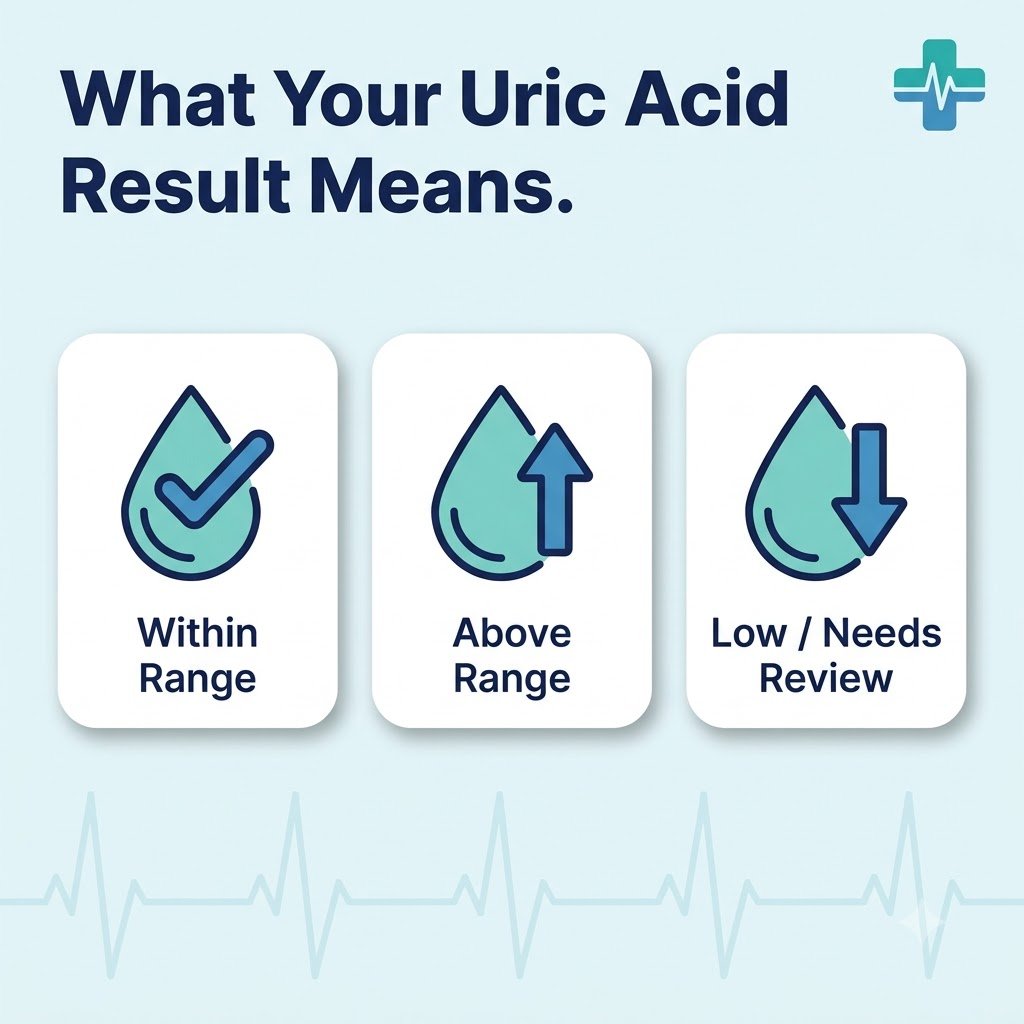
| Result | What It Means |
|---|---|
| Within your lab range | Usually reported as within the laboratory reference interval |
| Above your lab range | May indicate hyperuricaemia, but needs clinical context |
| Low | Can occur for several reasons and may need interpretation if persistent |
What Are the Symptoms of High Uric Acid?
High uric acid itself often causes no symptoms. Symptoms can appear when urate crystals trigger gout or when another condition is present.
- Sudden severe joint pain
- Swelling, warmth, and redness around a joint
- Pain that can begin suddenly, often at night
- Repeated attacks affecting the same or different joints
- In longstanding gout, firm deposits called tophi may develop
The classic presentation of gout can involve the big toe, but other joints may be affected. A painful, swollen joint can have other causes too, including infection — so severe or unexplained symptoms need medical assessment.
Why Does Uric Acid Become High?
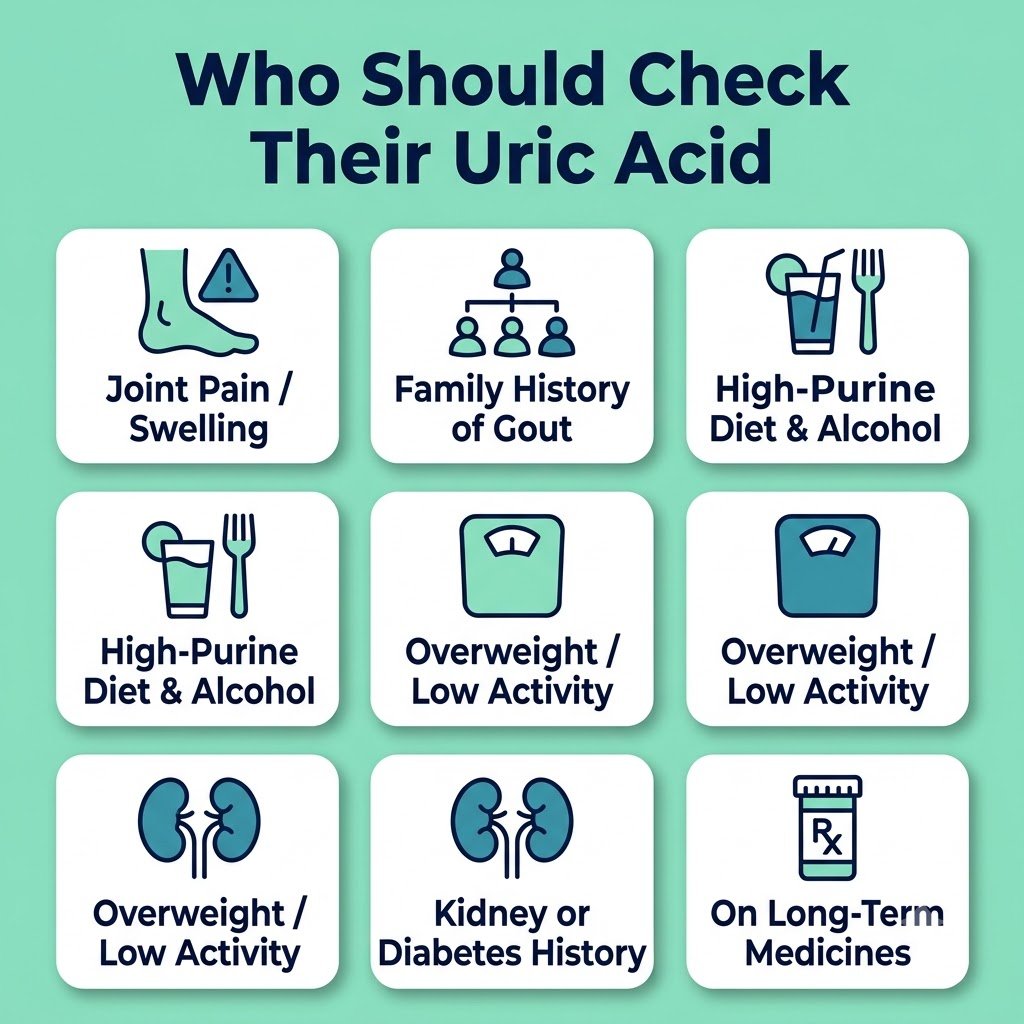
High uric acid can result from increased production, reduced kidney excretion, or a combination. Risk can be influenced by genetics, kidney function, body weight, diet, alcohol intake, and certain medicines.
Foods and drinks rich in purines can contribute to urate levels in susceptible people — examples include organ meats and some seafood. Sugary drinks containing high amounts of fructose may also contribute to higher uric acid levels.
Does High Uric Acid Always Mean Gout?
No. Some people have hyperuricaemia without ever developing gout. Conversely, a serum urate measurement should not be used alone to confirm or exclude gout in every clinical situation. The American College of Rheumatology guideline emphasizes management decisions based on the clinical context rather than treating a laboratory number in isolation.
How Is Gout Diagnosed?
A clinician considers the pattern of pain, joint examination, history, and laboratory findings. In selected cases, joint fluid may be examined for monosodium urate crystals. Imaging can also be useful in some patients. The correct diagnostic approach depends on the presentation.
How Can Uric Acid Be Reduced Naturally?
Lifestyle measures can be part of management, particularly for people with elevated urate or gout risk:
- Maintain a healthy weight and avoid crash diets
- Stay adequately hydrated unless a clinician has advised fluid restriction
- Limit alcohol, particularly when it triggers attacks
- Reduce frequent intake of purine-rich foods if advised
- Limit sugar-sweetened drinks
- Manage blood pressure, diabetes, and kidney health
Lifestyle changes are not a substitute for prescribed urate-lowering treatment when medication is indicated.
When Are Medicines Used?
Some people with gout need long-term urate-lowering therapy. The decision depends on factors such as the frequency and severity of attacks, tophi, kidney disease, and other clinical considerations. Medicines should be selected and monitored by a healthcare professional.
How to Prepare for a Uric Acid Blood Test
Preparation requirements depend on the laboratory and whether other tests are being collected at the same time. Ask whether fasting is needed. Tell the clinician about medicines and supplements you take. Do not stop a prescribed medicine simply to change the test result unless instructed to do so.
Uric Acid and Kidney Health
Kidneys play an important role in urate removal. Persistent abnormalities should therefore be interpreted alongside kidney function and the wider clinical picture.
When Should You Seek Medical Care Quickly?
Seek urgent medical attention for a hot, swollen joint accompanied by fever or severe illness, because joint infection can resemble gout. Also seek prompt care for severe pain, inability to use the affected limb, or rapidly worsening symptoms.
Uric Acid and Diet: What Matters Most?
Diet is one part of urate management, but it is not the only one. Genetics, kidney function, body weight, alcohol, medicines, and other health conditions can have a substantial effect. Instead of trying to eliminate every food containing purines, focus on an overall sustainable eating pattern and follow the advice given for your particular condition.
Foods that may increase uric acid exposure: organ meats, certain seafood, alcohol (especially when it triggers attacks), and sugar-sweetened/high-fructose beverages.
Foods that can fit into a balanced diet: vegetables, whole grains, appropriate protein portions, fruits in sensible amounts, adequate fluids (when medically appropriate), and low-fat dairy.
The goal is not a restrictive “zero-purine” diet but a practical pattern that supports overall health.
Does Drinking More Water Lower Uric Acid?
Good hydration supports normal kidney function and urine production, but drinking excessive amounts of water is not a treatment for gout. People with kidney, heart, or other conditions may have fluid restrictions, so hydration advice should be individualized.
Can Medicines Raise Uric Acid?
Yes. Some medicines can affect urate levels. This does not mean you should stop them. If you have a high uric acid result or gout attacks, give your clinician a complete list of medicines and supplements so they can assess whether any medication is relevant.
Why Can Uric Acid Remain High Despite Diet Changes?
Dietary changes may not be enough when the body produces excess urate or the kidneys do not remove enough. Some people therefore need medication in addition to lifestyle measures. Treatment is based on clinical diagnosis and risk of future gout-related problems, not on forcing a lab value to a particular number.
What Should You Do With an Unexpected High Result?
Do not panic or self-medicate. First check the laboratory reference interval and discuss the result with a healthcare professional. If you have no symptoms, the clinician may decide whether repeat testing or further assessment is appropriate. If you have recurrent attacks of a hot, swollen joint, the clinical picture becomes more important.
Should You Repeat a Uric Acid Test?
Whether repeat testing is useful depends on why the original test was ordered and what the result showed. A person with a one-time mildly elevated result and no symptoms may be managed differently from someone with recurrent gout attacks, kidney disease, or treatment with urate-lowering medicines. Follow-up testing should be planned with the clinician rather than repeated frequently without a reason.
Do Not Treat the Number Alone
Laboratory results are pieces of information, not diagnoses. The same uric acid value can have different significance in different people. Your symptoms, examination, kidney function, medicines, and history all matter when deciding what happens next.
Key Takeaways
- A uric acid test measures serum urate but does not diagnose gout by itself
- High uric acid may be present without symptoms
- Gout usually causes episodes of inflammatory joint pain and swelling
- Kidney function, medicines, genetics, and diet can all influence urate levels
- Persistent or symptomatic abnormalities should be interpreted by a healthcare professional
Frequently Asked Questions
1. What is a normal uric acid level?
There’s no single universal range — typical lab ranges are roughly 3.4–7.0 mg/dL for men and 2.4–6.0 mg/dL for women, but always check the range on your own report.
2. What causes high uric acid in the blood?
Increased production, reduced kidney excretion, or both — influenced by genetics, kidney function, body weight, diet, alcohol, and certain medicines.
3. What are the first signs of high uric acid?
Often none. Many people are asymptomatic until a sudden gout attack causes joint pain, swelling, and redness, typically in the big toe.
4. Is high uric acid the same as gout?
No. Hyperuricaemia is a blood finding; gout is the clinical condition that can result when urate crystals form in joints. Not everyone with high uric acid develops gout.
5. Do I need to fast before a uric acid test?
Not always — it depends on the lab and whether other tests are being drawn at the same time. Ask your lab directly.
6. Which foods should I be cautious about with high uric acid?
Organ meats, certain seafood, alcohol (especially when it triggers attacks), and sugar-sweetened or high-fructose drinks.
7. Can high uric acid affect the kidneys?
Persistent abnormalities should be interpreted alongside kidney function, as the kidneys play a central role in removing urate from the body.
8. Does drinking more water lower uric acid?
Good hydration supports normal kidney function, but it isn’t a treatment for gout on its own — and isn’t appropriate for everyone (e.g., those with fluid restrictions).
9. Can uric acid levels be low, and is that a problem?
Yes — low results can occur for several reasons and may need interpretation if persistent, evaluated by a doctor.
10. Should I repeat a uric acid test regularly?
It depends on why it was ordered and the result. Recurrent gout, kidney disease, or ongoing urate-lowering treatment usually warrant a follow-up plan set by your clinician, rather than routine re-testing without reason.
Related Reading
- Kidney Function Test (KFT): Normal Range & Cost
- Normal Blood Sugar Level Chart — Fasting, Post-Meal, HbA1c
- How to Read a Lipid Profile Report
External References
Medical Disclaimer
This article is for general education only and does not replace diagnosis or treatment from a qualified healthcare professional. Test selection and interpretation should be based on your symptoms, age, medical history, and clinician advice.
WhatsApp CTA
📲 Need help arranging a uric acid test or home sample collection? WhatsApp us at +91 93479 68950 — our team can help you explore available options.
Follow HealthPartner India: