
Turning 30 doesn’t automatically mean you need a long list of medical tests every year. But it’s a useful age to become more systematic about preventive healthcare. Many common non-communicable diseases can develop gradually without obvious symptoms, so a checkup can help identify risk factors early.
India’s National Programme for Prevention and Control of Non-Communicable Diseases uses population-based screening for adults aged 30 and above for conditions including hypertension and diabetes, along with several other priority conditions. Screening isn’t the same as diagnosing everyone with disease — it’s a way to identify people who may need further evaluation.
Quick Summary
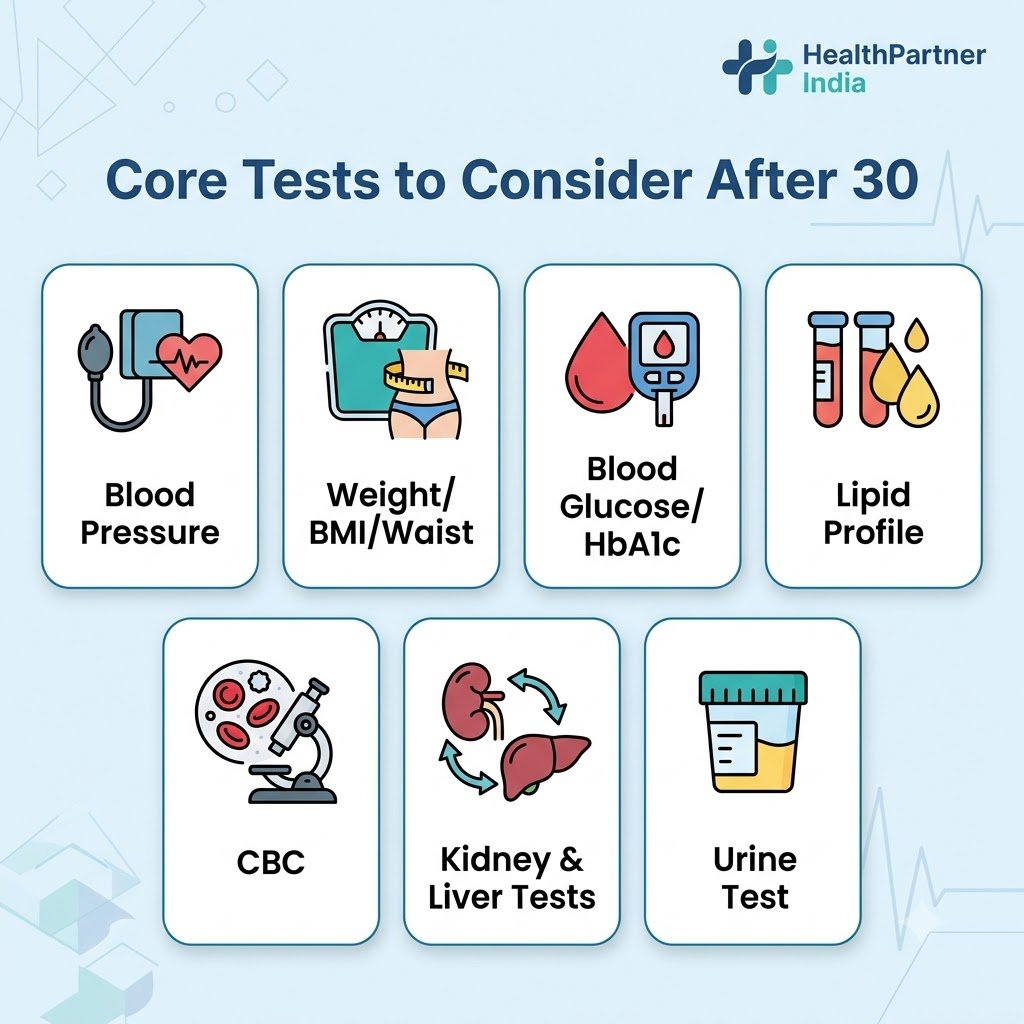
| Check | Why It May Matter |
|---|---|
| Blood pressure | Identifies hypertension, which can be silent |
| Weight, BMI, waist measurement | Assesses metabolic risk |
| Blood glucose / HbA1c | Assesses blood sugar and diabetes risk |
| Lipid profile | Cholesterol and triglycerides for cardiovascular risk |
| CBC | Investigates anaemia or blood abnormalities when indicated |
| Kidney and liver tests | Relevant with risk factors, symptoms or certain medicines |
| Urine testing | Flags urinary or kidney-related concerns |
What Should a Health Checkup After 30 Include?
There’s no single package that’s correct for everyone. A sensible starting point combines history, physical measurements and selected laboratory tests — not a blanket panel of every available test.
1. Blood Pressure Should Not Be Skipped
High blood pressure often causes no noticeable symptoms, and measurement is quick and inexpensive — making it one of the most practical preventive checks. A single high reading doesn’t necessarily confirm a diagnosis; healthcare professionals may use repeated or out-of-office measurements when appropriate. The U.S. Preventive Services Task Force also recommends confirmation outside the clinical setting before starting hypertension treatment.
2. Diabetes Screening: Fasting Glucose or HbA1c
Diabetes and prediabetes can be present before symptoms become obvious. HbA1c reflects average blood glucose over roughly the previous 2–3 months, while fasting plasma glucose measures glucose after fasting — which test is appropriate depends on the person and clinical situation. See our HbA1c ranges guide and normal blood sugar level chart for more detail.
3. Cholesterol and Cardiovascular Risk
A lipid profile commonly reports total cholesterol, LDL, HDL and triglycerides. The result shouldn’t be read in isolation — age, blood pressure, diabetes, smoking and family history all factor into overall cardiovascular risk. For a practical explanation of the numbers, see our lipid profile report guide.
4. Kidney and Liver Tests
Kidney function may be assessed with creatinine and estimated GFR, with urine testing where appropriate. Liver panels can include enzymes and other markers. These are particularly relevant with a medical condition, medication exposure, alcohol-related risk, obesity, diabetes, high blood pressure, or symptoms warranting evaluation. Read our KFT guide and LFT guide for more.
5. Cancer Screening Is Different From Routine Blood Testing
Cancer screening should be based on the type of cancer, age, sex, family history and risk factors — a general blood test cannot screen for every cancer. Some programmes use physical examination, imaging or specific tests instead of a routine “full-body blood package.” For example, USPSTF colorectal cancer screening recommends average-risk adults be screened from age 45 through 75. Indian screening decisions may differ by local guidance and individual risk — discuss the right approach with a clinician.
Do You Need Every Test Every Year?
No. Repeating a test simply because it’s part of a package doesn’t always add value. Some measurements, like blood pressure, may be checked frequently, while others depend on previous results, risk factors and symptoms. A doctor may recommend shorter intervals when a result is abnormal or a condition needs monitoring.
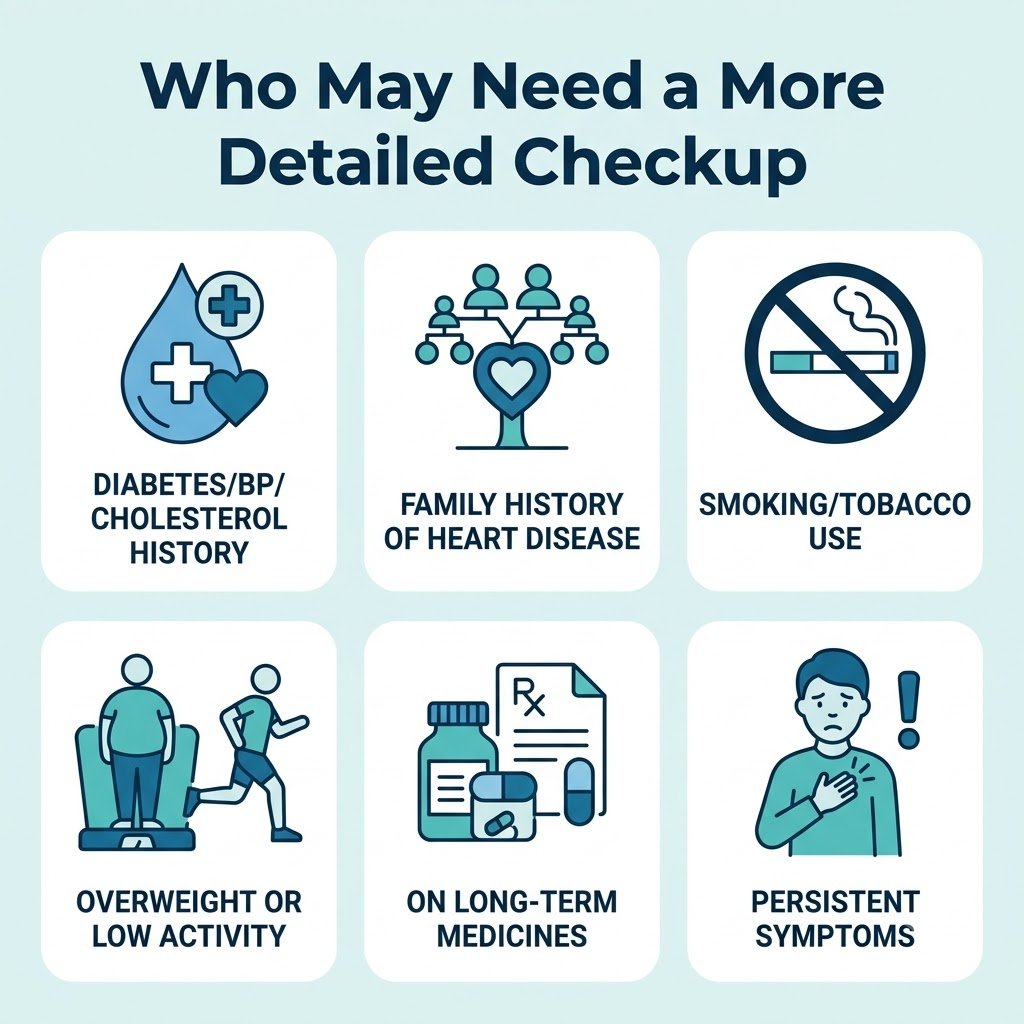
Who May Need a More Detailed Checkup?
- People with diabetes, high blood pressure or high cholesterol
- People with a strong family history of early heart disease, diabetes or inherited conditions
- People who smoke or use tobacco
- People with overweight/obesity or low physical activity
- People taking medicines that require monitoring
- People with persistent symptoms — unexplained fatigue, weight change, swelling, recurrent infections, or changes in bowel or urinary habits
How to Prepare for a Health Checkup
Ask the lab or clinician whether fasting is required. Don’t stop prescribed medicines unless your clinician tells you to. Carry previous reports, a list of medicines and supplements, and relevant family history. If several tests are planned, confirm whether blood and urine samples need to be collected at a particular time.
What Should You Discuss With a Doctor After 30?
Preventive care is more useful when connected to your personal risk profile. Tell your clinician about close relatives with diabetes, heart disease, stroke, kidney disease or certain cancers. Also mention tobacco use, alcohol intake, sleep problems, physical inactivity, dietary patterns, and any medicines or supplements you use regularly.
Health Checks for Women After 30
Women may need preventive care beyond routine blood tests. Depending on age and personal risk, this can include cervical cancer screening, breast health assessment, and reproductive or pregnancy-related care. The exact schedule varies by guideline, age and risk — discuss it with a qualified healthcare professional rather than adding it automatically to every package.
Health Checks for Men After 30
Men should also focus on blood pressure, metabolic health, cardiovascular risk, weight, tobacco exposure and lifestyle factors. Additional tests are considered when symptoms, family history or a known condition makes them appropriate. A “male full-body package” isn’t automatically necessary just because someone has crossed 30.
What Symptoms Should Not Wait for a Routine Checkup?
Routine screening is for people who are generally well. New or persistent symptoms need their own assessment — seek medical advice for unexplained weight loss, persistent fever, blood in urine or stool, ongoing chest discomfort, breathlessness, fainting, persistent abdominal pain, significant swelling, or a major change in bowel or urinary habits.
How Often Should You Have a Health Check?
There’s no universal “one full-body check every year” rule. Some checks may repeat annually for higher-risk people, while others can be spaced further apart. The right interval depends on previous results, age, family history, symptoms and diagnosed conditions — people already being treated for diabetes, hypertension or thyroid disease may need monitoring at intervals set by their clinician.
How to Choose a Health Checkup Package in India
Before paying for a package, check exactly what’s included. A useful package clearly lists the tests, sample requirements, report format, and whether doctor review is included. Be cautious of packages promising to detect every disease through a very large number of blood tests — more tests can also create false-positive or borderline results that need follow-up. Compare the actual tests rather than the package name; a “complete body checkup” can mean very different things at different labs.
A Simple Preventive Checklist After 30
At minimum, keep a record of your blood pressure, weight or waist measurement, blood sugar status when indicated, lipid results, and any other tests your clinician is monitoring. Keep reports together so trends can be compared over time — a change across several reports can sometimes be more informative than a single isolated result.
Preventive health also isn’t only about lab tests — vaccination, dental care, eye care, sleep, physical activity, nutrition, mental wellbeing and age-appropriate cancer screening are all part of a broader health plan.
How HealthPartner Can Help
HealthPartner India provides healthcare assistance for medicine ordering and selected healthcare services through our partner network, including Tata 1mg where offered. Depending on availability and eligibility, our team can help with healthcare-related ordering and lab-test assistance. Visit our Our Partners page to understand the partner model, or see how HealthPartner works.
If you need help arranging medicines, lab tests or healthcare assistance, HealthPartner India services can help you explore available options.
Frequently Asked Questions
Do I need a full body checkup every year after turning 30?
Not necessarily. Some checks, like blood pressure, may be done more often, while others depend on your risk factors and previous results. A clinician can help set the right interval for you.
Which single test matters most after 30?
There’s no single “most important” test — blood pressure and diabetes screening are often prioritized because both conditions can be silent, but the right panel depends on your individual risk profile.
Can I get all these tests done without visiting a doctor first?
Yes, most lab packages don’t require a prescription. However, a doctor’s input helps you choose tests that are actually relevant instead of paying for ones you don’t need.
Is a full body checkup different for men and women after 30?
The baseline tests (blood pressure, blood sugar, lipids, kidney/liver function) are similar. Women may also need cervical or breast health screening, and men may be guided differently for cardiovascular risk factors, based on individual history.
Does a normal checkup mean I don’t need to see a doctor for symptoms?
No. A normal report doesn’t rule out every condition. New or persistent symptoms should always be evaluated on their own, regardless of a recent checkup result.
At what age does cancer screening usually start?
It depends on the cancer type and personal risk. For example, USPSTF colorectal cancer guidance recommends starting at 45 for average-risk adults; other screenings (like cervical cancer) start earlier for women. Discuss the right schedule with a clinician.
Should I fast before a health checkup after 30?
It depends on which tests are included — some blood sugar and lipid tests may require fasting. Always confirm with the lab beforehand.
Is HbA1c better than fasting blood sugar for diabetes screening?
Neither is universally “better” — they measure different things. HbA1c reflects a 2–3 month average; fasting glucose reflects a single point in time. Your clinician may use one or both depending on your situation.
What if my family has a history of diabetes or heart disease?
Mention this to your clinician — a strong family history often means earlier or more frequent screening is worth considering, even without symptoms.
Can HealthPartner help me book these tests?
Yes — message us on WhatsApp with your requirement and we’ll help you check available lab-test and health-checkup options through our partner network.
Related Reading
- Full Body Health Checkup: Tests, Cost & Guide (India)
- HbA1c Test: Normal Range, Prediabetes & Diabetes Levels
- Normal Blood Sugar Level Chart
- How to Read Your Lipid Profile Report
- Kidney Function Test (KFT): Normal Range & Cost
- Liver Function Test (LFT): SGPT/SGOT Normal Range & Guide
(Verify these slugs against your live site before publishing — several are best-guess based on your naming pattern.)
External References
- Government of India — National Programme for Prevention and Control of Non-Communicable Diseases: Operational Guidelines
- U.S. Preventive Services Task Force — Hypertension in Adults: Screening
- U.S. Preventive Services Task Force — Colorectal Cancer: Screening
Follow HealthPartner India:
Medical disclaimer: This article is for general education only and does not replace diagnosis or treatment from a qualified healthcare professional. Test selection and interpretation should be based on your symptoms, age, medical history and clinician advice.
Need help booking a lab test or health checkup after 30? Message us on WhatsApp at +91 93479 68950 and we’ll help you understand the available options.