
Introduction
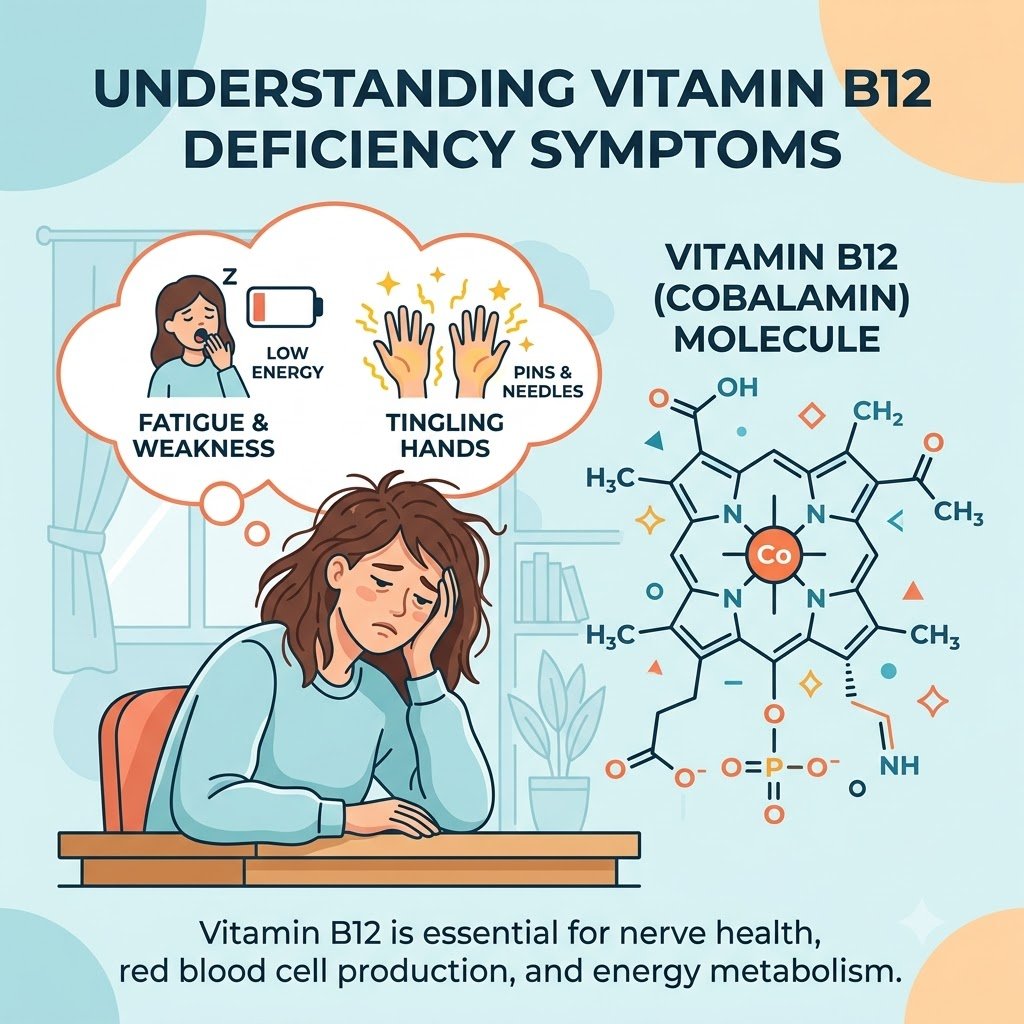
Feeling tired all the time, noticing tingling in your hands or feet, or struggling to concentrate even after a full night’s sleep? These everyday complaints are often brushed off as stress or a busy lifestyle — but they’re also classic signs of Vitamin B12 deficiency, one of the most common (and most overlooked) nutrient deficiencies in India.
Unlike Vitamin D, which most people know to check occasionally, B12 deficiency tends to develop silently over months or years, especially in people following a vegetarian or vegan diet — which describes a very large share of the Indian population. By the time symptoms become obvious, levels are often already quite low.
This guide breaks down what Vitamin B12 does, who’s most at risk in India, the warning signs to watch for, and how a simple blood test can catch it early.
📌 Quick Summary
| Aspect | Details |
|---|---|
| What it is | An essential vitamin needed for nerve function, red blood cell formation, and DNA synthesis |
| Who’s most at risk | Vegetarians/vegans, elderly adults, pregnant women, people on long-term metformin or antacid medication |
| Common symptoms | Fatigue, tingling/numbness, pale skin, memory problems, mood changes |
| Test name | Serum Vitamin B12 test (blood test, usually no fasting required) |
| Normal range | Roughly 200–900 pg/mL (lab-dependent — always check your own report’s reference range) |
| Deficiency threshold | Below 200 pg/mL; 200–300 pg/mL is considered borderline/low-normal by many doctors |
| Treatment | Dietary changes, oral supplements, or B12 injections depending on severity |
What Is Vitamin B12 and Why Does It Matter?
Vitamin B12 (cobalamin) is a water-soluble vitamin your body needs to:
- Form healthy red blood cells and prevent anemia
- Maintain the protective sheath around nerve fibres
- Support DNA production and cell division
- Keep your brain and nervous system functioning normally
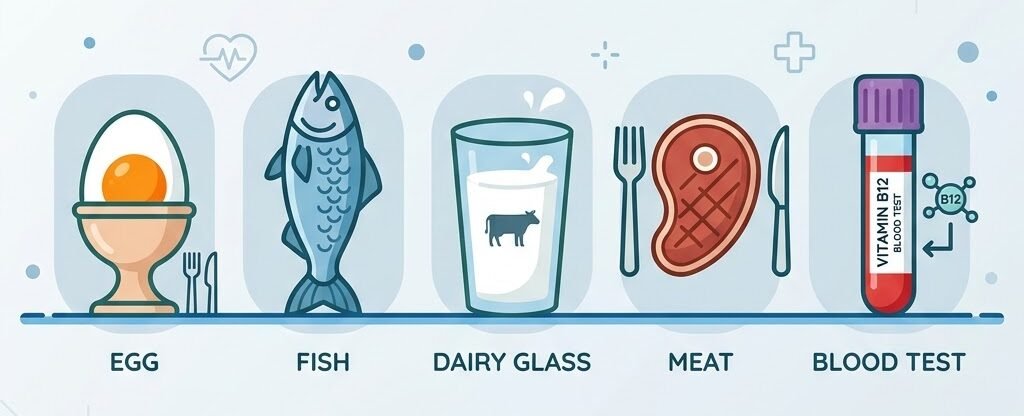
Unlike some vitamins, your body can’t produce B12 on its own — it has to come from food, primarily animal-based sources like meat, fish, eggs, and dairy (NIH Office of Dietary Supplements). This is exactly why deficiency is so widespread in India, where a large portion of the population follows a vegetarian diet with limited natural B12 sources, and why the ICMR-NIN Dietary Guidelines for Indians flag B12 as a nutrient of concern for vegetarians.
Vitamin B12 Deficiency Symptoms
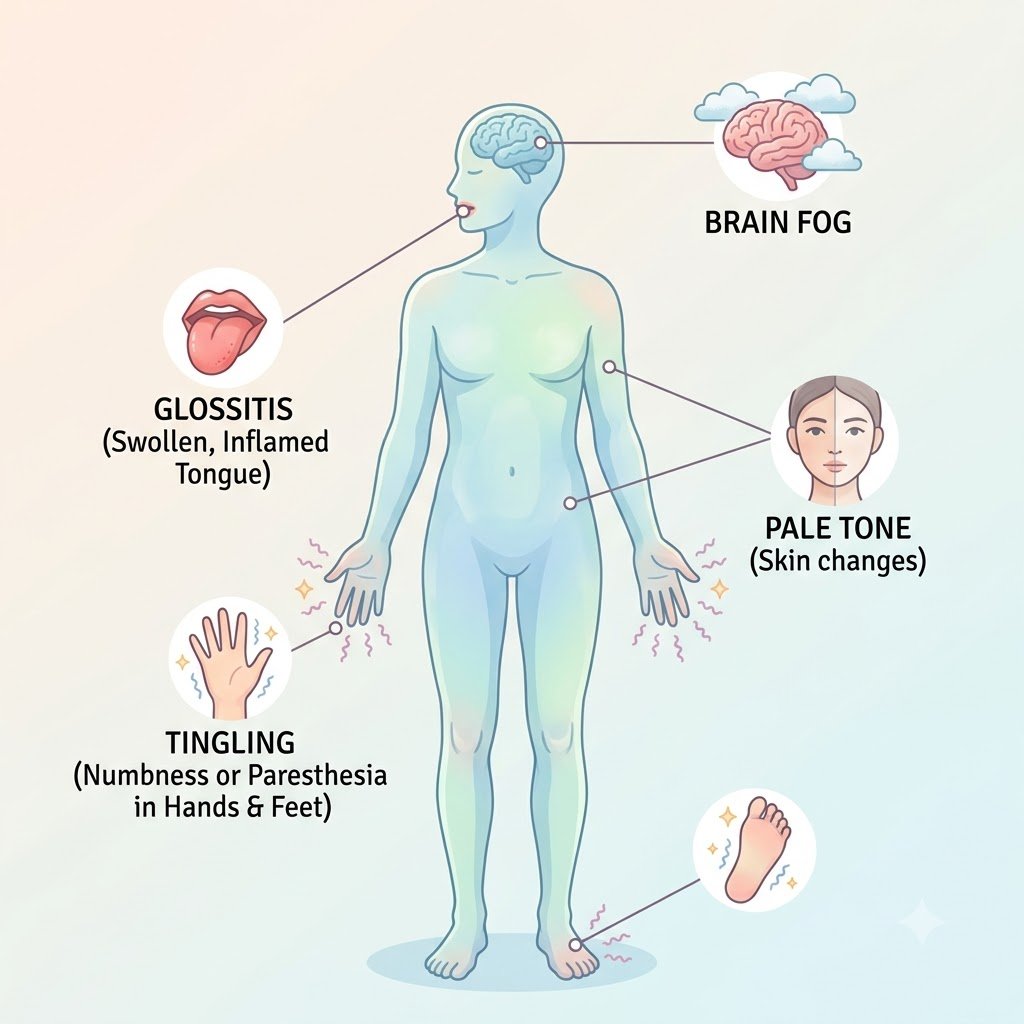
Symptoms often develop gradually, which is why many people don’t connect them to a nutrient deficiency until levels are quite low. Common signs include:
- Persistent fatigue and weakness
- Pale or yellowish skin
- Tingling or numbness in the hands and feet (pins-and-needles sensation)
- Difficulty with balance or walking
- Shortness of breath, especially on exertion
- Rapid heartbeat
- A sore, smooth, or swollen tongue (glossitis)
- Memory problems, confusion, or difficulty concentrating (“brain fog”)
- Mood changes, including irritability or low mood
- In severe, prolonged cases: vision problems or nerve damage
Many of these overlap with iron-deficiency anemia and thyroid issues, which is exactly why a blood test — not guesswork — is the reliable way to confirm what’s actually going on.
What Causes Vitamin B12 Deficiency?
1. Dietary intake (the most common cause in India) Since B12 occurs naturally almost only in animal products, strict vegetarians and vegans are at significantly higher risk. Even lacto-vegetarians who eat dairy can run low if intake isn’t consistent.
2. Poor absorption Some people eat enough B12 but can’t absorb it properly, due to:
- Pernicious anemia (an autoimmune condition affecting a stomach protein needed for B12 absorption)
- Digestive conditions like Crohn’s disease or celiac disease
- Gastric bypass or other stomach surgery
3. Medication interactions Long-term use of certain medications can interfere with B12 absorption, including:
- Metformin (commonly prescribed for Type 2 diabetes)
- Long-term antacids or PPIs (proton pump inhibitors) used for acid reflux
4. Age Absorption naturally becomes less efficient as we get older, making adults over 50 more prone to deficiency even with an adequate diet.
5. Pregnancy and breastfeeding B12 requirements increase during pregnancy and lactation, and deficiency in mothers can affect infant development.
Who Should Get Tested?
Consider getting a Vitamin B12 test if you:
- Follow a vegetarian or vegan diet
- Are over 50 years old
- Are pregnant or breastfeeding
- Take metformin or long-term antacid medication
- Have a digestive condition affecting nutrient absorption
- Are experiencing unexplained fatigue, tingling, or memory issues
- Have a family history of pernicious anemia

Understanding Your Vitamin B12 Test Report
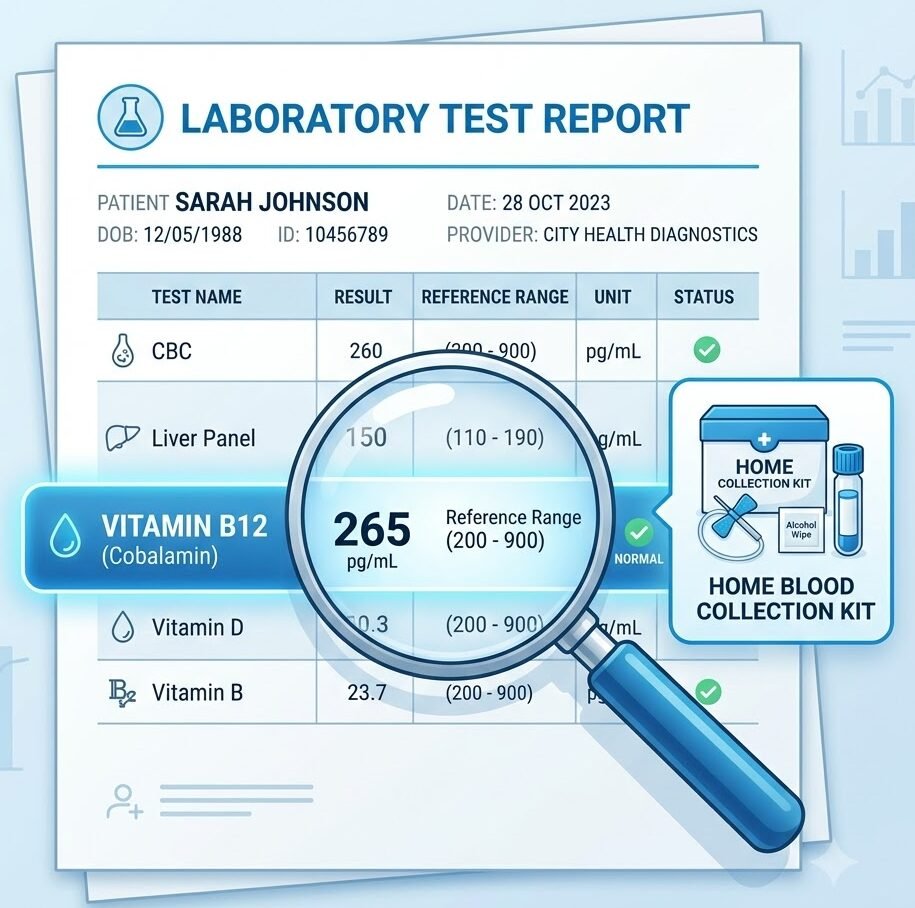
The test itself is a simple blood draw, and most labs don’t require fasting — though it’s always worth confirming with your specific lab. Here’s how results are generally interpreted (reference ranges vary slightly between labs, so always check the range printed on your own report):
| Result | Interpretation |
|---|---|
| Below ~200 pg/mL | Deficient — supplementation typically recommended |
| ~200–300 pg/mL | Borderline/low-normal — your doctor may recommend retesting or additional markers |
| ~300–900 pg/mL | Normal range |
| Above ~900 pg/mL | High — usually not harmful, but worth discussing with your doctor if unexpected |
If your B12 comes back borderline, doctors sometimes recommend additional tests like serum homocysteine or methylmalonic acid (MMA) for a clearer picture, since B12 levels alone don’t always tell the full story (see Mayo Clinic’s overview of vitamin B12 deficiency anemia).
A practical tip: Since Vitamin D deficiency is also extremely common in India and shares several symptoms with B12 deficiency (fatigue, mood changes, muscle weakness), many people choose to test both together in a single visit rather than guessing which one is behind their symptoms — book a combined Vitamin D + B12 panel instead of two separate visits.
How Is Vitamin B12 Deficiency Treated?
Treatment depends on the cause and severity:
- Dietary changes: Adding eggs, dairy, fish, poultry, or meat (if diet permits), or B12-fortified foods like fortified cereals and plant milks for vegetarians and vegans
- Oral supplements: Tablets or sublingual (under-the-tongue) B12, typically for mild-to-moderate deficiency
- B12 injections: Recommended for more severe deficiency or when absorption issues (like pernicious anemia) prevent oral supplements from working effectively
- Addressing the underlying cause: For example, adjusting medication or managing a digestive condition alongside supplementation, as outlined in this Vitamin B12 fact sheet for health professionals
Self-treating with over-the-counter supplements without testing first isn’t ideal — it’s better to confirm your actual levels first, since both very low and unnecessarily high supplementation have their own considerations.
Frequently Asked Questions
Vitamin B12 ki kami se kya hota hai? (What happens with B12 deficiency?) Untreated B12 deficiency can lead to anemia, permanent nerve damage, and neurological symptoms like memory loss or balance problems. Early detection through a simple blood test prevents this.
Vitamin B12 kis mein paya jata hai? (What foods contain Vitamin B12?) Primarily animal products — meat, fish, eggs, and dairy. Vegetarians often need fortified foods or supplements to meet daily requirements.
Can vegetarians get enough B12 without supplements? It’s difficult but not impossible — through consistent dairy intake and fortified foods. Many doctors recommend periodic testing and supplementation as a precaution for long-term vegetarians.
How often should I get tested? If you’re in a higher-risk group (vegetarian, over 50, on metformin, pregnant), testing once a year — or as advised by your doctor — is reasonable.
Is a B12 deficiency serious? Mild deficiency is easily corrected, but if left untreated for a long time, it can cause irreversible nerve damage. Catching it early through testing makes a real difference.
Get Tested From Home With HealthPartner India
If you’re experiencing fatigue, tingling, or other symptoms above — or simply want peace of mind — you don’t need to visit a lab in person. HealthPartner India, powered by Tata 1mg, offers home sample collection for Vitamin B12 tests (and combined Vitamin D + B12 panels) across India.
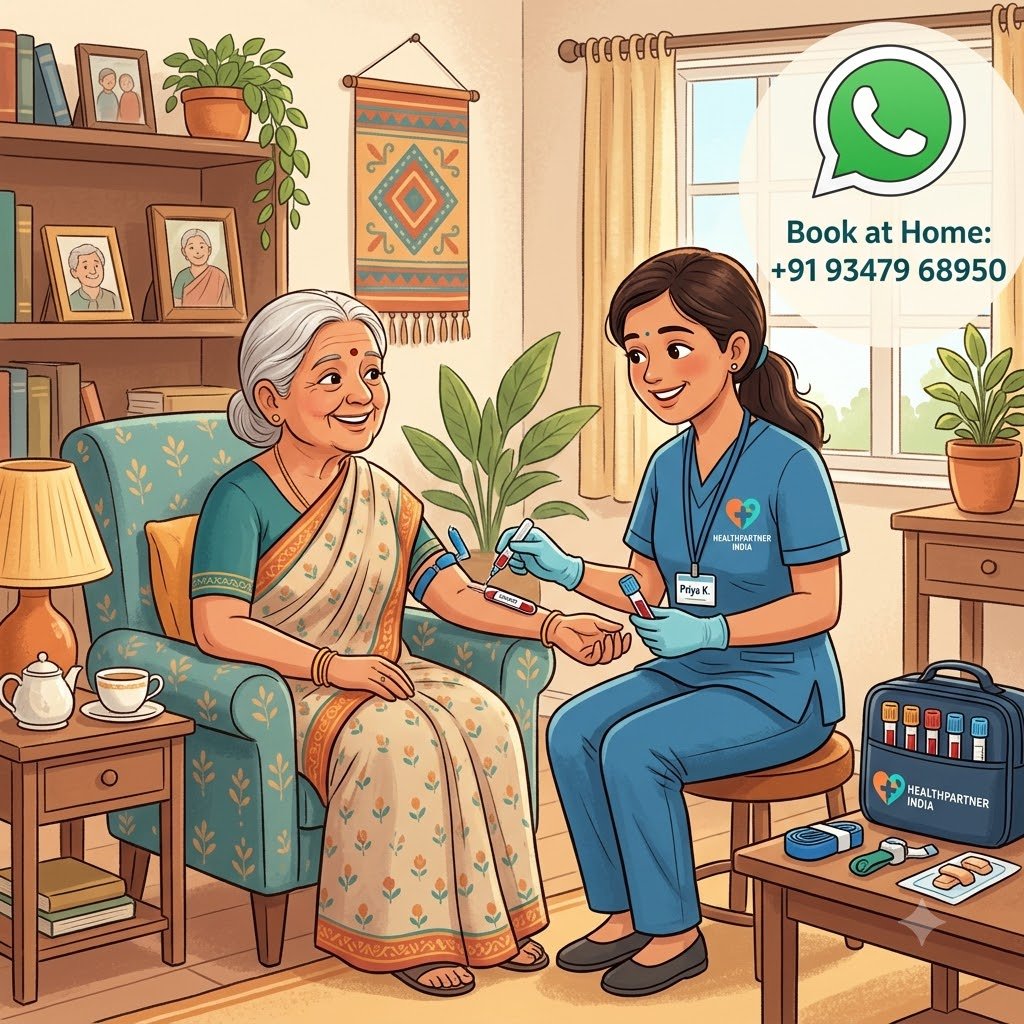
📲 Book your test on WhatsApp: Chat with HealthPartner India
Follow us: Instagram | Facebook
Disclaimer: This article is for informational purposes only and is not a substitute for professional medical advice, diagnosis, or treatment. Always consult a qualified healthcare provider regarding your specific symptoms or test results.