
📌 Quick Summary
| Aspect | Details |
|---|---|
| Condition | Thyroid Disease (Hypothyroidism / Hyperthyroidism) |
| Main Cause | Thyroid gland producing too little or too much thyroid hormone |
| Common Symptoms | Fatigue, weight changes, hair loss, mood changes, irregular heartbeat |
| Risk Factors | Being female, family history, iodine deficiency, pregnancy, autoimmune conditions |
| Diagnosis | TSH Test, Free T3/T4 Test, Thyroid Profile |
| Normal TSH Range | 0.4 – 4.0 mIU/L (may vary slightly by lab) |
| Treatment | Medication (levothyroxine or anti-thyroid drugs), regular monitoring |
What Is the Thyroid Gland?
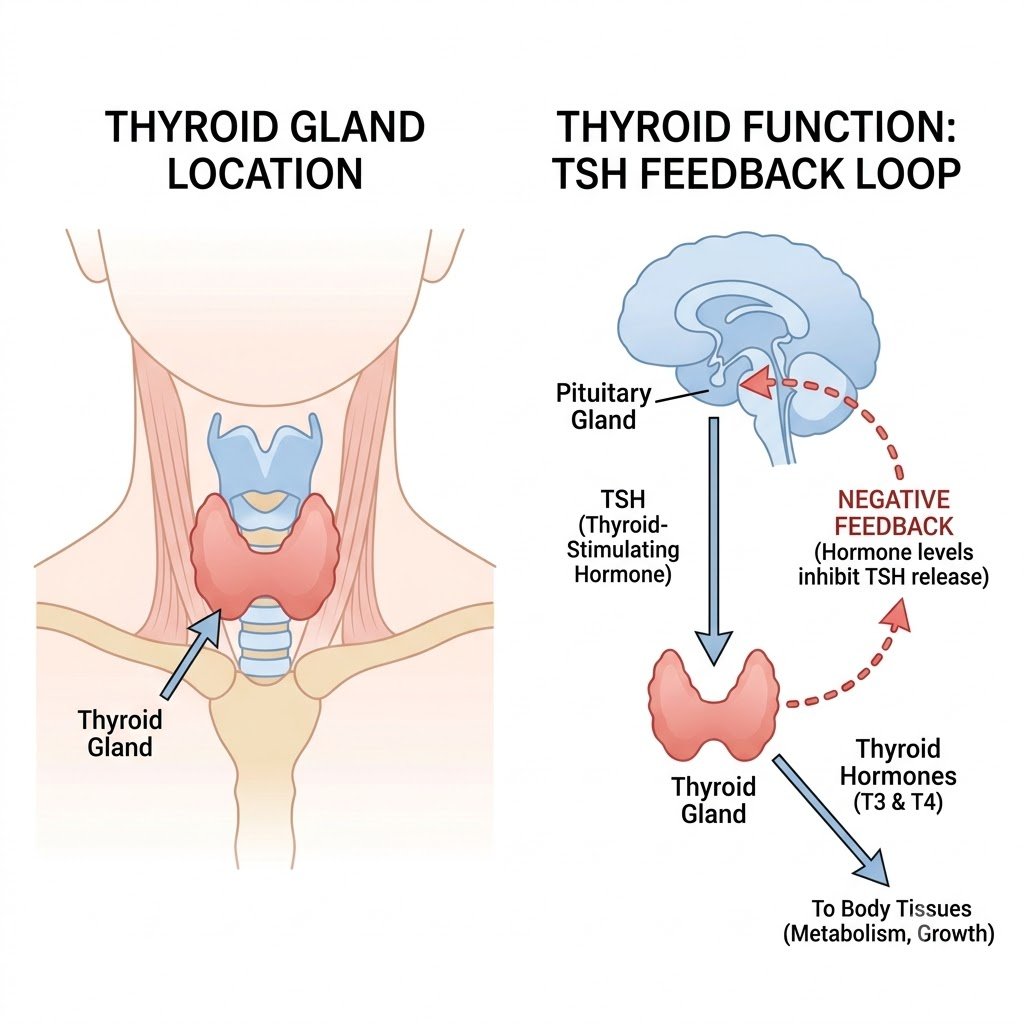
Understanding thyroid symptoms and causes is the first step toward catching a thyroid disorder early. The thyroid is a small, butterfly-shaped gland at the base of your neck, just below your Adam’s apple. Despite its size, it plays an outsized role in your body — it produces hormones (mainly T3 and T4) that regulate your metabolism, controlling how your body uses energy, and influencing your heart rate, body temperature, weight, and even mood.
Your thyroid is controlled by a signal from the pituitary gland in your brain, called Thyroid-Stimulating Hormone (TSH). When thyroid hormone levels drop, the pituitary releases more TSH to push the thyroid to work harder — which is why a high TSH level usually points to an underactive thyroid, and a low TSH level usually points to an overactive thyroid. This is the opposite of what many people expect, and it’s one of the most common points of confusion when reading a thyroid report.
Thyroid disorders are common in India, driven historically by iodine deficiency, and continue to affect a large share of the population — women in particular. According to the U.S. Office on Women’s Health, roughly 1 in 8 women will experience a thyroid problem in their lifetime, and Indian regional studies have found hypothyroidism rates as high as 24% in some populations, with women affected far more often than men.
Types of Thyroid Disorders
Hypothyroidism (Underactive Thyroid)
The most common thyroid disorder — the gland doesn’t produce enough thyroid hormone, causing the body’s processes to slow down. Often caused by iodine deficiency or an autoimmune condition called Hashimoto’s thyroiditis.
Hyperthyroidism (Overactive Thyroid)
Less common than hypothyroidism — the gland produces too much thyroid hormone, speeding up the body’s processes. Often caused by an autoimmune condition called Graves’ disease, or thyroid nodules.
Goitre
A visible enlargement of the thyroid gland, which can occur with either an underactive or overactive thyroid, and historically has been strongly linked to iodine deficiency in India.
Thyroid Nodules
Lumps that can form within the thyroid gland. Most are benign, but they’re usually evaluated with an ultrasound and sometimes a biopsy to rule out thyroid cancer.
Subclinical Thyroid Dysfunction
A milder stage where TSH is slightly abnormal but T3/T4 levels are still within the normal range — often with no obvious symptoms, but worth monitoring, especially in women who are pregnant or planning pregnancy.
Early Signs and Symptoms of Thyroid Problems
Symptoms differ depending on whether the thyroid is underactive or overactive, and can be easy to mistake for stress, aging, or other conditions — which is part of why thyroid disorders often go undiagnosed for a long time.
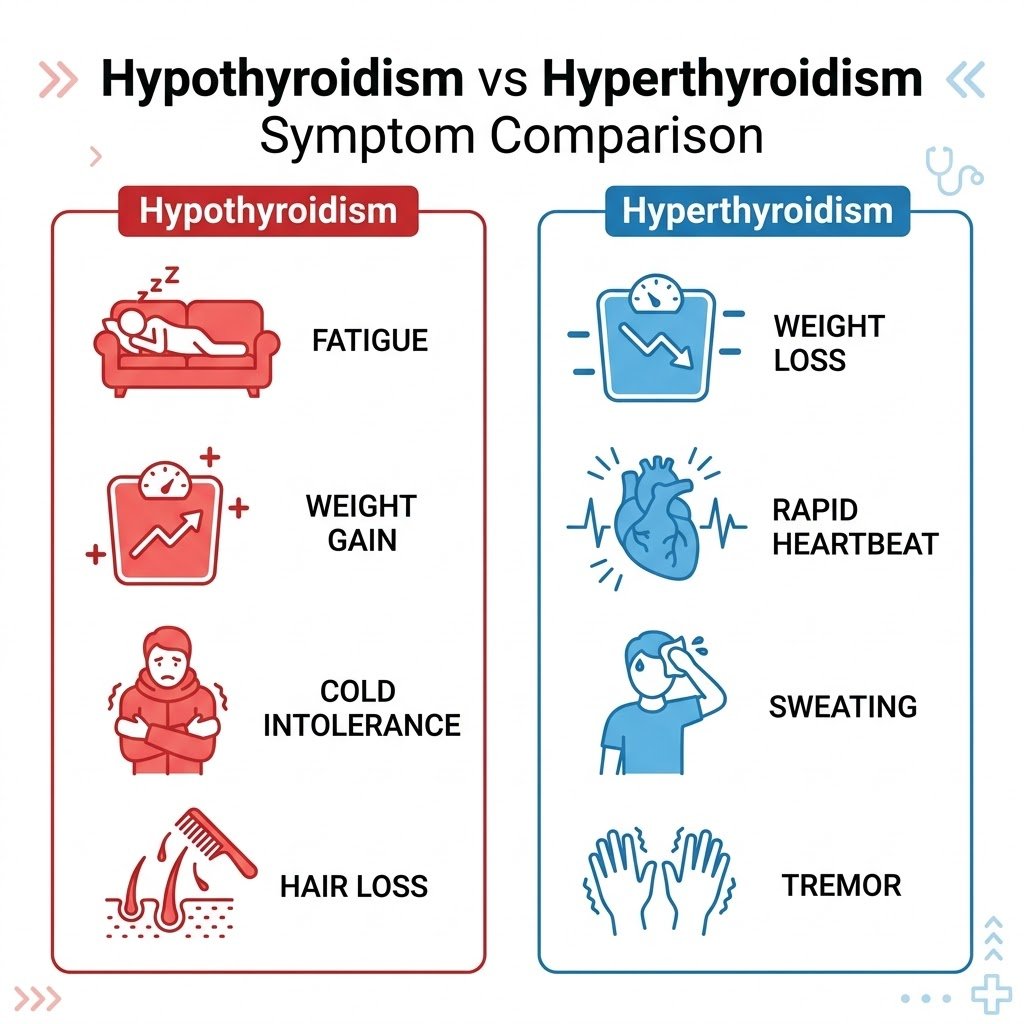
Common signs of an underactive thyroid (hypothyroidism):
- Constant fatigue and low energy
- Unexplained weight gain
- Feeling cold when others don’t
- Dry skin and hair thinning or loss
- Constipation
- Low mood or difficulty concentrating
- Irregular or heavy periods
Common signs of an overactive thyroid (hyperthyroidism):
- Unexplained weight loss
- Rapid or irregular heartbeat
- Feeling anxious, irritable, or restless
- Excess sweating and heat intolerance
- Hand tremors
- Difficulty sleeping
- Lighter or irregular periods
If several of these sound familiar, it’s worth getting a simple blood test rather than guessing — the symptoms alone can’t reliably tell you which direction your thyroid is off, and both directions are treatable once identified.
What Causes Thyroid Problems?
- Iodine deficiency or excess — iodine is essential for thyroid hormone production; both too little and too much can disrupt thyroid function
- Autoimmune conditions — Hashimoto’s thyroiditis (linked to hypothyroidism) and Graves’ disease (linked to hyperthyroidism) are the most common underlying causes in adults
- Family history — having a close relative with thyroid disease raises your risk
- Being female — thyroid disorders are significantly more common in women than men
- Pregnancy and postpartum changes — pregnancy places extra demand on the thyroid, and postpartum thyroiditis can occur after childbirth
- Age — risk increases with age, particularly around menopause
- Certain medications or prior thyroid/neck treatment, including radiation
How Is a Thyroid Problem Diagnosed?
Thyroid function is checked through simple blood tests:
- TSH (Thyroid-Stimulating Hormone) Test — the primary screening test; normal range is generally 0.4–4.0 mIU/L, though this can vary slightly by lab
- Free T3 and Free T4 Test — measures actual thyroid hormone levels, often done alongside TSH for a complete picture
- Thyroid Profile / Thyroid Panel — a combined test covering TSH, T3, and T4 together
- Anti-TPO Antibody Test — checks for autoimmune thyroid conditions like Hashimoto’s or Graves’ disease
- Thyroid Ultrasound — used if a nodule or goitre is found on physical examination
As a general guide, a TSH between 4.5–10 mIU/L may indicate subclinical (mild, early-stage) hypothyroidism, while TSH above 10 mIU/L usually points to more significant hypothyroidism requiring treatment. A TSH below the normal range usually points toward hyperthyroidism. Only a doctor can properly interpret your results alongside your symptoms and other test values.
📱 Book Your Thyroid Test with HealthPartner India
We help you book trusted thyroid screening tests through our Tata 1mg partnership, including:
- Thyroid Profile Total (TSH, T3, T4) — the complete standard thyroid panel
- TSH (Thyroid Stimulating Hormone) Test — quick screening test
- Thyroid Profile Free (Free T3, Free T4, TSH) — more detailed hormone assessment
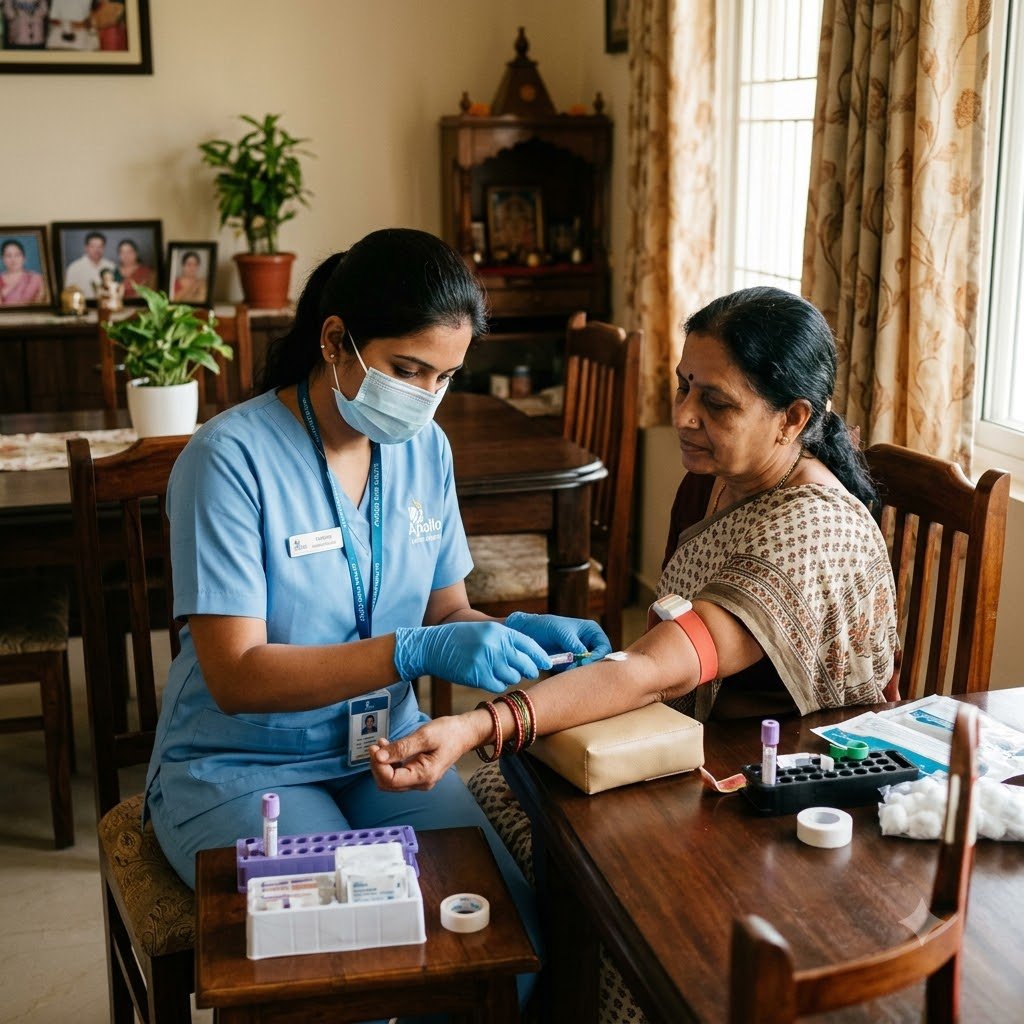
Chat with us on WhatsApp to book your test with home sample collection and check available discounts.
Thyroid Problems in Women and During Pregnancy
Thyroid disorders disproportionately affect women, and the risk rises further during pregnancy and around menopause. Left untreated during pregnancy, thyroid dysfunction has been linked to complications including miscarriage risk, anemia, and effects on fetal development — which is why thyroid screening is often recommended as part of routine prenatal care, particularly for women with a personal or family history of thyroid issues.
Symptoms of thyroid dysfunction can also overlap with normal pregnancy symptoms — fatigue, changes in heart rate, temperature sensitivity — making a simple blood test the most reliable way to know for sure rather than guessing based on symptoms alone.
Why Early Diagnosis Matters
Thyroid disorders are highly treatable once identified, but they often develop slowly and get mistaken for stress, aging, or unrelated conditions for months or years. Catching a thyroid imbalance early can help avoid:
- Heart complications from prolonged hyperthyroidism or untreated hypothyroidism
- Fertility and pregnancy complications
- Ongoing fatigue and reduced quality of life
- Goitre or nodule progression
- Worsening mental health symptoms like anxiety or depression linked to thyroid imbalance
A simple, affordable blood test is often all it takes to get a clear answer.
Managing Thyroid Health: Lifestyle Tips
✔ Take thyroid medication at the same time each day, as prescribed, usually on an empty stomach
✔ Get regular TSH monitoring as advised by your doctor, especially if dosage was recently adjusted
✔ Include iodine-rich foods in moderation (iodized salt, dairy, seafood) — but don’t over-supplement without medical advice
✔ Manage stress and prioritize sleep, both of which can influence thyroid function
✔ Tell your doctor about all other medications and supplements you take, as some interact with thyroid medication
✔ If pregnant or planning pregnancy with a thyroid history, get tested early in your prenatal care
If you’re prescribed thyroid medication, order it easily through our medicine ordering service — just send your prescription on WhatsApp.

Key Takeaways
- The thyroid gland regulates metabolism through hormones T3 and T4, controlled by TSH
- A high TSH usually means an underactive thyroid (hypothyroidism); a low TSH usually means an overactive thyroid (hyperthyroidism)
- Thyroid disorders are common in India and affect women far more often than men
- Symptoms can be mistaken for stress or aging, so testing is more reliable than guessing
- Most thyroid conditions are manageable with medication and regular monitoring once diagnosed
Frequently Asked Questions (FAQs)
1. What is thyroid disease? Thyroid disease refers to conditions where the thyroid gland produces too much (hyperthyroidism) or too little (hypothyroidism) thyroid hormone, affecting metabolism and overall health.
2. What is the normal range for TSH? Generally 0.4–4.0 mIU/L, though normal ranges can vary slightly between labs and may differ during pregnancy.
3. What are the early signs of thyroid problems? Common signs include fatigue, unexplained weight changes, hair loss, feeling unusually cold or hot, mood changes, and irregular periods.
4. Is thyroid disease more common in women? Yes — women are significantly more likely to develop thyroid disorders than men, with risk increasing further during pregnancy and around menopause.
5. Which test is used to diagnose thyroid problems? A TSH test is the standard first screening test, often combined with Free T3 and Free T4 tests as a full Thyroid Profile.
6. Can thyroid problems be cured? Most thyroid conditions aren’t “cured” in the traditional sense but are effectively managed long-term with medication and regular monitoring.
7. Does thyroid disease cause weight gain? Hypothyroidism (underactive thyroid) commonly causes weight gain due to a slowed metabolism, while hyperthyroidism (overactive thyroid) more often causes weight loss.
8. Is thyroid disease linked to iodine deficiency in India? Yes — iodine deficiency has historically been a major cause of goitre and hypothyroidism in India, though the national salt iodization programme has helped reduce this significantly since the 1980s.
9. When should I get my thyroid tested? If you notice persistent fatigue, unexplained weight changes, hair loss, or irregular periods, or if you have a family history of thyroid disease or are pregnant, it’s worth getting a TSH test.
10. How can HealthPartner India help? We help with thyroid test bookings (TSH, Thyroid Profile), medicine ordering for prescribed thyroid medication, and doctor consultations — all coordinated via WhatsApp.
Need Help With Your Thyroid Care?
Whether you need a thyroid test, prescribed medicines, or a doctor consultation, HealthPartner India is here to help — genuine products, trusted labs, delivered across India.
📱 WhatsApp us today: +91 93479 68950
Follow us for more health tips and updates: Facebook | Instagram
Medical Disclaimer: This article is for educational purposes only and is not a substitute for professional medical advice, diagnosis, or treatment. Always consult a qualified healthcare professional regarding any medical condition.