
Getting a lab report back with numbers like “94 mg/dL” or “HbA1c: 5.9%” doesn’t mean much if you don’t know what counts as normal. This guide breaks down every major blood sugar test — fasting, post-meal, random, and HbA1c — what the healthy ranges are, and when a number is worth a conversation with your doctor.
👉 If you’re already managing diabetes, our diet chart for diabetic patients is worth reading alongside this one. ➡️ Diet Chart for Diabetic Patients – Indian Meal Plan.
📊 Normal Blood Sugar Levels Chart
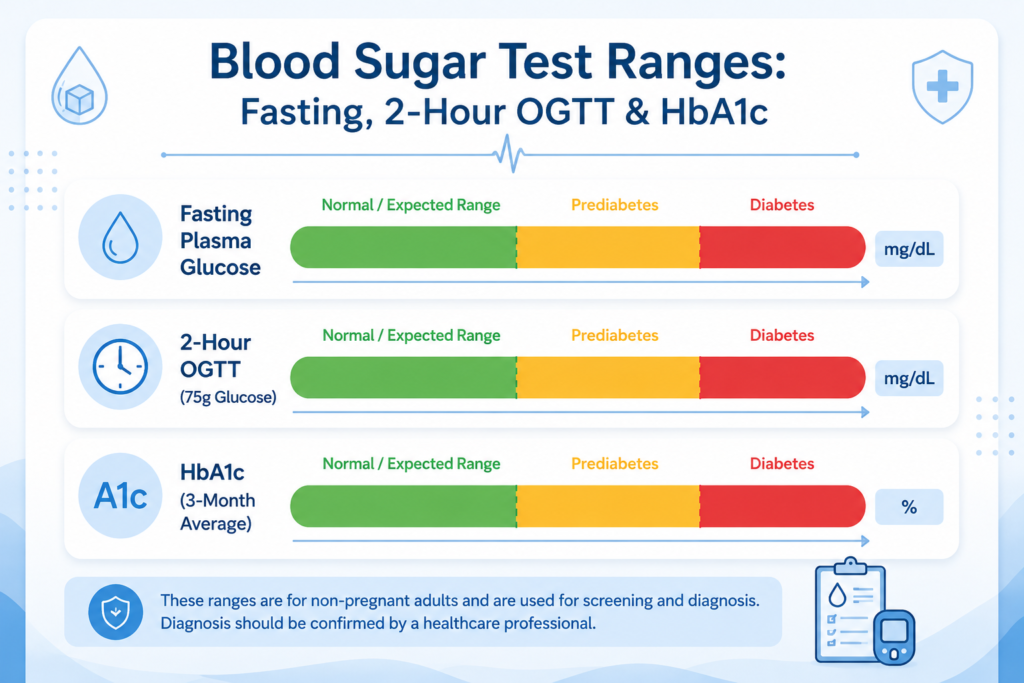
| Test | Normal / Expected Range | Prediabetes | Diabetes* |
|---|---|---|---|
| Fasting plasma glucose | 70–99 mg/dL | 100–125 mg/dL | ≥126 mg/dL |
| 2-hour OGTT (oral glucose tolerance test) | Below 140 mg/dL | 140–199 mg/dL | ≥200 mg/dL |
| HbA1c | Below 5.7% | 5.7–6.4% | ≥6.5% |
| Random glucose | No single “normal” cutoff used for diagnosis | — | ≥200 mg/dL, with classic symptoms |
These are diagnostic criteria for non-pregnant adults. A diabetes diagnosis should be confirmed by a healthcare professional, unless there is unequivocal hyperglycemia—a single reading is a signal to get it checked, not a diagnosis on its own.
Ready to check your numbers? Book a fasting, OGTT, RBS, or HbA1c test on 1 mg. →
🧠 What Is Normal Blood Sugar?
Blood sugar readings mean different things depending on which test was used and when it was taken:
- Fasting (8–10 hours without food): 70–99 mg/dL
- 2-hour OGTT: below 140 mg/dL
- HbA1c (your average over roughly 2–3 months): below 5.7%
- Random glucose: interpreted differently — covered below
These are the numbers doctors use to catch diabetes and prediabetes, often well before any symptoms show up.
🌅 Normal Fasting Blood Sugar Level
This is checked after 8–10 hours without eating — usually first thing in the morning, before breakfast.
- Normal: 70–99 mg/dL
- Prediabetes: 100–125 mg/dL
- Diabetes: 126 mg/dL or above, confirmed with a repeat or follow-up test
Fasting glucose is probably the single most common number people check on a lab report in India — it’s usually the first line anyone looks at.
👉If yours is running high, diet plays a major role — our diabetic diet chart walks through exactly what to change: ➡️ Diet Chart for Diabetic Patients – Indian Meal Plan
🍛 2-Hour Post-Meal / PP Blood Sugar
A quick clarification worth knowing: a 2-hour reading after a regular home meal isn’t the same test as a diagnostic OGTT. The official thresholds — 140–199 mg/dL for prediabetes, 200 mg/dL or above for diabetes — apply specifically to the standardized 2-hour OGTT, which uses a measured 75g glucose drink, not an everyday meal.
A home post-meal check can still be a useful habit for tracking your own patterns day to day. Just know it’s a different measurement than the formal diagnostic test, and everyone’s glucose rises somewhat after eating — that alone isn’t cause for concern.
⏱️ Random Blood Sugar (RBS)
RBS can be checked at any point in the day, regardless of when you last ate. Doctors often use it when symptoms are present, or simply to get a snapshot at a particular moment.
Unlike fasting glucose or the OGTT, there’s no neat three-tier normal/prediabetes/diabetes chart for random readings, since the number depends heavily on what and when you last ate. A reading of 200 mg/dL or higher, combined with classic symptoms like excessive thirst, frequent urination, or unexplained fatigue, can meet the diagnostic bar for diabetes — but a single random number on its own should never be used to self-diagnose. That interpretation belongs to a doctor, alongside your symptoms and other tests.
📉 HbA1c
HbA1c estimates your average blood glucose over roughly the past 2–3 months, which makes it useful for both screening and confirming a diagnosis.
- Normal: Below 5.7%
- Prediabetes: 5.7–6.4%
- Diabetes: 6.5%+
Because it isn’t affected by what you ate that morning or how well you slept the night before, doctors often use HbA1c alongside fasting glucose to get a fuller picture.
Book your HbA1c test from home: Schedule on 1 mg →
👫 Blood Sugar by Gender & Pregnancy
A frequent search is whether “normal sugar level” is different for men versus women — it isn’t. Fasting, OGTT, and HbA1c targets are identical regardless of gender.
Pregnancy is the real exception. Targets during pregnancy differ from standard adult ranges and depend on whether gestational diabetes has been diagnosed — pregnant women should follow the specific numbers given by their obstetrician or diabetes care team rather than the general chart here.
A newborn’s glucose reading also needs to be judged in context — by age in hours, symptoms, and clinical picture — by a pediatrician, so it doesn’t fit into a standard adult range at all.
Why This Matters More for South Asians
India carries one of the highest diabetes burdens in the world, and people of South Asian background tend to develop Type 2 diabetes younger and at a lower body weight than many other populations. If you have risk factors — family history, excess weight, high blood pressure, or a past episode of gestational diabetes — it’s worth asking your doctor when you should start regular screening, since there’s no single age that applies to everyone.
⚠️ Symptoms of High Blood Sugar
Watch for:
- Excessive thirst
- Frequent urination
- Persistent fatigue
- Blurred vision
- Wounds that heal slower than usual
When these show up consistently, they’re part of what doctors look at when evaluating for Type 2 diabetes — by far the most common form in adults, and the one most closely tied to lifestyle.
👉 Learn full details here: ➡️ Diabetes Symptoms and Causes
🚨 When Blood Sugar May Be Dangerous
Very high or very low blood glucose can require urgent medical attention.
- Below 70 mg/dL: low blood glucose (hypoglycemia)
- Below 54 mg/dL: clinically significant hypoglycemia that needs prompt treatment
- Very high readings, especially alongside vomiting, difficulty breathing, confusion, or severe weakness, call for urgent medical care — particularly for anyone with diagnosed diabetes
- 200 mg/dL or higher on a random reading: can meet the diagnostic threshold when paired with classic symptoms, but this always needs confirmation from a doctor, not a self-diagnosis from one reading
🥗 How to Manage High Blood Sugar
Diet, activity, sleep, and any prescribed treatment all play a role. For many people with diabetes, diet changes alone aren’t enough — medication or insulin, as directed by a doctor, may also be needed.
Everyday habits that help:
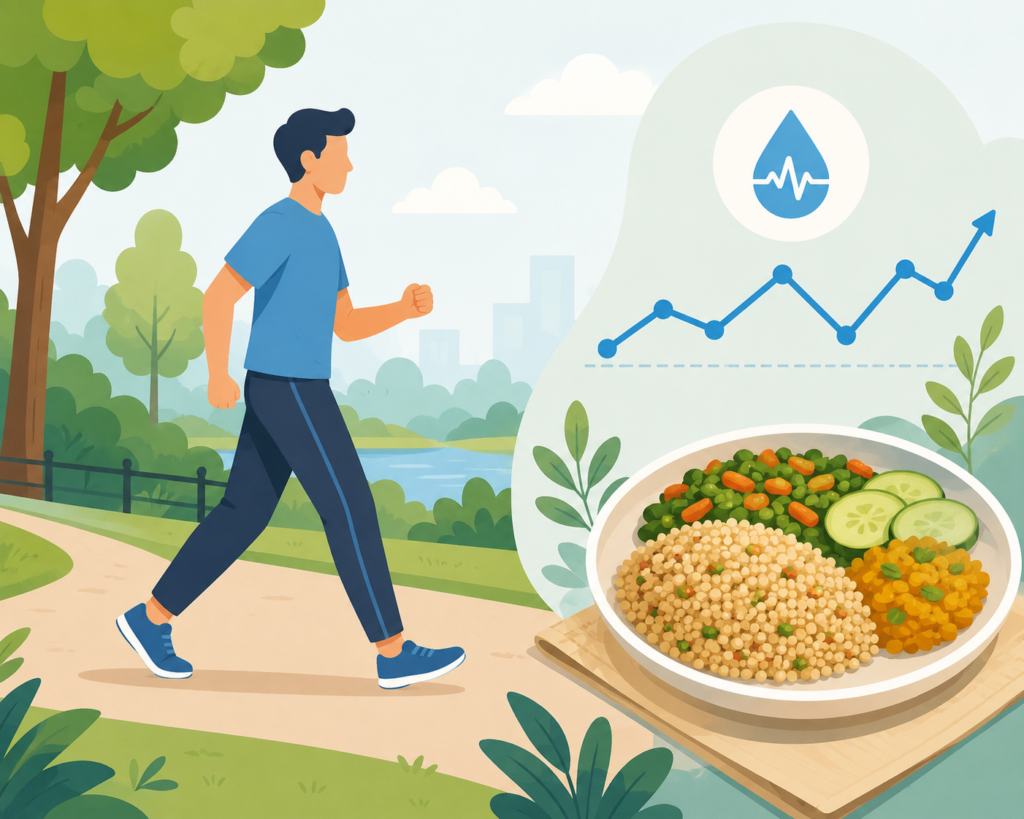
- Favor low-GI foods — millets, vegetables, pulses — over refined carbs
- Cut back on sugar, maida, and fried food
- Take a 15–20 minute walk after meals
- Eat at regular intervals instead of skipping meals
- Prioritize sleep — poor sleep is linked to lower insulin sensitivity
- Manage stress, since stress hormones can raise blood sugar even without eating anything
- Take prescribed medication or insulin exactly as directed
👉 Follow this complete guide: ➡️ Diet Chart for Diabetic Patients – Indian Meal Plan
🔗 Related Guides
- 🏠 Homepage: healthpartner.co.in
- 🥗 Diet Chart: Diet Chart for Diabetic Patients
- ⚠️ Symptoms Guide: Diabetes Symptoms and Causes
❓ FAQs
What is a normal blood sugar level? Normal fasting blood glucose is 70–99 mg/dL, and a 2-hour OGTT reading below 140 mg/dL is expected in people without diabetes.
What is a normal sugar level after eating? For a routine meal, a healthy 2-hour reading is generally expected to stay below 140 mg/dL—though the formal diagnostic 140–199/≥200 mg/dL thresholds apply specifically to the standardized OGTT, not an everyday meal.
What is a normal fasting blood sugar level? 70–99 mg/dL, measured after 8–10 hours of fasting.
What is a normal random blood sugar level? There isn’t a fixed “normal” cutoff for random glucose the way there is for fasting or OGTT, since it depends on when you last ate. A reading of 200 mg/dL or higher, with classic symptoms, can meet the diagnostic threshold for diabetes.
Does normal sugar level differ between men and women? No—the normal blood glucose range is the same for both. Pregnancy is the main factor that changes the targets.
Is blood glucose level the same as blood sugar level? Yes—blood glucose and blood sugar refer to the same thing, and the same ranges apply to both terms.
Can one high reading mean diabetes? Not necessarily. Unless there is unequivocal hyperglycemia, diagnosis usually requires confirmatory testing—your doctor may repeat the same test or use another test such as HbA1c or fasting plasma glucose.
📌 Key Takeaways
- Normal fasting blood glucose: 70–99 mg/dL
- Normal 2-hour OGTT: Below 140 mg/dL
- Normal HbA1c: Below 5.7%
- Random glucose doesn’t have a simple “normal” cutoff—it’s interpreted alongside symptoms
- The normal range is the same for men and women; pregnancy changes the targets
- A single abnormal reading is a signal to get confirmatory testing, not a diagnosis on its own
- Diet, activity, sleep, and (where prescribed) medication all play a role in day-to-day management
📲 Need Help Understanding Your Report?
📞 WhatsApp Health Partner India: +91 93479 68950 for general guidance. Please consult a qualified doctor for diagnosis or treatment decisions.
🔗 Follow Health Partner India for more health guides: Facebook | Instagram
Sources
American Diabetes Association. Standards of Care in Diabetes—2026: Diagnosis and Classification of Diabetes.
⚠️ Disclaimer
This article is for informational purposes only and is not a substitute for professional medical advice, diagnosis, or treatment. Please consult a qualified doctor to interpret your test results and for any treatment decisions.