
What you put on your plate has more day-to-day influence over your blood sugar than almost anything else. This diet chart for diabetic patients breaks down the foods that help, the ones worth limiting, and a simple Indian meal plan you can actually follow — built around millets and low-GI choices rather than strict restriction.
If you haven’t already, it’s worth reading our earlier guide on diabetes symptoms and causes to understand how the condition develops before diving into diet specifics.
📌 Quick Summary — Diabetic Patient Diet Chart at a Glance
| Aspect | Details |
|---|---|
| Goal | Keep blood sugar stable through a balanced, low-GI diet chart |
| Best Carbs | Millets (ragi, jowar, bajra), whole grains, legumes |
| Best Proteins | Dal, paneer, eggs, fish, chicken, tofu |
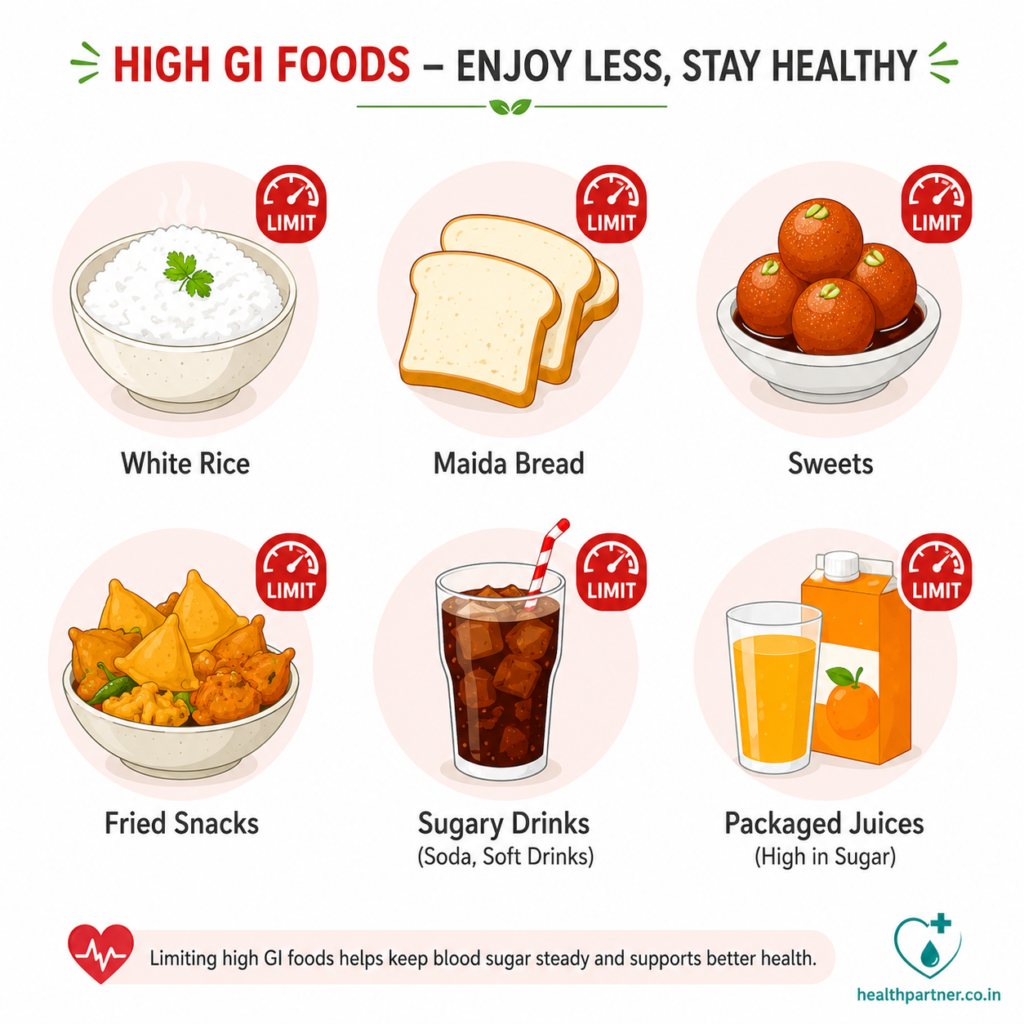
| Foods to Limit | White rice, maida, sugary drinks, fried snacks, sweets |
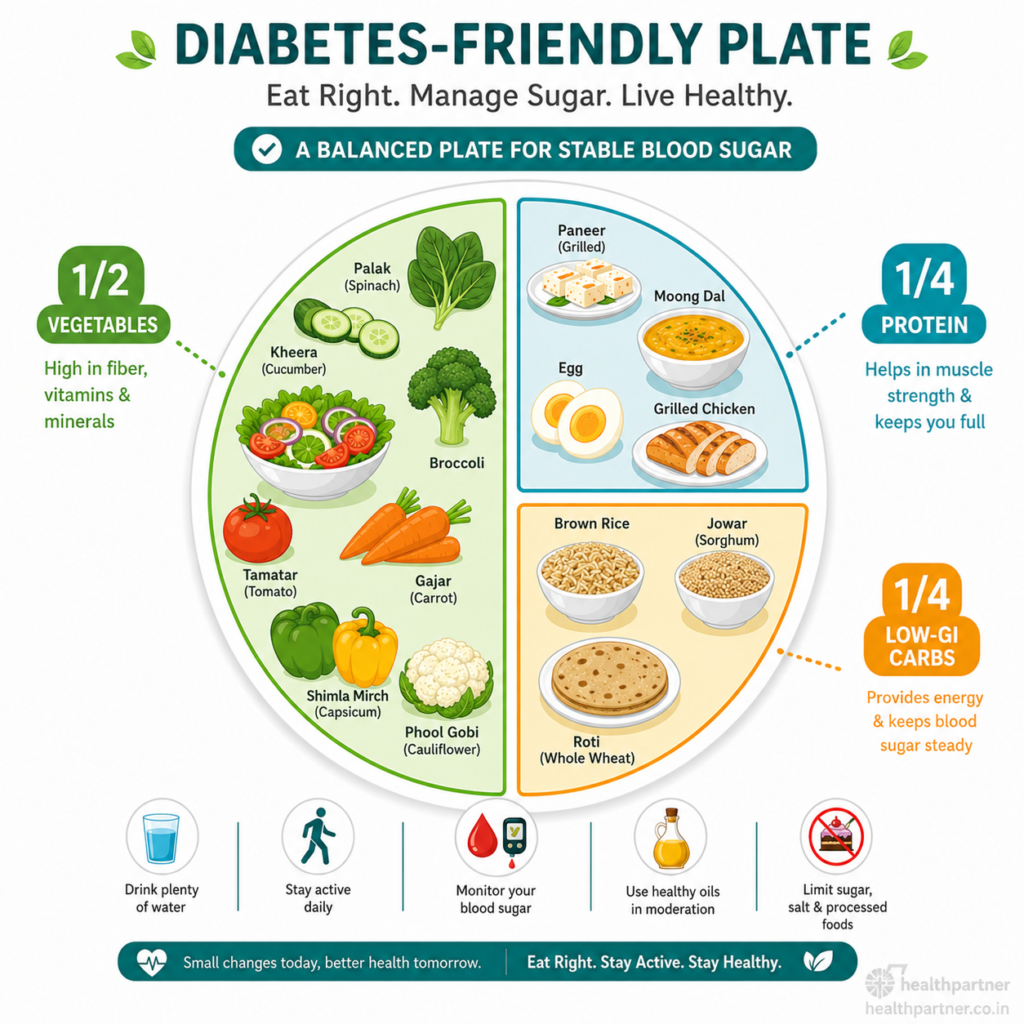
| Eating Pattern | Diabetes Plate Method — ½ vegetables, ¼ protein, ¼ low-GI carbs |
| Meal Timing | 2–3 balanced meals a day; avoid long gaps and constant snacking |
| Key Tool | Glycemic Index (GI) — choose low/medium-GI foods most often |
Why Diet Matters More Than Almost Anything Else
Blood sugar rises and falls based directly on what you eat and when — which is exactly why a proper diet chart for diabetic patients matters more than generic “eat healthy” advice.
There isn’t one universal diabetes diet that works for everyone. Mediterranean-style eating, DASH, lower-carbohydrate approaches, and plant-forward diets have all shown real benefit in research. What they share is the same underlying pattern: plenty of non-starchy vegetables, whole and minimally processed grains, legumes, nuts, and lean protein, with less refined carbohydrate, added sugar, and ultra-processed food.
One detail worth knowing if you’re Indian: regular fine atta roti has a glycemic response surprisingly close to white rice, even though wheat is technically a whole grain. Swapping part of your usual wheat and polished rice for millets — and building meals around fiber and protein rather than carbs alone — is one of the highest-impact changes you can make.
Understanding the Glycemic Index (GI) — Low GI Foods for Diabetes
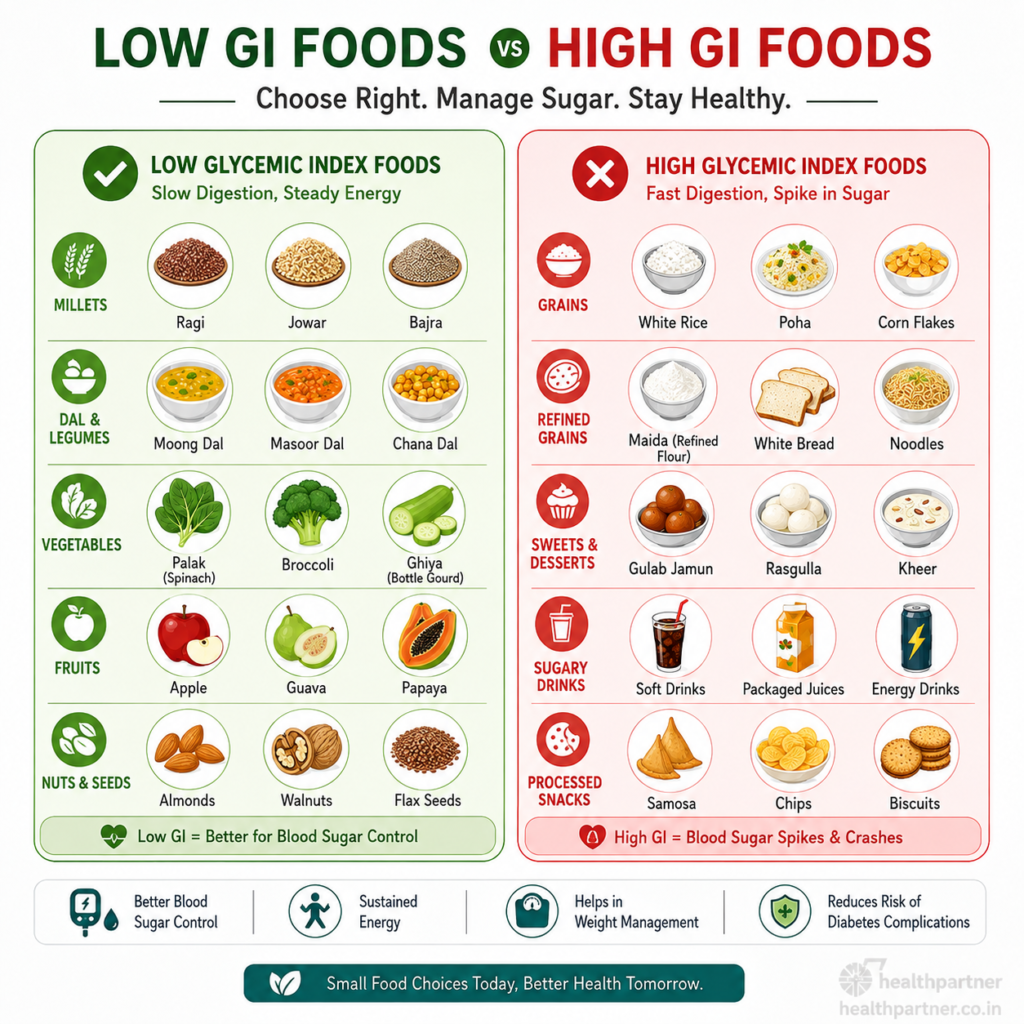
The Glycemic Index (GI) ranks carbohydrate foods on how fast they raise blood sugar, from 0 to 100. Lower-GI foods release glucose gradually, putting less strain on your system after a meal.
- Low GI (55 or below): most dals and legumes, non-starchy vegetables, most millets, apples, oats
- Medium GI (56–69): bajra, jowar depending on preparation, sweet potato, brown rice
- High GI (70+): white rice, white bread, maida-based foods, potatoes, sugary drinks
Quick Glycemic Index Chart for Common Indian Foods
| Food | Approx. GI | Category |
|---|---|---|
| Kodo millet | 51–57 | Low |
| Ragi (finger millet) | 54–68 | Low–Medium |
| Jowar (sorghum) | 54 | Low |
| Moong dal / chana dal | 25–40 | Low |
| Bajra (pearl millet) | 55–60 | Medium |
| Brown rice | 50–68 | Medium |
| Sweet potato | 60–65 | Medium |
| White rice (polished) | 72–89 | High |
| White bread/maida items | 70–85 | High |
GI isn’t the whole story, though — portion size and what you eat alongside a food matter just as much. Pairing rice with dal and vegetables, for instance, softens the overall spike compared to eating rice alone.
The Plate Method: A Simple Way to Build Any Meal
You don’t need to count every gram of carbohydrate to eat well with diabetes. The Plate Method gives you an easy visual template for any meal:
- Half your plate: non-starchy vegetables — bhindi, lauki, cabbage, spinach, cauliflower, tomato, cucumber
- A quarter of your plate: protein — dal, paneer, chicken, fish, eggs, tofu
- A quarter of your plate: low-to-medium GI carbohydrates — millet roti, brown rice, quinoa, whole grains
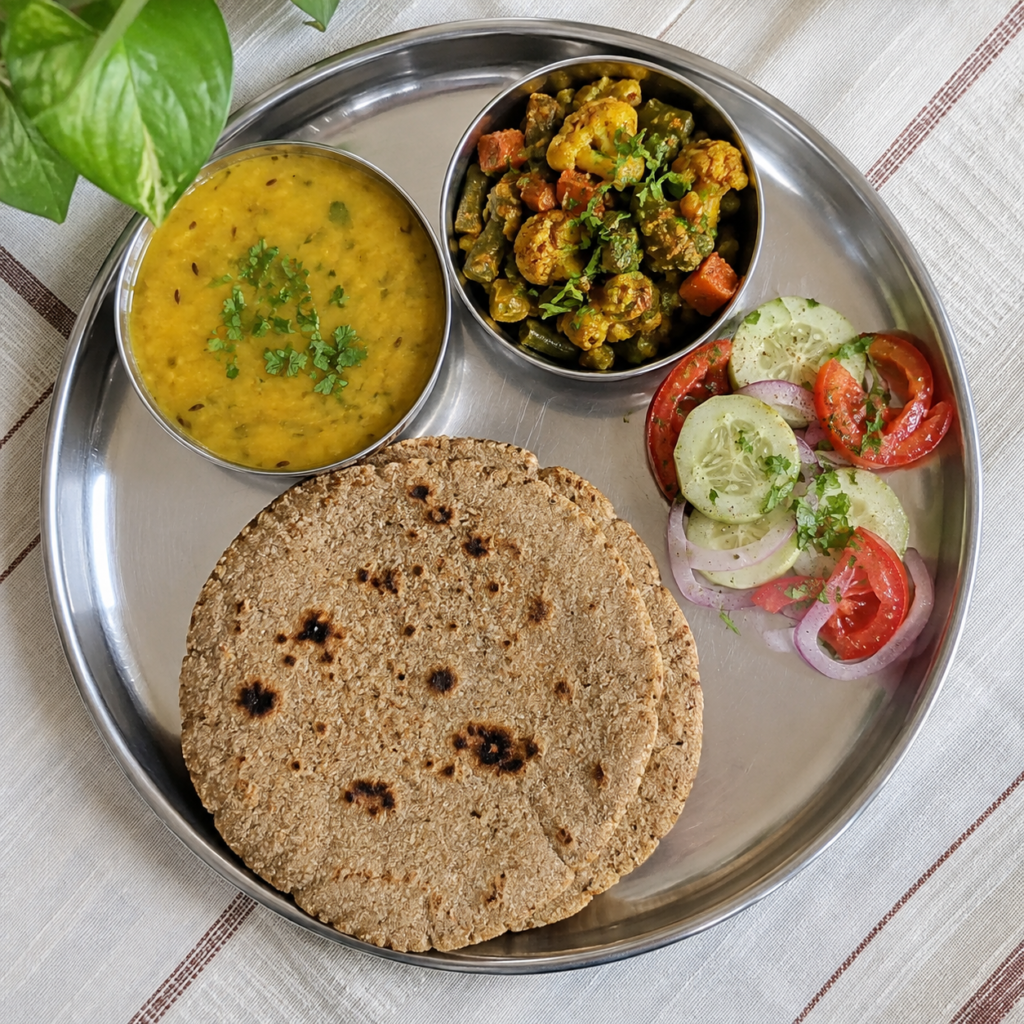
This works just as well for a home-cooked Indian thali as it does for any other cuisine — it’s a matter of proportion, not a fixed food list.
Best Foods to Eat — Indian Diabetic Diet Chart Essentials
Millets for Diabetes: A Smart Indian Swap
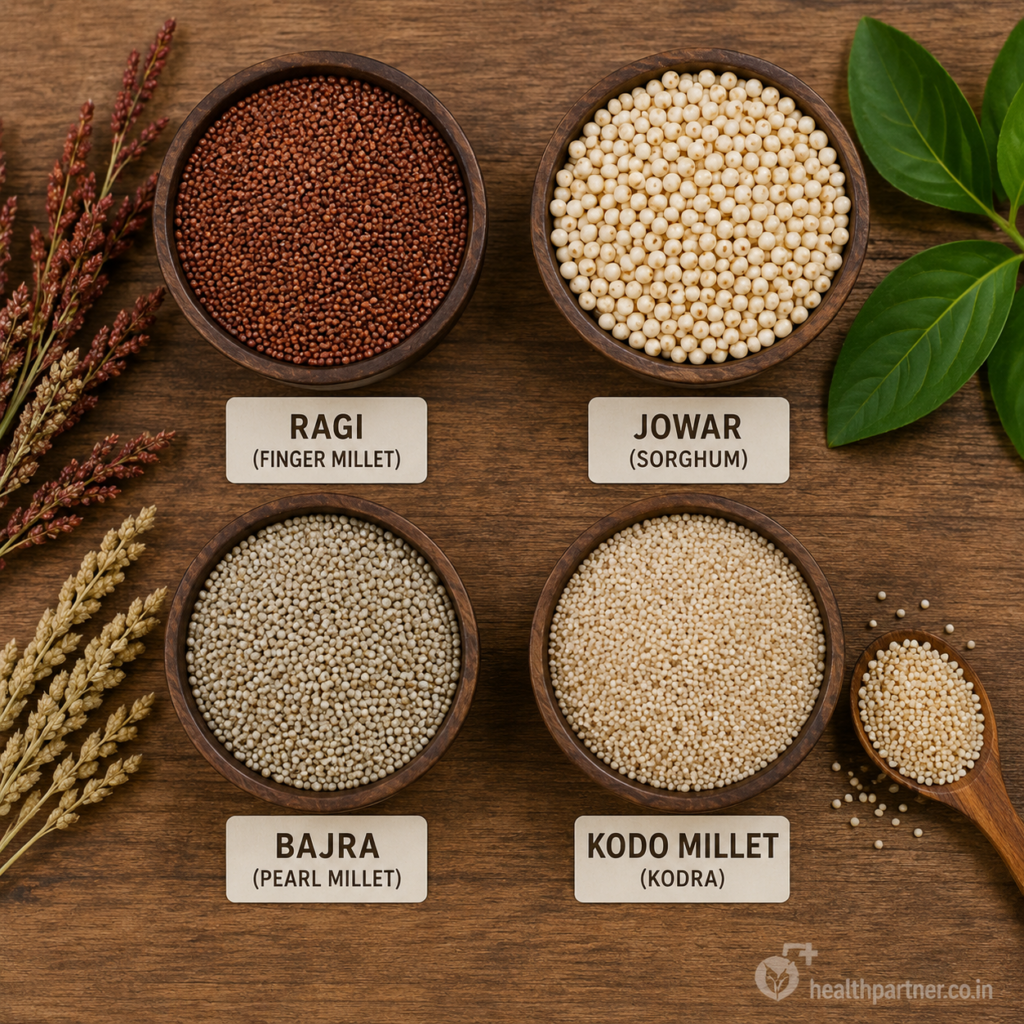
Millets deserve a special mention. Ragi, jowar, bajra, and kodo millet all sit meaningfully lower on the glycemic index than polished white rice or finely milled wheat flour. Working roughly 50–100g of cooked millet into your day — through rotis, khichdi, upma, or dosa — is a practical way to bring down the overall glycemic load of your meals.
- Ragi (finger millet) — lower GI, and a good source of calcium and fiber
- Jowar (sorghum) — a versatile substitute for rice in dal-rice or curd-rice
- Bajra (pearl millet) — moderate GI, rich in iron and magnesium
- Kodo millet — one of the lowest-GI grains available
Other Foods Worth Prioritizing
- Legumes and dals — moong, chana, rajma, masoor — low GI, high in protein and fiber
- Non-starchy vegetables, eaten generously
- Nuts and seeds — almonds, walnuts, flaxseed, chia
- Whole fruit in moderation — guava, papaya, apple, pear
- Low-fat dairy or curd
- Water, buttermilk, lemon water, or herbal tea over sugary drinks
What to Limit
Just as important as what you eat is knowing the foods to avoid in diabetes — or at least eat rarely and in small portions:
- White rice and maida-based foods — naan, white bread, biscuits, pasta, eaten in excess
- Sugary drinks and packaged juices — among the fastest ways to spike blood sugar
- Sweets and desserts — fine occasionally, not as a routine
- Fried and processed snacks — samosas, pakoras, chips, namkeen
- High-sugar fruits in large portions — mango, grapes, chikoo
- Heavily processed packaged foods in general
None of these need to be eliminated completely for most people — the goal is smaller portions, less frequency, and smarter pairing (e.g., a small amount of rice with extra dal and vegetables), not total restriction, which is hard to sustain long-term.
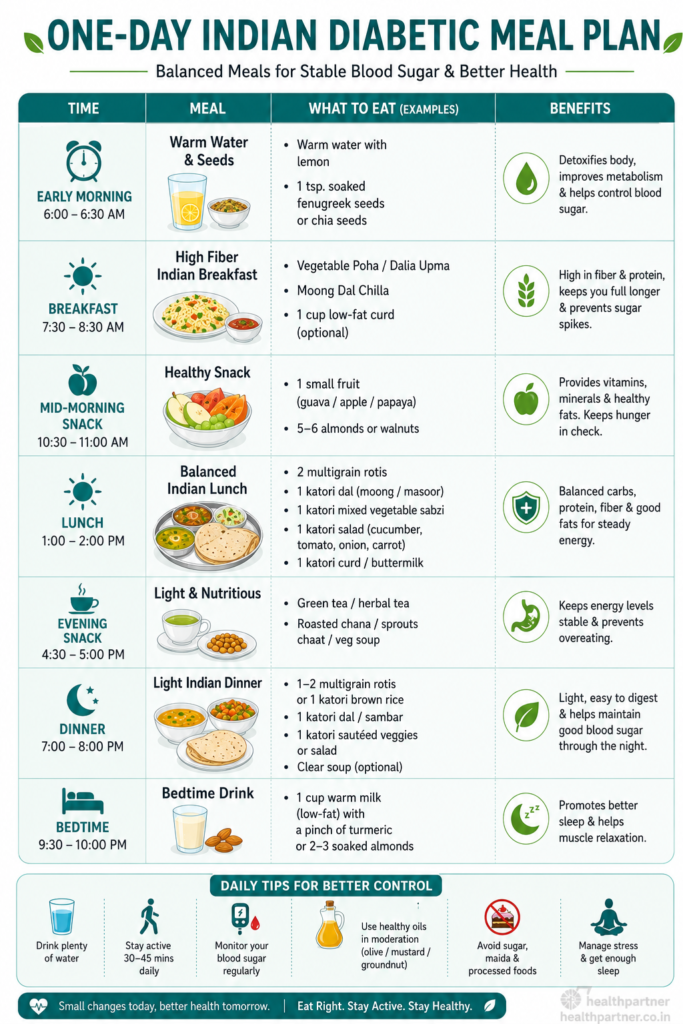
Sample Diet Chart for Diabetic Patients (1-Day Indian Meal Plan)
| Meal | Example |
|---|---|
| Early Morning | Warm water or unsweetened lemon water |
| Breakfast | Vegetable besan cheela or ragi dosa + mint chutney |
| Mid-Morning | A small handful of nuts or a guava |
| Lunch | Jowar roti + dal + a large portion of sabzi + cucumber-tomato salad |
| Evening | Roasted chana or sprouts, herbal tea |
| Dinner | Bajra khichdi with vegetables + curd |
| Before Bed | A glass of milk (if tolerated) or nothing if not hungry |
This is a general example, not a prescription — your own plan should reflect your blood sugar targets, medications, and any other health conditions, ideally worked out with a doctor or dietitian, especially if you’re on insulin or other glucose-lowering medicine.
Practical Tips for Everyday Life
✔ Eat at consistent times — skipping meals often leads to bigger swings later
✔ Fill half your plate with vegetables before adding rice or roti
✔ Choose whole fruit over fruit juice
✔ Watch portion sizes for rice and roti, even the lower-GI varieties
✔ Stay hydrated — dehydration can skew blood sugar readings
✔ At festivals or eating out, have a modest portion of what you enjoy rather than cutting it out entirely, and balance it with extra vegetables and activity that day
✔ Pair carb-heavy foods with protein or fiber to soften the glucose spike
📱 Get Personalized Support from HealthPartner India
A good diet for diabetic patients works best alongside regular monitoring. We can help you:
- Book an HbA1c (Glycosylated Hemoglobin) Test or a combined Diabetes Screening Package (HbA1c + FBS) to track how your diet changes are working
- Check your Fasting Blood Sugar (FBS) Test regularly to see how your meals are affecting your glucose
- Get a full Diabetes and Heart Check if you also want your cholesterol reviewed alongside blood sugar
- Order a glucometer — such as the Dr Morepen Gluco One Glucometer with 25 Test Strips — for home monitoring
- Get your prescribed medicines delivered through our medicine ordering service
Chat with us on WhatsApp for test bookings, medicine orders, glucometer purchases, or to ask about doctor consultations.
Key Takeaways
- There’s no single “best” diabetes diet chart — what matters is whole foods, fiber, and portion balance
- Millets (ragi, jowar, bajra, kodo) are a lower-GI alternative to white rice and milled wheat for Indian meals
- The Plate Method (½ vegetables, ¼ protein, ¼ carbs) is an easy way to build any meal without counting every gram
- Pairing higher-GI foods with protein and fiber reduces their overall blood sugar impact
- Occasional treats are fine in moderation — sustainable habits beat strict elimination
- Regular blood sugar testing helps you see what’s actually working for your body
Frequently Asked Questions (FAQs)
1. What is a good diet chart for diabetic patients? There’s no single best diabetic patient diet chart — Mediterranean, DASH, low-carb, and plant-based patterns all show benefits. What matters most is prioritizing whole foods, fiber, and vegetables while limiting refined carbs and added sugar, structured around consistent meal timing.
2. Is rice bad for diabetics? Not in small portions. White rice does carry a high GI, but pairing a smaller serving with dal, vegetables, and protein blunts the impact — and swapping in millets on some days helps further.
3. Are millets really better than rice for diabetes? Yes — most millets like ragi, jowar, and kodo millet have a lower glycemic index than polished white rice and finely milled wheat flour, and Indian government research (ICMR-NIN, ICAR) supports their role in better blood sugar management.
4. Can a diabetic eat fruit? Whole fruits like guava, apple, and papaya in moderate portions are fine. It’s fruit juice and very high-sugar fruits in large amounts that are worth watching.
5. How many meals should a diabetic (sugar) patient eat per day? Most guidelines suggest 2–3 balanced meals a day rather than frequent snacking, though this can vary based on medication and individual advice from your doctor.
6. Do I need to completely avoid sweets? No — complete elimination is rarely sustainable. Small portions on occasion, balanced with the rest of your diet and activity that day, are generally more realistic than an all-or-nothing approach.
7. Can diet alone control diabetes without medication? For some people with prediabetes or early Type 2 diabetes, diet and lifestyle changes can meaningfully improve or delay progression. However, this varies by individual, and any changes to medication should only be made with your doctor’s guidance.
8. How can HealthPartner India help with my diabetic diet chart? While we don’t provide personalized nutrition counseling, we help you track your progress through easy HbA1c and blood sugar test bookings, glucometers for home monitoring, and medicine delivery — all coordinated over WhatsApp.
Need Help Managing Your Diabetes?
Whether you need a blood sugar test, a glucometer, or your prescribed medicines delivered, HealthPartner India is here to help — genuine products, trusted labs, delivered across India.
📱 WhatsApp us today: +91 93479 68950
Follow us for more health tips and updates: Facebook | Instagram
Medical Disclaimer: This article is for educational purposes only and is not a substitute for professional medical or nutritional advice, diagnosis, or treatment. Always consult a qualified healthcare professional or registered dietitian before making significant changes to your diet, especially if you take insulin or other diabetes medication.