
Feeling unusually tired, dizzy or weak? Noticing increased hair fall, pale skin or shortness of breath during everyday activities? These can be iron deficiency symptoms, but they can also occur with many other health conditions.
Iron deficiency happens when your body does not have enough iron to meet its needs. If the deficiency becomes severe enough to reduce hemoglobin and red blood cell production, it can lead to iron deficiency anemia.
The good news is that iron deficiency can usually be identified with blood tests and treated once the underlying cause is found.
In this guide, you’ll learn the common symptoms of iron deficiency, what causes low iron, which tests check iron levels, what a ferritin test means, which Indian foods provide iron, and how iron deficiency is treated.
Important: Symptoms alone cannot confirm iron deficiency. A healthcare professional may recommend blood tests such as a complete blood count (CBC), hemoglobin and ferritin, along with other iron studies when appropriate. According to the World Health Organization, anaemia affects a significant share of women and children worldwide, making iron status an important thing to monitor.
Related reading: if you’re also dealing with constant fatigue, it’s worth ruling out other common deficiencies — see our guide on Vitamin B12 Deficiency Symptoms, Causes & Tests.
Quick Answer: What Are the Symptoms of Iron Deficiency?
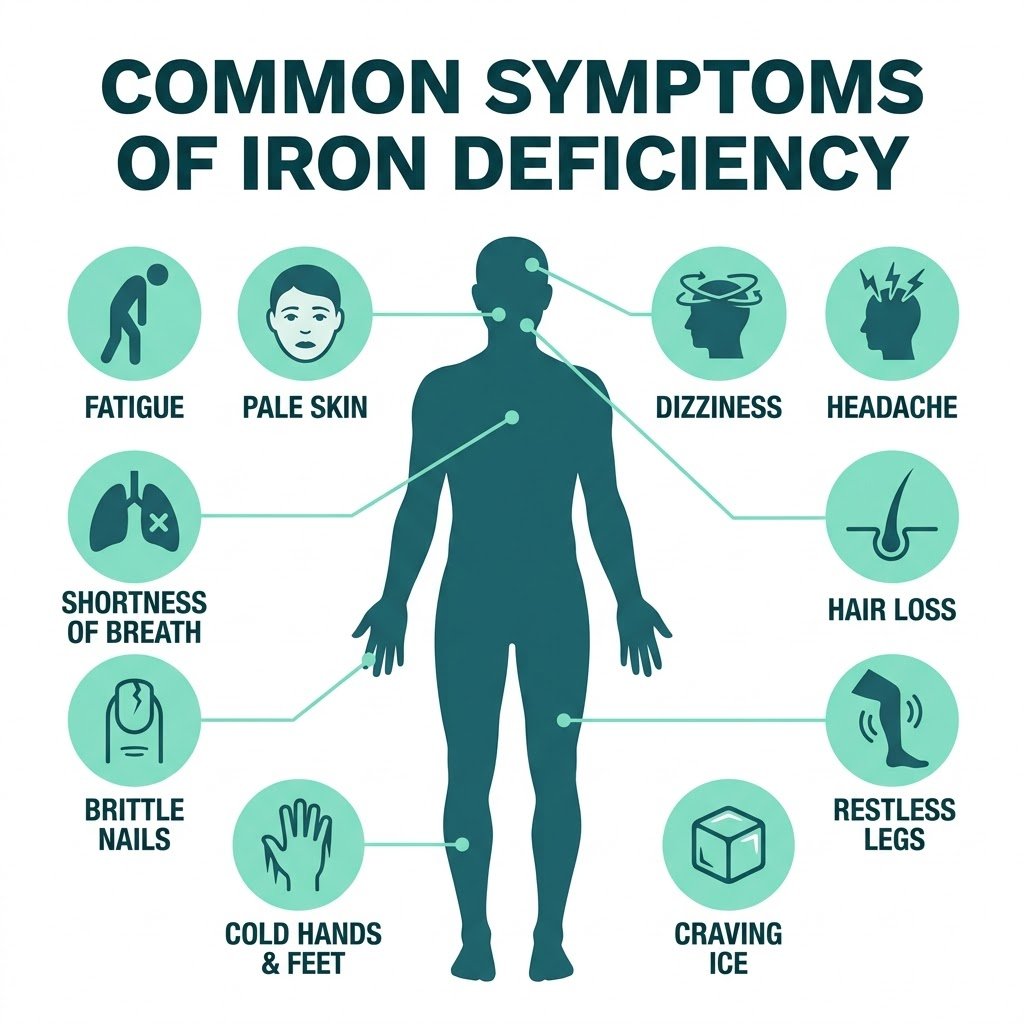
Common iron deficiency symptoms can include:
- Persistent tiredness or low energy
- Weakness
- Pale skin
- Dizziness or lightheadedness
- Headaches
- Shortness of breath, especially with activity
- Fast or noticeable heartbeat
- Difficulty concentrating
- Cold hands and feet
- Hair thinning or hair loss
- Brittle nails
- Restless legs
- Unusual cravings for ice or other non-food items, known as pica
- Sore or inflamed tongue
Symptoms may develop gradually, and some people with mild anemia may have few or no noticeable symptoms.
What Is Iron Deficiency?
Iron is an essential mineral that your body uses to make hemoglobin. Hemoglobin is the protein inside red blood cells that carries oxygen around the body.
When your body’s iron stores become depleted, you may develop iron deficiency. If the deficiency progresses and your body cannot produce enough healthy red blood cells and hemoglobin, it can result in iron deficiency anemia.
Iron deficiency is not always the same as anemia. A person can have depleted iron stores before anemia develops, which is one reason tests such as ferritin can be useful when evaluating possible iron deficiency. The National Institutes of Health Office of Dietary Supplements notes that iron plays a central role in oxygen transport and energy metabolism, which is why deficiency can affect so many parts of the body at once.
Iron Deficiency vs Iron Deficiency Anemia
These terms are related but not identical.
Iron deficiency: Your body’s available or stored iron is too low.
Iron deficiency anemia: Iron deficiency has progressed to the point that the body cannot produce enough healthy red blood cells and hemoglobin.
This means someone can have low iron or low ferritin but normal hemoglobin. Your healthcare professional will interpret the results together with your symptoms, medical history and other blood tests.
10 Common Iron Deficiency Symptoms
1. Constant tiredness
Feeling tired after normal daily activities is one of the most common symptoms associated with iron deficiency anemia.
You may feel exhausted even after sleeping adequately or notice that activities that previously felt easy now require more effort.
2. Weakness and reduced stamina
Low iron can be associated with reduced physical performance and weakness. You may find it harder to exercise, climb stairs or complete physically demanding tasks.
3. Pale skin
Paler-than-usual skin can occur with anemia. Some people may also notice paleness inside the lower eyelids, lips or gums.
4. Dizziness or lightheadedness
Iron deficiency anemia can be associated with dizziness, headaches and lightheadedness, particularly as anemia becomes more significant.
5. Shortness of breath
If anemia reduces the blood’s oxygen-carrying capacity, you may become breathless during activities that previously did not make you short of breath.
6. Headaches
Recurring headaches can occur with iron deficiency anemia, although headaches have many possible causes and do not by themselves prove that you have low iron.
7. Hair thinning or hair loss
Hair loss can occur alongside iron deficiency, but it has many other possible causes as well.
If hair loss occurs together with fatigue, paleness or other symptoms, your healthcare professional may consider whether checking iron status is appropriate.
8. Brittle nails
Iron deficiency anemia can sometimes cause brittle nails. In more significant cases, nails may become unusually shaped.
9. Restless legs
Some people with low iron may experience uncomfortable sensations or an urge to move their legs, particularly at night.
Restless legs can have several causes, so testing and medical evaluation may be appropriate when symptoms are persistent.
10. Craving ice or non-food items
An unusual desire to eat ice, clay, chalk or other non-food substances is called pica.
Pica can occur with iron deficiency anemia and should be discussed with a healthcare professional.
Early Signs of Iron Deficiency You Shouldn’t Ignore
Iron deficiency can develop gradually.
Some early or less obvious signs may include:
- Feeling more tired than usual
- Reduced exercise tolerance
- Difficulty concentrating
- Frequent headaches
- Feeling weak
- Increased hair shedding
- Cold hands and feet
- Restless legs
- Craving ice
These symptoms are not specific to iron deficiency. Stress, poor sleep, thyroid disorders, vitamin B12 deficiency, vitamin D deficiency and other conditions can cause similar symptoms.
That is why symptoms alone are not enough to diagnose iron deficiency.
What Causes Iron Deficiency?
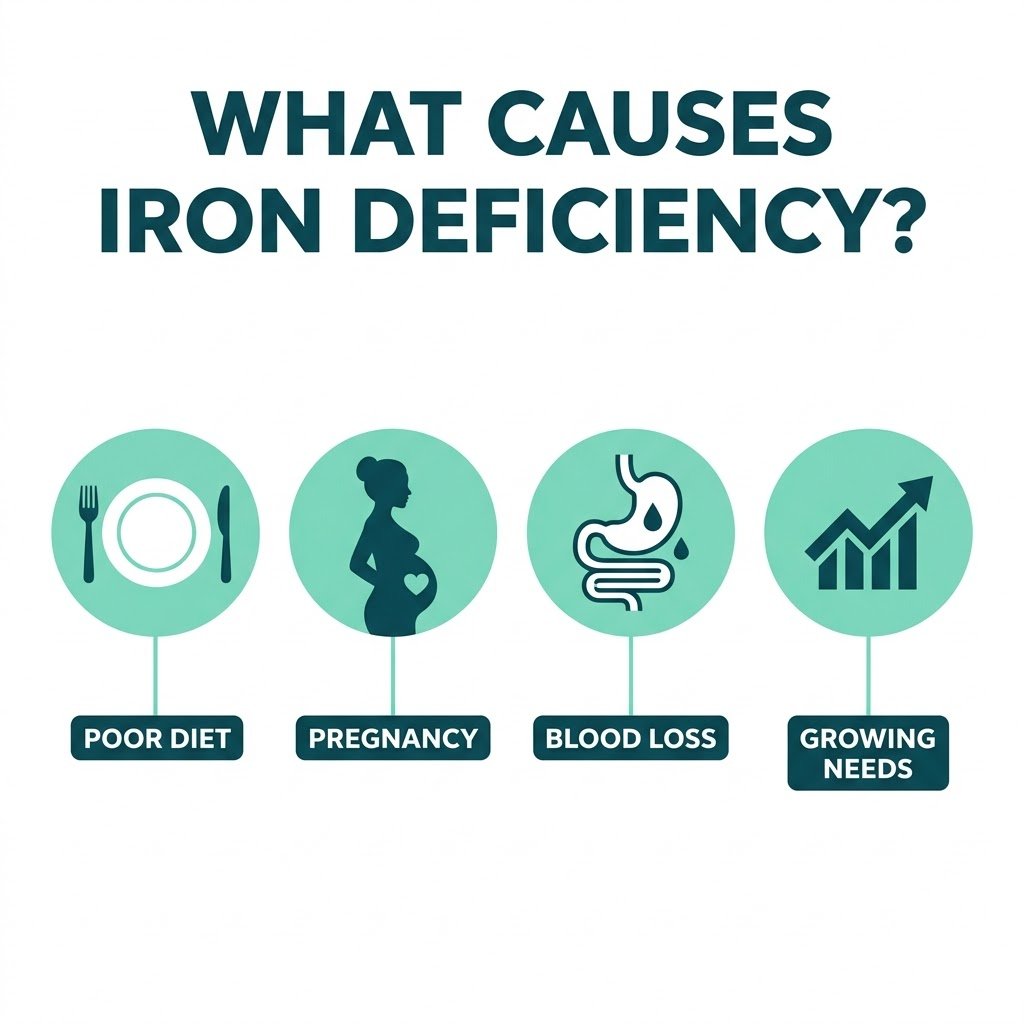
Iron deficiency can happen because your body is not getting enough iron, losing too much iron, not absorbing iron properly, or needing more iron than usual.
1. Not getting enough iron from food
A diet that consistently provides too little iron can contribute to deficiency.
This can be more likely when a person’s diet is restrictive or lacks a variety of iron-containing foods.
2. Heavy menstrual bleeding
Heavy or prolonged menstrual bleeding can cause ongoing iron loss and is an important possible cause of iron deficiency in women who menstruate.
If periods are unusually heavy, treating the blood loss is important rather than simply taking iron without investigating the cause.
3. Pregnancy
Iron requirements increase during pregnancy because the body needs to support increased blood volume and the developing baby.
Pregnant women should discuss anemia screening and iron requirements with their healthcare professional rather than starting high-dose iron supplements on their own.
4. Blood loss
Chronic blood loss can gradually reduce iron stores.
Possible sources include:
- Heavy menstrual bleeding
- Gastrointestinal bleeding
- Some stomach or intestinal conditions
- Frequent blood donation
- Other sources of ongoing blood loss
Unexplained iron deficiency, particularly in men or postmenopausal women, may require investigation for possible blood loss.
5. Poor iron absorption
Some gastrointestinal conditions and certain surgical procedures can interfere with iron absorption.
If iron levels remain low despite appropriate treatment, your healthcare professional may investigate whether absorption or ongoing blood loss is contributing to the problem.
6. Increased iron requirements
Iron needs can increase during:
- Pregnancy
- Infancy
- Childhood
- Adolescence
- Periods of rapid growth
Can You Have Low Iron but Normal Hemoglobin?
Yes.
Iron stores can become depleted before anemia develops.
This is why a person may have a low ferritin level while their hemoglobin has not yet fallen into the anemic range.
Ferritin is a protein that reflects stored iron, although ferritin levels can also be influenced by inflammation and certain illnesses. Results therefore need to be interpreted in the context of the person’s overall health.
If you have symptoms of iron deficiency but your hemoglobin is normal, ask your healthcare professional whether ferritin and other iron studies are appropriate.
How Is Iron Deficiency Diagnosed?
There is no single symptom that confirms iron deficiency.
Your healthcare professional may use several blood tests depending on your symptoms and medical history.
Complete Blood Count (CBC)
A CBC measures several components of your blood, including red blood cells and hemoglobin.
It can help identify anemia and provide clues about the type of anemia.
Iron deficiency anemia can cause red blood cells to become smaller and paler than usual.
Hemoglobin
Hemoglobin is the protein in red blood cells that carries oxygen.
A low hemoglobin level can indicate anemia, but hemoglobin alone cannot tell you whether iron deficiency is the cause.
Anemia thresholds vary according to factors such as age, sex, pregnancy and the clinical guideline being used. Your laboratory report will also provide its reference range.
Ferritin Test
A ferritin blood test measures ferritin, a protein that stores iron.
Low ferritin generally indicates reduced iron stores and can help identify iron deficiency. However, ferritin can increase with inflammation, infection and some other conditions, so the result should not be interpreted in isolation.
Serum Iron
Serum iron measures the amount of iron circulating in the blood at the time of testing.
It is generally interpreted together with other iron studies rather than used alone to diagnose iron deficiency.
TIBC
TIBC stands for total iron-binding capacity.
It provides information about the blood’s capacity to bind iron and may be included as part of an iron study panel.
Transferrin Saturation
Transferrin saturation helps show how much of the iron-binding protein transferrin is carrying iron.
Together, ferritin, serum iron, TIBC/transferrin and other results can help healthcare professionals assess iron status.
The WHO recommends using ferritin as an important biomarker for assessing iron stores, while also considering the clinical context and factors such as inflammation. You can read more directly from the WHO guideline on ferritin thresholds.
Ferritin Test: What Does It Tell You?
A ferritin test is one of the most useful tests when evaluating iron stores.
What does low ferritin mean?
Low ferritin generally suggests that your body’s stored iron is low.
However, there is no single number that should be interpreted in isolation for every person. Laboratory reference ranges can differ, and inflammation can affect ferritin results.
Can ferritin be normal even when there is an iron problem?
Ferritin can be affected by inflammation and other conditions, so a result that appears normal does not always provide the complete picture.
Your healthcare professional may consider your symptoms, CBC, ferritin and other iron studies together.
Do I need a ferritin test?
It may be considered when you have symptoms suggestive of iron deficiency, anemia on a blood test, heavy menstrual bleeding, pregnancy, problems absorbing nutrients or other risk factors.
Your doctor can determine which tests are appropriate for you.
Iron-Rich Foods for Iron Deficiency
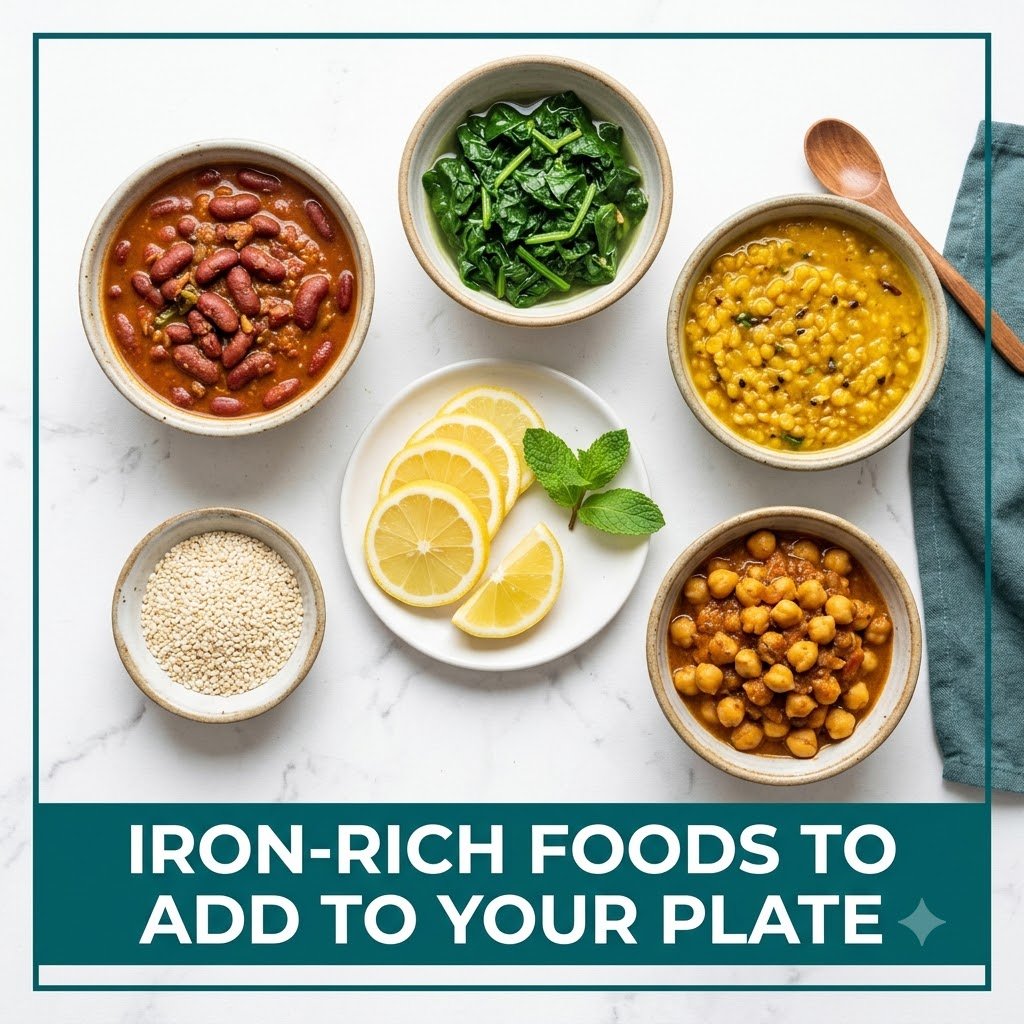
Diet is an important part of maintaining healthy iron levels, but significant iron deficiency may require treatment beyond food alone.
Vegetarian iron-rich foods
Good food sources include:
- Dal and lentils
- Chickpeas (chana)
- Rajma
- Soybeans and tofu
- Green leafy vegetables
- Sesame seeds (til)
- Peas
- Fortified cereals or grains, where available
- Nuts and seeds
Non-vegetarian sources
Iron-containing animal foods include:
- Meat
- Fish
- Poultry
- Eggs
Animal foods contain heme iron, which is generally absorbed more efficiently than the non-heme iron found in plant foods.
Pair iron-rich foods with vitamin C
Vitamin C can help improve the absorption of iron from plant foods.
Try combining iron-containing foods with:
- Amla
- Guava
- Orange
- Lemon
- Tomato
- Capsicum
For example, you could add lemon to dal or include a vitamin-C-rich fruit with a meal.
If you’re building a broader iron-friendly meal plan, our Diet Chart for Diabetic Patients: Indian Meal Plan also has useful tips on balancing pulses, vegetables and portion sizes.
Be careful with tea and coffee
Tea and coffee can reduce iron absorption when consumed around the time of an iron-containing meal or iron supplement.
If you are taking iron supplements, ask your healthcare professional about the best timing.
Important: Foods such as jaggery and pomegranate can be part of a healthy diet, but eating them alone should not be considered a treatment for medically confirmed iron deficiency.
Iron Deficiency Treatment
The right treatment depends on how low your iron is and why it became low.
1. Treat the underlying cause
Finding the reason for iron deficiency is important.
For example, someone with heavy menstrual bleeding may need evaluation and treatment for the bleeding, while someone with suspected gastrointestinal blood loss may need further investigation.
Simply replacing iron without addressing ongoing blood loss may not solve the problem.
2. Iron supplements
Healthcare professionals commonly use oral iron supplements to treat iron deficiency anemia.
Different iron preparations and doses are available, and the appropriate option depends on the person’s situation.
Do not start high-dose iron supplements simply because you have fatigue or hair loss. Too much iron can be harmful, and unnecessary supplementation can delay finding the real cause of your symptoms.
Iron supplements can also cause side effects such as constipation, nausea or stomach discomfort.
3. Intravenous iron
Some people may need iron given through a vein when oral iron is not tolerated, is not absorbed adequately, or when a healthcare professional considers IV treatment appropriate.
4. Follow-up testing
Treatment does not correct iron deficiency overnight.
Your healthcare professional may repeat blood tests to monitor hemoglobin and iron status and determine whether treatment is working and how long it should continue.
Iron Deficiency in Women
Women who menstruate can be at increased risk of iron deficiency because of regular blood loss.
Heavy or prolonged periods can increase the risk further.
Talk to a healthcare professional if you experience:
- Very heavy periods
- Periods lasting unusually long
- Fatigue or weakness
- Dizziness
- Breathlessness
- Hair loss together with other symptoms
The underlying cause of heavy menstrual bleeding may also need evaluation.
Iron Deficiency During Pregnancy
Iron requirements increase during pregnancy, and anemia screening is an important part of pregnancy care.
Possible symptoms can include:
- Fatigue
- Weakness
- Dizziness
- Shortness of breath
- Pale skin
However, pregnancy itself can cause symptoms that overlap with anemia.
If you are pregnant and are concerned about iron deficiency, speak with your obstetrician or healthcare professional before taking additional iron supplements.
Iron Deficiency in Men
Iron deficiency can also occur in men.
However, unexplained iron deficiency or iron deficiency anemia in an adult man deserves medical evaluation because chronic blood loss can sometimes be the underlying cause.
Possible sources include the gastrointestinal tract.
Do not assume that low iron is simply due to diet without discussing the result with a healthcare professional.
When Should You Get an Iron Deficiency Test?
Consider discussing testing with a healthcare professional if you have:
- Persistent unexplained fatigue
- Recurrent dizziness
- Pale skin
- Shortness of breath
- Hair loss along with other symptoms
- Heavy menstrual bleeding
- Restless legs
- A previous diagnosis of anemia
- A blood report showing low hemoglobin
- A condition that may affect nutrient absorption
- Pregnancy or increased nutritional requirements
The exact tests needed depend on your symptoms and medical history.
When Should You See a Doctor Urgently?
Seek prompt medical attention if you experience:
- Severe difficulty breathing
- Chest pain
- Fainting
- A very rapid or irregular heartbeat
- Significant or ongoing bleeding
- Black, tar-like stools or visible blood in the stool
These symptoms can have causes other than iron deficiency and should not be self-diagnosed.
Frequently Asked Questions
What are the first symptoms of iron deficiency?
Early symptoms may include tiredness, weakness, reduced exercise tolerance, headaches, dizziness and difficulty concentrating. Symptoms can be mild or develop gradually.
What are the most common iron deficiency symptoms?
Common symptoms include fatigue, weakness, pale skin, dizziness, headaches, shortness of breath and reduced stamina. Hair loss, brittle nails, restless legs and pica can also occur.
Can iron deficiency cause hair loss?
Iron deficiency can be associated with hair loss, but hair loss has many possible causes. If hair loss is persistent or occurs with other symptoms, discuss whether blood tests such as CBC and ferritin are appropriate.
Can I have low iron but normal hemoglobin?
Yes. Iron stores can become depleted before anemia develops. Ferritin can help assess stored iron, although results must be interpreted in context.
What blood test confirms iron deficiency?
Healthcare professionals may use a combination of CBC, hemoglobin, ferritin, serum iron, TIBC/transferrin and transferrin saturation depending on the situation. There is no single test that is appropriate for every person.
What is a ferritin test?
A ferritin blood test measures ferritin, a protein that stores iron. A low ferritin level generally indicates low iron stores, although ferritin can also be affected by inflammation and other conditions.
What does low ferritin mean?
Low ferritin generally suggests depleted iron stores. Your healthcare professional will interpret the result using the laboratory’s reference range, your symptoms and other test results.
How can I increase iron naturally?
Include iron-rich foods such as dal, lentils, chickpeas, beans, soy, green leafy vegetables, seeds, meat, fish and eggs. Pair plant-based iron sources with vitamin-C-rich foods to improve absorption.
Can iron deficiency be treated with diet alone?
Diet can help prevent and support treatment of iron deficiency, but confirmed or significant deficiency may require iron supplementation under medical guidance. The underlying cause should also be identified.
How long does it take to correct iron deficiency?
Improvement varies from person to person and depends on the severity of deficiency, treatment and whether the underlying cause is corrected. Blood tests are often repeated to monitor the response to treatment.
What causes iron deficiency in women?
Common causes include heavy menstrual bleeding, increased iron requirements during pregnancy, inadequate dietary intake and problems with iron absorption.
What causes iron deficiency in men?
Dietary deficiency and absorption problems are possible causes, but unexplained iron deficiency in adult men may require evaluation for chronic blood loss, particularly from the gastrointestinal tract.
Key Takeaways
- Iron deficiency symptoms can include fatigue, weakness, dizziness, headaches, pale skin and shortness of breath.
- Hair loss, brittle nails, restless legs and pica can also occur.
- Iron deficiency can exist before anemia develops.
- A ferritin test can help assess the body’s stored iron.
- CBC, hemoglobin and other iron studies may be used alongside ferritin.
- Heavy menstrual bleeding, pregnancy, inadequate dietary intake, blood loss and poor absorption can contribute to iron deficiency.
- Iron-rich foods are helpful, but significant deficiency may require medically guided treatment.
- Do not take high-dose iron supplements without appropriate medical advice.
- Finding and treating the underlying cause is an important part of treatment.
Book an Iron Test or Blood Test
If you have persistent symptoms or want to check your iron status, talk to a healthcare professional about which blood tests are appropriate.
Health Partner India can assist with blood test and lab-test bookings through the Tata 1mg Health Partner programme, including convenient home sample collection where available.
Send your prescription or test requirement on WhatsApp to +91 93479 68950 for assistance.
Follow us for more health tips and updates:
- Instagram: @tata1mg_healthpartner
- Facebook: Health Partner India
Medical Disclaimer
This article is for general educational purposes and does not replace professional medical advice, diagnosis or treatment.
Iron deficiency symptoms can overlap with many other conditions. Do not diagnose yourself based only on symptoms or start high-dose iron supplements without appropriate medical guidance.
If your blood report shows low hemoglobin, ferritin or iron levels, discuss the results with a qualified healthcare professional.